

UN Reaffirms Commitment to Colombia’s Peace Process and JEP
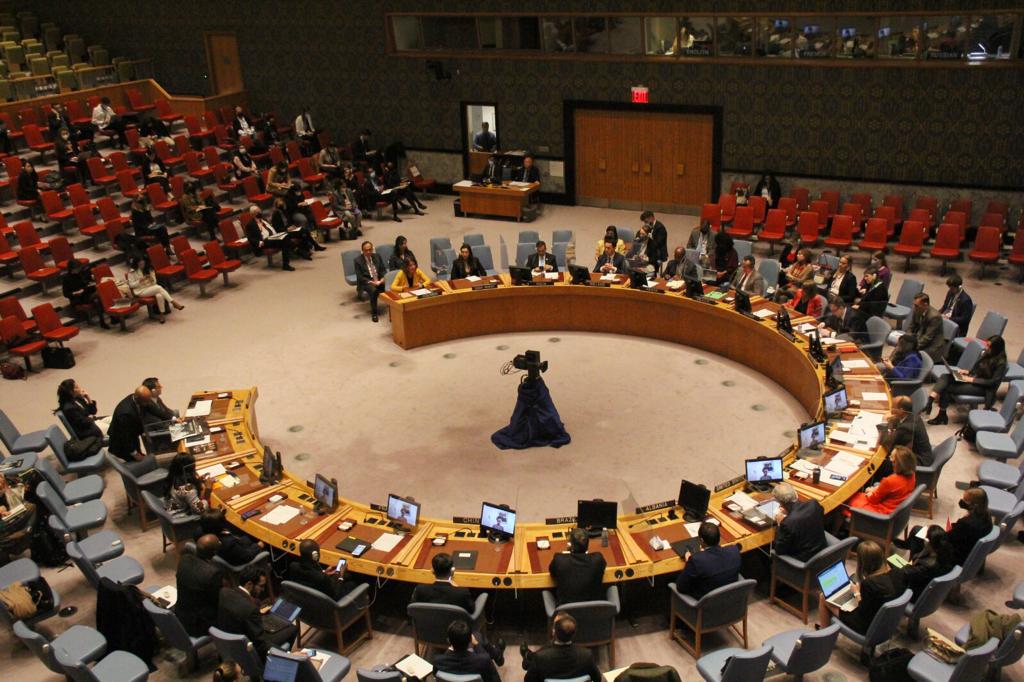
The United Nations Security Council once again sent a strong message of support for Colombia’s peace process by reiterating its backing for the Special Jurisdiction for Peace (JEP) and the implementation of the Final Peace Agreement signed in 2016 between the Colombian State and the now-defunct FARC.
The statement was made during the most recent session on Colombia in New York, where member states highlighted the role of the transitional justice tribunal as one of the fundamental pillars for guaranteeing truth, justice, reparations, and guarantees of non-repetition for victims of the conflict.
The position of the body primarily responsible for international peace and security carries particular significance given Colombia’s current political moment, a decade after a peace agreement that was considered historic at the time and earned the Nobel Peace Prize for former Colombian President Juan Manuel Santos, the architect of the accord.
The international support also comes as President-elect Abelardo de la Espriella and leaders of his future administration have openly opposed the Agreement, announced their intention to dismantle part of the institutional framework created to implement it, questioned the continuity of the JEP, and argued that former FARC commanders should face prison sentences, a stance that has raised concerns among various domestic and international sectors.
UN reaffirms commitment to Colombia’s peace process and the JEP
During the Security Council session, member countries reiterated their unwavering support for the Special Jurisdiction for Peace (JEP) and the Final Peace Agreement, considering both essential elements for consolidating a stable and lasting peace in Colombia.
Delegations highlighted the work carried out by the JEP in clarifying the most serious crimes committed during the armed conflict and acknowledged the progress achieved through restorative justice.
International representatives particularly emphasized the beginning of the phase of the first restorative rulings and the sanctions imposed on those who acknowledged responsibility for serious human rights violations.
For the international community, this process represents a milestone in the implementation of the Peace Agreement and an innovative mechanism that places victims at the center through the acknowledgment of truth and the repair of the harm caused.
The United Nations has insisted that the JEP is a fundamental component of the Comprehensive System of Truth, Justice, Reparations, and Non-Repetition and has reiterated that it will continue supporting the implementation of the tribunal’s decisions through the UN Verification Mission in Colombia.
In this regard, Miroslav Jenca, head of the UN Verification Mission in Colombia, reiterated the importance of guaranteeing the physical security and legal protections of the more than 11,000 former FARC members who laid down their arms and have reaffirmed their commitment to continue honoring the Final Peace Agreement throughout their reintegration process.
“It is essential to protect what has been achieved, expand security and development through a stronger state presence in regions affected by violence, and guarantee justice for victims under the terms of the agreement,” Jenca said.
The JEP as the core of the agreement
The Special Jurisdiction for Peace was created by the 2016 Final Agreement as the mechanism responsible for investigating, prosecuting, and sanctioning the most serious and representative crimes committed during the armed conflict before December 1 of that year.
Its model combines judicial responsibilities with restorative measures, conditioning legal benefits on the delivery of full truth, acknowledgment of responsibility, and reparations for victims.
Since its creation, the JEP has accredited thousands of victims, opened multiple macro-cases, and secured public acknowledgments from dozens of top perpetrators regarding their participation in kidnappings, extrajudicial executions, enforced disappearances, and other war crimes and crimes against humanity.
Meanwhile, Ambassador Jerome Bonnafont, France’s representative to the Security Council, called for fostering “national reconciliation through Transitional Justice, whose recent sanctions are worthy of praise.” He said that the legacy left by the Final Peace Agreement over the past ten years is of great value and should continue to be implemented.
Jeff Bartos, U.S. Ambassador to the United Nations for Administration and Reform, urged the Colombian government to prioritize the broad and swift implementation of the commitments contained in the Final Peace Agreement, particularly in the areas of security and infrastructure investment.
For her part, Anna Evstigneeva, representative of the Russian delegation, noted that “the JEP’s final decisions in Cases 01 and 03 have been a major step forward.” She added: “We trust that the leaders of the former FARC and the former combatants recognized as most responsible for serious crimes will soon be able to serve the corresponding sanctions.” She also recalled the importance of implementing the Final Peace Agreement in its entirety.
En medio de un nuevo capítulo político, el #AcuerdoDePaz cumplirá 10 años -dos tercios del plazo de 15 años para implementación-; un horizonte útil para acelerar y consolidar avances alcanzados a la fecha en aspectos que aún son clave para la paz y la seguridad duraderas en 🇨🇴. pic.twitter.com/khY4T3JoWd
— Miroslav Jenča (@JencaMiroslav) July 15, 2026
Clash with the incoming De la Espriella administration
The international support contrasts with the position taken by President-elect Abelardo de la Espriella, who during the campaign and after his election has questioned the Peace Agreement and the functioning of the JEP.
The president-elect has announced the closure of several entities related to the implementation of the agreement, described the jurisdiction as a mechanism that promotes impunity, and stated that he will seek prison sentences for former guerrilla leaders.
Those positions have raised concerns among human rights organizations, former peace negotiators, and various international actors, who warn that the Peace Agreement enjoys constitutional protection and that the JEP was created through constitutional reforms, meaning its elimination would require complex legal and constitutional procedures.
In that context, the Security Council’s statement represents a political signal of considerable weight. The international community once again made clear that it views the full implementation of the Peace Agreement and the independent functioning of the JEP as commitments of the Colombian State, not of any particular government.
The United Nations’ message reaffirms that the transitional justice process continues to be closely monitored by the international community, which maintains its support for the institutions created to guarantee victims’ rights and preserve the commitments assumed by Colombia nearly a decade ago.
En un nuevo capítulo político, el #AcuerdoDePaz cumplirá 10 años, dos tercios de su horizonte de implementación. Es una oportunidad para acelerar y consolidar avances clave hacia una paz y una seguridad duraderas en 🇨🇴. @JencaMiroslav #UNSC 🧵 pic.twitter.com/VZaxw1ZEqt
— Misión de la ONU en Colombia (@MisionONUCol) July 15, 2026