

Ugandan President: The Logic of Africa’s Position on Today’s Wars
What do the countries of Africa, close to a third of all those represented at the United Nations, have against condemning the wars of today in Gaza, Ukraine and Iran?
Since the start of the conflict in Eastern Europe and the hostilities in the Levant 20 months later, most African nations, including my own—Uganda—have regularly and consistently refrained from public commentary and abstained in United Nations votes concerning both conflicts. We are accused of being at once pro-Russia, pro-Israel, anti-America, and anti-Iran.
What we are, as should be expected and respected, is pro-ourselves. Uganda’s position and—I believe I speak generally for Africa’s—is one of neutrality, grounded in history. Only in today’s “you’re with us or against us” world could an act of abstention be judged biased. But we will not change our position in the face of any criticism, not least criticism that conveniently disregards history.
A year ago, I replied to a letter I had received from the government of Iran. It complained furiously that Uganda, both as a nation and as the current holder of the chairmanship of the Non-Aligned Movement, had not commented on the tragic situation in the Middle East. Why, I was asked, would I not condemn the actions of the “transplant” Israel against the legitimate Palestinian people of the region?
When Mahmoud Ahmadinejad was Iranian president, I used to tell him that Iran’s view that Israeli Jews were imports, and therefore that their state lacked legitimacy, was a mistake. According to the Bible, and all known anthropological study, the Jewish people—the Israelites—are historic to the region. And so are others: The seven nations of Canaan of Biblical history, along with their ancient counterparts the Philistines of what is today’s Gaza, were not Jews. Similarly, I would ask Benzion Netanyahu—Israeli Prime Minister Benjamin Netanyahu’s father—if he believed those groups’ ethnic descendants did not also belong there. Their ancient religions may have perished and been replaced by today’s Islam: But the progeny of those peoples live on.
It was therefore right that in 1924 the Zionist movement rejected colonial Britain’s offer of Uganda—of all places—as a Jewish homeland and insisted on their right of historic return to the lands of the Middle East from where they had been ejected by another imperial power, Rome, two millennia before. But it is also right that the U.N. created today’s partition between the State of Israel and the Palestinian Authority, and wrong that Israel refuses to implement the two-state solution.
Condemnation of imperialism and colonialism is an impulse that comes easily for Africans, though at least we spend time understanding our history and speak with authority on the subject. Imagine my surprise when, in conversations with Iranian leadership, they seemed not to know about the coup d’etat of the 1950s—in the lifetimes of many of us alive today—by Britain’s MI6 and America’s CIA to overthrow the then democratically elected prime minister of Iran, Mohammad Mosaddegh, over a dispute about access to oil resources. It was the resentment of that overthrow that led, we now understand inexorably, to the revolution of 1979 and the rule of the clerics. Perhaps they do not follow this history because to do so would be to acknowledge the paradox of imperialism in their own rise to power?
We reject, too, the use of external force, especially from outside the region, as a solution to the Middle East’s woes. In our times, such force has been, most recently, primarily American, and before that primarily British. Yet how many times in this past and the present must we bear witness to the failures of outside forces to create certainty, finality, stability, prosperity, and peace in the region? There is no time when external power will achieve that, and nothing but hubris can deny that fact. We appeal instead to the actors in the Middle East to draw back from the use of force and go back to principled diplomacy. As hard as it may be, Iran and the Islamists should recognize Israel, and Israel should implement the two-state solution.
Facing this world before us, who would seriously expect the countries of Africa to vote for or against this motion or that laid down before the United Nations in the words of one interested party or another? We would abstain—and do so as a point of principle, and in the full knowledge that we will receive criticism from both sides. Do we voice and cast our votes in support of resolutions for ceasefires and truces, and of others backing justice and international law efforts of accountability? Of course, yes. But for condemnations and taking geopolitical sides? No.
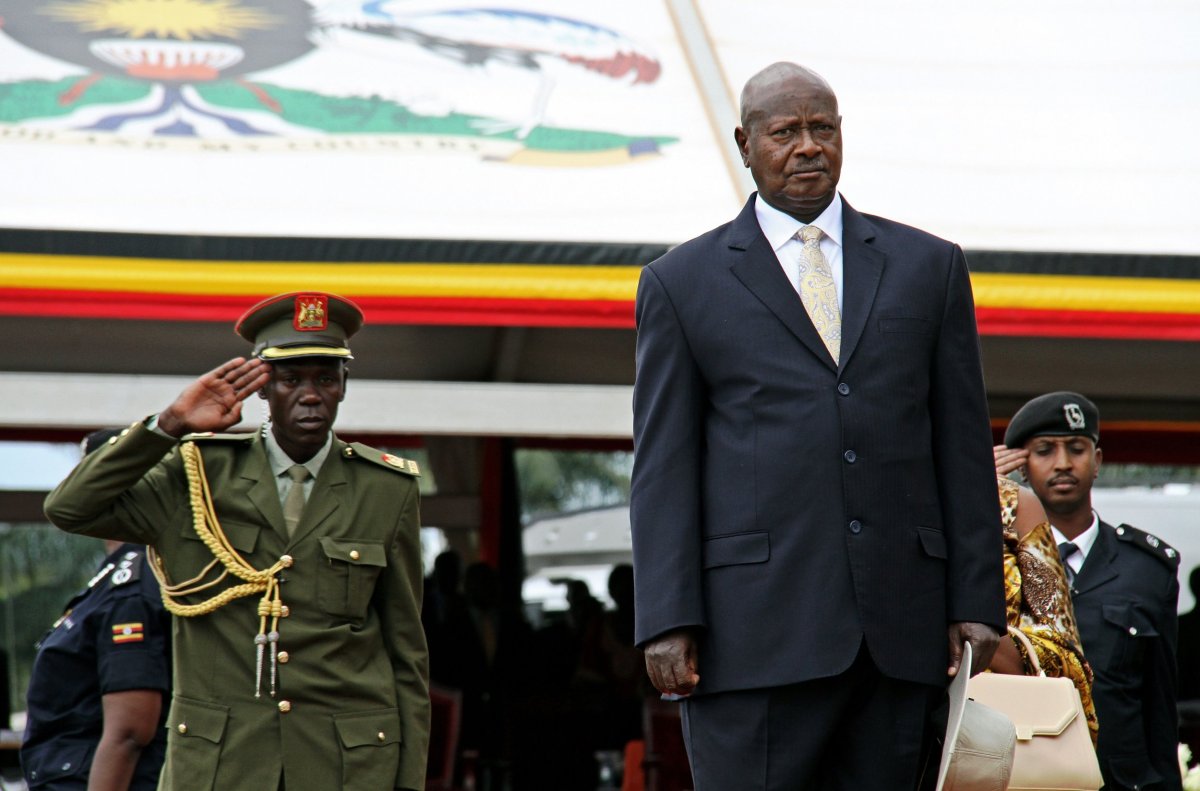
Yoweri K. Museveni is President of the Republic of Uganda.
The views expressed in this article are the writer’s own.
Credit: Source link