

Liberia Rules the Seas. Why Does It Fail to Prosper at Home? | Commentaries
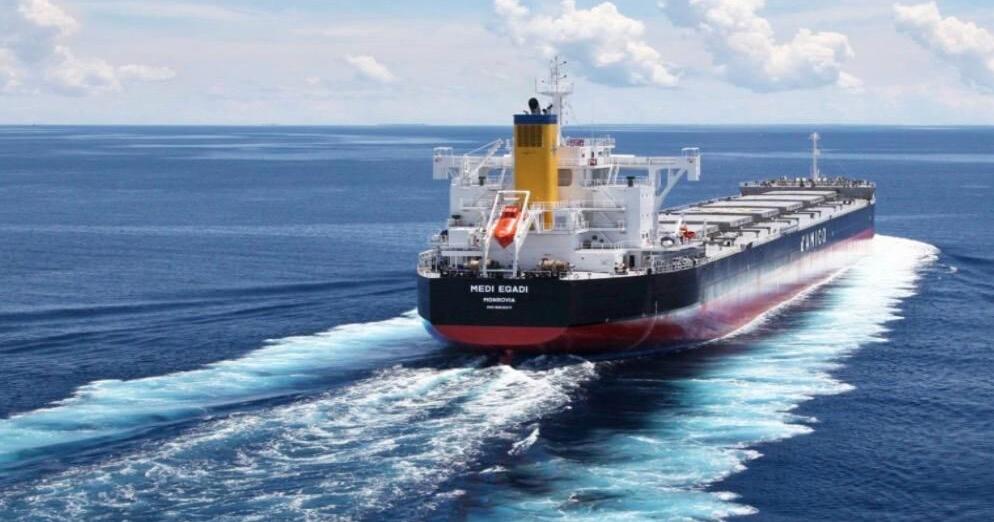
Liberia’s most recent achievement of becoming the first ship registry in the world to surpass 300 million gross tons (307.4 millions GT to be precise) deserves recognition. Yet, any serious reflection on this milestone must move beyond celebration and confront a recurring question that too often gets ignored in Liberian political economy: why have some of Liberia’s greatest international successes produced so little visible transformation for ordinary Liberians?
The answer, which I attempt to provide below, inevitably leads to the intertwined histories of political leadership, elite capture, and—that most virulent scourge that holds society back—corruption.
A Historical Pattern: Wealth Without Development, or the Paradox of Prosperity
The establishment of the shipping registry—which is today administered by the Liberian International Ship and Corporate Registry (LISCR)—did not occur in isolation. It originated in 1948 through a collaboration between the Liberian government and former U.S. Secretary of StateEdward Stettinius Jr., who played a pivotal role in creating Liberia’s open registry system by establishing the Liberia Company.
Stettinius, a close associate of William V.S. Tubman, utilized this connection to found Stettinius Associates-Liberia, Inc., which managed the flag of convenience registry in Liberia. This arrangement permitted foreign shipowners to register their vessels under the Liberian flag while operating on a global scale. Within a span of two decades, Liberia became home to the largest shipping registry in the world. This achievement was remarkable.
However, it also set a precedent that would recur throughout Liberia’s history: international capital flowed into Liberia, yet a significant portion of the value generated remained detached from the local economy. A similar trend was observed in rubber concessions, iron ore mining, timber extraction, and subsequently in offshore finance. Liberia consistently gained global significance in certain sectors while remaining underdeveloped domestically. Thus, the registry represents more than just a narrative about shipping; it is part of a larger historical framework in which the state functions as a conduit for the passage of global capital.
Corruption as a Problem of Distribution
When Liberians hear that their country controls over 17 percent of the world’s fleet, the natural expectation is that such dominance should translate into visible national prosperity. The problem is not necessarily that the registry has failed commercially. By every commercial metric, it has
succeeded. The problem is that Liberians have often lacked transparency regarding how registry revenues are generated, distributed, invested, and monitored. Historically, maritime revenues have constituted a substantial portion of government income. During certain periods, registry revenues accounted for significant percentages of government receipts and even became one of the few reliable sources of state revenue during periods of instability.
Despite its importance, public debates have frequently emerged concerning revenue transparency, contract arrangements, political influence, and who are the ultimate beneficiaries of the registry’s success. It remains to be seen whether the full value generated by the registry reaches the Liberian public or stays concentrated among political and commercial elites. This is where the topic of corruption becomes relevant.
Corruption should not be understood only as the theft of money or misappropriation of funds. In Liberia, corruption has often taken the form of elite capture—the ability of small groups to control strategic national assets and direct benefits toward themselves while the wider population receives little. In that sense, corruption is not merely a legal concern. It is a structural challenge.
The Charles Taylor-Era and Registry Politics
The relationship between the registry and political power became particularly evident during the civil war (1989–2003). During the years of instability and conflict, maritime revenues remained among the few dependable sources of income available to the state. Under Charles Taylor’s regime, the registry emerged as one of the government’s most important legal revenue streams. This history reveals an uncomfortable truth: institutions that survive state collapse often become attractive targets for political control.
Because the registry generated revenue independent of domestic production, agriculture, or manufacturing, it became especially valuable to political elites. The focus often shifted from enhancing the registry to controlling the access to the revenues it produced. This dynamic has characterized much of Liberia’s history since independence. Political rivalry has frequently revolved around access to state-controlled resources rather than the creation of new productive capacities.
The Problem Through a Global Lens
There is also an international dimension that complicates simplistic discussions of corruption.
Liberia’s registry is one of the world’s most prominent “flags of convenience.” Shipowners register under the Liberian flag because it offers efficiency, regulatory flexibility, and tax advantages. Critics have long argued that open registries allow corporations to minimize taxes, reduce labor costs, and obscure ownership structures.
This means the registry exists within a global system that often incentivizes opacity. Consequently, corruption cannot be perceived merely as a problem confined to Liberia. The registry operates within a larger international political economy where influential corporations, financiers, and shipping entities pursue jurisdictions that enhance their commercial benefits. While Liberia gains from hosting the registry, it simultaneously holds a structurally disadvantaged position within this arrangement. A significant portion of the value produced by the global shipping sector is accrued in other regions—specifically in ship-owning nations, financial centers, insurance markets, and logistics hubs.
The Real Question
Perhaps the most important issue, thus, is not whether corruption exists within the registry itself. The more important question is whether Liberia has successfully converted its extraordinary maritime position into national development. After nearly eighty years of operating one of the world’s largest registries, Liberia still lacks a major maritime university, a globally competitive shipping finance sector, extensive shipbuilding capacity, or a large domestic maritime workforce.
The country’s ports remain underdeveloped relative to the scale of the registry it hosts. This disconnect should concern political leaders and policymakers more than the tonnage figures themselves. A registry exceeding 300 million gross tons is impressive. But history suggests that raw numbers can be misleading. Our country is rich in iron ore, rubber, timber, and shipping registrations while remaining poor in infrastructure, healthcare, industrial capacity, and employment opportunities.
The corruption question cannot, consequently, be reduced to whether money was stolen. It must also ask whether national institutions have been sufficiently accountable and visionary to transform maritime success into public prosperity.
In looking ahead, Liberia’s 300-million-ton milestone is both a triumph and a challenge. It demonstrates, indeed, that the country possesses one of the most successful international commercial institutions ever created on the African continent. However, it also revives a longstanding historical question that the state has never answered since the nineteenth century,
i.e., at the time of the declaration of independence. The question is: how can a nation be globally significant and domestically struggling at the same time?
Until Liberia can clearly show how maritime wealth improves our schools, ports, infrastructure, technical education, employment, and public services, the celebration of registry growth will remain incomplete. The real measure of success is not the number of ships flying the Liberian flag. It is whether the benefits of those ships eventually reach the Liberian people.
Author: Keita is a Liberian child and human rights activist, with a wide array of interests including philosophy, political and historical thought, and physics. He obtained his B.A. from Yale University and is completing an LL.M. degree at Leiden University in the Netherlands this summer.
Credit: Source link