

Why is Putin’s Russia becoming more unapologetic, uncompromising and difficult to predict?
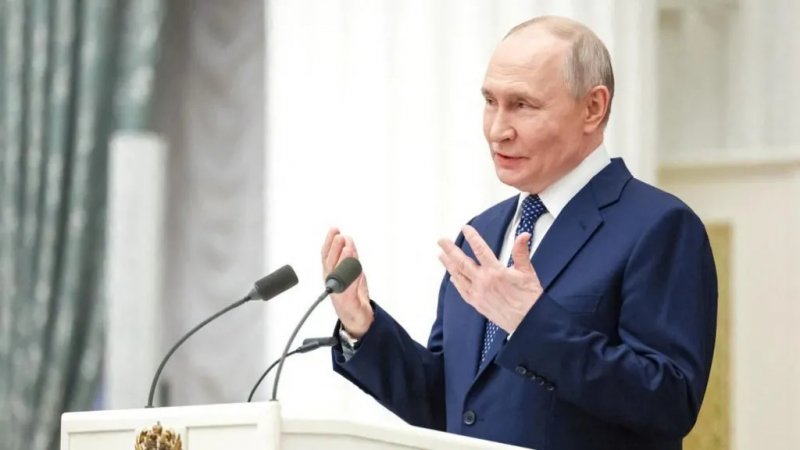
Russia in 2026 presents itself to the world with a growing sense of defiance. More than four years after the full scale invasion of Ukraine began, the Kremlin shows little sign of reconsidering its goals, despite battlefield losses, economic pressures, international sanctions and growing domestic strains. Instead, Moscow increasingly projects an image of resilience, endurance and determination.
The phrase used by Russian folk singer Nadezhda Babkina after receiving a state award from President Vladimir Putin captured that mood. Her remark that those who dislike Russia’s path “can go and poison themselves” reflected a broader political atmosphere that has become deeply embedded in modern Russian state ideology, News.az reports.
This atmosphere raises several important questions. Why has Russia become more uncompromising? What does Vladimir Putin want from the war in Ukraine? Why has a negotiated settlement remained elusive? How has Donald Trump changed Moscow’s calculations? Is there a debate inside Russia about ending the war? And what might Russia’s future look like if the conflict continues indefinitely?
This FAQ explainer examines the political, military, economic and social forces shaping Russia in 2026.
What slogan best describes Russia in 2026?
If Russia had an unofficial slogan today, it might be:
“Russia is what it is.”
The phrase echoes comments previously made by Russian Foreign Minister Sergei Lavrov and reflects a political philosophy that has become central to Kremlin messaging.
Modern Russia increasingly rejects the idea that it must justify itself to Western governments, institutions or public opinion. Instead, officials argue that Russia has its own interests, values and geopolitical goals, regardless of international criticism.
This mindset has become especially pronounced since the invasion of Ukraine in 2022.
Rather than seeking acceptance from the West, Moscow increasingly portrays itself as a civilizational power standing against what it describes as Western dominance and interference.
The message is simple: Russia will pursue its objectives whether others approve or not.
Why has Russia become more unapologetic?
Several factors have contributed to this transformation.
First, Russian leaders believe relations with the West were already deteriorating long before the invasion of Ukraine.
The Kremlin frequently points to NATO expansion, sanctions, political disputes and disagreements over security arrangements as evidence that confrontation was inevitable.
Second, Moscow believes it has survived numerous attempts to isolate it internationally.
Despite extensive sanctions, Russia continues to trade with many countries across Asia, Africa, Latin America and the Middle East. Russian officials often highlight these relationships as proof that Western pressure has failed.
Third, the war itself has hardened political attitudes.
Wars tend to reinforce nationalist narratives and reduce space for compromise. After years of fighting, thousands of casualties and massive economic costs, backing down becomes politically difficult.
The longer the conflict continues, the more difficult it becomes for any side to admit mistakes or accept concessions.
How does Vladimir Putin view the war in Ukraine?
Publicly, Putin has remained remarkably consistent.
He continues to describe the war as necessary for Russian security and insists that Russia’s objectives remain unchanged.
The Kremlin argues that Ukraine has become a platform for Western influence and military pressure against Russia.
As a result, Putin frames the conflict not simply as a war against Ukraine but as part of a broader confrontation with the West.
This perspective helps explain why Moscow has shown little willingness to compromise on key issues.
Russian leaders continue to demand recognition of territories claimed by Moscow and insist that Ukraine must accept security arrangements favorable to Russia.
From the Kremlin’s perspective, abandoning these goals would undermine the rationale for the war itself.
Why has a peace agreement remained so difficult?
Peace negotiations face several major obstacles.
The first is territorial disputes.
Russia and Ukraine have fundamentally different positions regarding territory occupied or claimed by Moscow.
Ukraine insists on restoring its internationally recognized borders.
Russia insists that several territories are now permanently part of the Russian Federation.
These positions leave very little room for compromise.
The second obstacle is security guarantees.
Ukraine seeks strong security commitments from Western partners to prevent future attacks.
Russia opposes arrangements that would deepen Ukraine’s military ties with Western countries.
The third obstacle is political legitimacy.
Leaders on both sides face domestic pressures that make major concessions politically risky.
Any agreement perceived as surrender could trigger significant political consequences.
Why did Russia once have high expectations for Donald Trump?
Many Russian officials believed Donald Trump might approach the conflict differently from previous American administrations.
In Moscow, there was speculation that Trump’s emphasis on negotiations and deal making could create opportunities for a settlement more favorable to Russian interests.
Russian commentators frequently discussed the possibility that Washington might pressure Kyiv into accepting difficult compromises.
These expectations intensified after high level contacts between American and Russian officials.
Some Russian analysts even spoke of a new diplomatic atmosphere emerging between the two countries.
However, those expectations gradually faded.
No major peace agreement emerged.
The war continued.
Russia’s strategic objectives remained unfulfilled.
As a result, enthusiasm within parts of the Russian political establishment appears to have diminished.
Why is Putin reportedly frustrated?
Several developments may be contributing to growing frustration within the Kremlin.
One factor is the duration of the conflict.
What was initially expected by many observers to be a relatively short campaign has evolved into a prolonged war of attrition.
Attritional warfare creates enormous costs in manpower, equipment and financial resources.
Another factor is the resilience of Ukraine.
Despite significant destruction and challenges, Ukraine has continued resisting Russian military operations.
Western military and financial support has played an important role in sustaining that resistance.
A third factor involves the international environment.
Russia has managed to avoid complete isolation, but sanctions, export controls and restrictions on technology transfers have complicated economic development and modernization efforts.
These pressures accumulate over time.
How has the war changed Russia itself?
The war has transformed Russia in numerous ways.
Politically, state authority has become more centralized.
Security concerns now dominate many areas of public policy.
Military priorities receive significant attention and resources.
Economically, Russia has adapted to sanctions through import substitution, alternative trade routes and closer cooperation with non Western partners.
However, adaptation does not eliminate costs.
Many industries face challenges obtaining advanced technologies, equipment and components.
Socially, the conflict has reshaped public discourse.
Military themes have become more prominent in education, media and cultural life.
Patriotism and national unity are frequently emphasized.
At the same time, political debate on sensitive issues remains tightly managed.
Has Ukraine brought the war closer to Russia?
Yes.
One of the most significant developments since 2022 has been the increasing ability of Ukraine to conduct long range operations inside Russia.
Drone attacks have reached regions far from the front lines.
Energy facilities, industrial infrastructure and military sites have become targets.
For many Russians, the war is no longer a distant conflict occurring exclusively on foreign territory.
Instead, security concerns increasingly affect daily life inside Russia itself.
The psychological impact of this shift is significant.
The perception that even Moscow and surrounding regions can be threatened changes public understanding of the conflict.
How have sanctions affected Russia?
Sanctions have produced mixed results.
On one hand, they have imposed substantial costs.
Access to advanced technology has become more difficult.
Financial transactions face additional complications.
Foreign investment from many Western countries has declined dramatically.
Economic growth has slowed compared with what might otherwise have occurred.
On the other hand, sanctions have not produced economic collapse.
Russia remains a major energy producer.
It continues trading with numerous countries.
Government spending, particularly related to defense production, has supported parts of the economy.
This creates a complex picture.
Sanctions have weakened Russia in certain areas while failing to force a major policy reversal.
Is Russia’s economy under strain?
Most evidence suggests that significant pressures exist.
Budget deficits have become an increasing concern.
Government expenditures related to defense and security remain substantial.
Inflationary pressures periodically emerge.
Labor shortages affect some sectors.
Long term productivity growth faces challenges due to demographic trends and restricted access to advanced technologies.
However, Russia retains important economic strengths.
It possesses vast natural resources.
It maintains large industrial capabilities.
It continues exporting energy, minerals and agricultural products.
As a result, predictions of imminent economic collapse have repeatedly proven inaccurate.
The more relevant question may be whether Russia can sustain current policies over the long term.
Why is Russia escalating attacks instead of reducing them?
From Moscow’s perspective, escalation may serve several purposes.
First, it can increase pressure on Ukraine.
Second, it signals determination to both domestic and international audiences.
Third, it may strengthen Russia’s negotiating position by demonstrating that military operations will continue unless political demands are addressed.
Military escalation can also reflect frustration.
When political objectives remain unmet, leaders sometimes increase military pressure in hopes of changing strategic calculations.
However, escalation carries risks.
It can provoke stronger responses from opponents and contribute to further international isolation.
Why does the Kremlin reject responsibility for escalation?
Governments involved in conflicts often portray their actions as responses rather than initiations.
Russia argues that its military operations are reactions to Ukrainian attacks.
Ukraine argues that its actions are responses to Russian aggression.
These competing narratives serve domestic and international political purposes.
By presenting military actions as defensive or retaliatory, governments seek to maintain legitimacy and public support.
Such information battles have become a central feature of modern warfare.
Is there any sign that Putin might change course?
At present, there is little evidence of a fundamental shift.
Putin’s public statements remain largely consistent.
Russian official messaging continues emphasizing long term objectives.
Military operations continue.
Diplomatic positions show limited flexibility.
This does not mean change is impossible.
Political decisions can evolve rapidly under certain circumstances.
However, current indicators suggest continuity rather than transformation.
What role does the St Petersburg International Economic Forum play?
The St Petersburg International Economic Forum serves several purposes.
It is designed to showcase Russia’s economic potential.
It provides opportunities for foreign delegations and businesses to engage with Russian officials.
It also functions as a major political platform.
Putin frequently uses the event to communicate strategic priorities and broader geopolitical messages.
In many ways, the forum combines economics, diplomacy and political signaling.
Even during wartime, Russia continues using the event to demonstrate that it remains connected to the global economy.
Why do many countries still attend Russian events?
International politics is rarely divided into simple camps.
Many countries maintain relationships with multiple major powers simultaneously.
For numerous states, engagement with Russia reflects economic interests, energy needs, trade opportunities or broader geopolitical considerations.
Attendance at international forums does not necessarily imply endorsement of Russian policies.
Instead, it often reflects pragmatic calculations.
This reality illustrates one of the central features of the modern international system: many countries prefer flexibility over alignment with a single bloc.
Is there growing debate inside Russia about ending the war?
There are signs that discussion exists, although within limits.
Some analysts and commentators have begun questioning whether Russia can fully achieve its most ambitious objectives.
Others warn about the costs of an indefinite conflict.
A few voices have suggested that a prolonged stalemate may be more dangerous than an imperfect settlement.
These discussions are noteworthy because public debate on sensitive security issues remains highly constrained.
When such arguments appear in publications connected to policy circles, observers pay attention.
They may indicate that at least some members of the elite are considering alternative scenarios.
Why is that debate still limited?
Russia maintains a highly controlled political environment.
Certain topics remain sensitive.
Discussions that challenge core state narratives can encounter restrictions.
As a result, debate often occurs indirectly.
Analysts may frame criticisms in technical or strategic language rather than openly opposing government policy.
The disappearance of controversial articles or the restriction of access to certain content highlights the boundaries that still exist.
There may be room for discussion, but there are also clear limits.
Why is the concept of victory so important in Russia?
Historical memory plays a major role in Russian national identity.
The Soviet Union’s victory in World War Two occupies a central place in public consciousness.
Military achievements are frequently celebrated.
Historical narratives often emphasize resilience, sacrifice and triumph over adversity.
As a result, the idea of ending a major conflict without achieving declared objectives can be politically and psychologically challenging.
Victory is not merely a military concept.
It is deeply connected to national identity.
This makes compromise more complicated.
Could Russia eventually accept a compromise?
History suggests that even seemingly intractable conflicts can end through negotiation.
However, compromise usually becomes possible only when all sides conclude that continued fighting offers diminishing returns.
That moment has not clearly arrived.
Russia believes time may still work in its favor.
Ukraine believes continued resistance remains necessary.
External supporters of both sides continue providing assistance.
Until these calculations change, a comprehensive settlement remains difficult.
What are the biggest risks if the war continues indefinitely?
Several risks stand out.
The first is continued human suffering.
Prolonged warfare inevitably results in additional casualties and destruction.
The second is economic deterioration.
Even large economies struggle under the weight of extended military conflicts.
The third is regional instability.
Escalation could increase the risk of broader confrontation involving additional countries.
The fourth is political radicalization.
Long wars often strengthen hardline positions and weaken moderate voices.
Finally, there is the risk of strategic exhaustion.
Countries engaged in lengthy conflicts may eventually face difficult choices regarding resources, priorities and long term development.
Is Russia winning or losing?
The answer depends on how victory is defined.
Russia has demonstrated significant military endurance and continues controlling substantial territory.
It has survived extensive sanctions and maintained state stability.
At the same time, it has not achieved all of its stated objectives.
The conflict has lasted far longer than many anticipated.
Economic and technological costs have been considerable.
International relations with many Western countries remain deeply damaged.
Therefore, simple claims of victory or defeat fail to capture the complexity of the situation.
What does Russia in 2026 ultimately represent?
Russia in 2026 represents a country that has chosen endurance over compromise.
It is a state that remains determined to pursue its strategic objectives despite international criticism, economic pressure and prolonged conflict.
The Kremlin projects confidence and resilience, but beneath that confidence lie serious challenges.
The war in Ukraine has become a defining event not only for Ukraine and Russia, but for the entire international system.
It has reshaped alliances, altered economic relationships, transformed military doctrines and intensified geopolitical competition.
Perhaps the most striking feature of Russia today is not its military power, economic resources or diplomatic strategy.
It is the sense that the country has embraced a political identity built around resistance.
The message emerging from Moscow is increasingly clear: Russia believes it can withstand pressure, absorb costs and continue pursuing its chosen path.
Whether that path ultimately leads to strategic success, negotiated compromise or deeper isolation remains one of the most important unanswered questions in global politics.
For now, the unofficial slogan that best captures the mood of Putin’s Russia may indeed be the simplest one:
Russia is what it is.
And in 2026, the Kremlin appears determined to ensure that the world accepts that reality on its terms.