

Sunil Gulati: The Indian American Architect Behind Soccer’s Rise in the United States
19
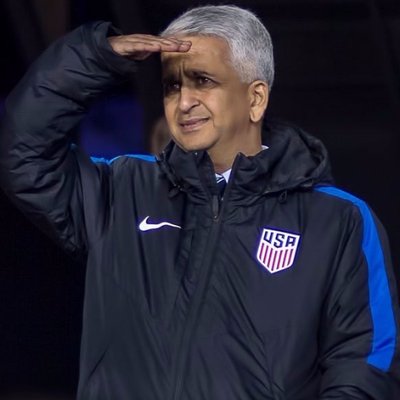
As the United States, Canada, and Mexico prepare to co-host the 104-match FIFA World Cup 2026, people of Indian origin across the Americas have a special reason to celebrate the tournament. At the center of that story is Sunil Gulati, the Indian American soccer executive widely credited with helping transform the sport’s landscape in the United States.
In the more than century-long history of the U.S. Soccer Federation, few figures have had a greater impact on the growth and development of the sport than Gulati. Born to a family that migrated from Allahabad, India, after the 1947 Partition, Gulati later moved to the United States with his parents and grew up in Connecticut.
An economist by training, Gulati has balanced an accomplished academic career with decades of service to soccer. A former World Bank economist, he currently serves as a senior lecturer in economics at Columbia University, where his sports economics course is among the institution’s most popular offerings. In recognition of his contributions to the game, he was inducted into the National Soccer Hall of Fame in 2019.
Former U.S. Soccer President Alan Rothenberg once summarized Gulati’s influence by stating, “Sunil is the single most important person in the development of soccer in this country.”
Gulati made history as the first person of Indian descent to reach the highest levels of leadership in both U.S. Soccer and FIFA, the sport’s global governing body. He was elected president of the U.S. Soccer Federation in 2006 and was re-elected twice, serving a total of 12 years. During his tenure, U.S. Soccer experienced significant growth. The U.S. Women’s National Team won two FIFA Women’s World Cups, while the men’s national team qualified for five consecutive World Cups. The United States also hosted consecutive Women’s World Cups and the successful 2016 Copa América Centenario.
Beyond domestic achievements, Gulati played a key role in strengthening the United States’ influence within international soccer. Elected to FIFA’s Executive Committee, now known as the FIFA Council, in 2013, he helped position the United States among the sport’s most influential decision-makers.
One of his most significant accomplishments was leading the effort to unite the United States, Canada, and Mexico in a joint bid for the 2026 FIFA World Cup. The successful bid marked the first time three nations joined forces to host the tournament. Featuring a record 104 matches, the competition is expected to further accelerate soccer’s growth across North America and generate lasting interest in the sport.
At FIFA, Gulati has served on several influential committees, including the Confederations Cup Committee, Strategic Committee, Youth Competitions Committee, FIFA Task Force Football 2014, and the FIFA Ticketing Subcommittee. He was also appointed to FIFA’s Independent Governance Committee, which was tasked with recommending reforms to strengthen governance within the organization.
Gulati is also recognized for his longstanding support of women’s soccer. A strong advocate for the women’s game, he played a leading role in establishing the National Women’s Soccer League (NWSL), which has become the most successful and sustainable professional women’s league in U.S. history. The league has provided an important platform for the development of players, coaches, and referees.
His involvement in soccer spans more than four decades. During the 1980s and early 1990s, Gulati became a key figure in the United States’ preparations for the 1994 FIFA World Cup, a tournament that remains one of the most successful in World Cup history. He later served as Deputy Commissioner of Major League Soccer (MLS) following its launch in 1996, helping shape the league’s early development through strategic player acquisitions and organizational growth.
From 1999 to 2011, Gulati served as president of Kraft Soccer Properties. Prior to becoming U.S. Soccer president, he was the federation’s executive vice president from 2000 to 2006 and led significant governance reforms during his final year in that role. Over the years, he has held numerous leadership positions within the federation, including interim general secretary, managing director of national teams, chairman of the International Games Committee, chairman of the National Teams Committee, and chairman of the Technical Committee. He has also served on the U.S. Soccer Board of Directors since 1995.
Gulati additionally chaired the U.S. bid effort for the 2022 FIFA World Cup and played a leading role in initiatives such as Project 2010, U.S. Cup ’92, and U.S. Cup ’93, which helped elevate the sport’s profile ahead of the 1994 World Cup. He also served on the boards of the FIFA Women’s World Cup USA tournaments in 1999 and 2003. Today, he continues his involvement in the sport as a member of the Board of Directors of the U.S. Soccer Foundation.
Academically, Gulati graduated magna cum laude and Phi Beta Kappa from Bucknell University before earning both an M.A. and M.Phil. in economics from Columbia University. He joined Columbia’s economics faculty in 1986 and later worked at the World Bank through its Young Professionals Program, serving as a country economist for Moldova. He currently serves as the Michael K. Dakolias Senior Lecturer in Economics at Columbia University.
Gulati and his wife, Marcela, have two children, Emilio and Sofia, and reside in New York City. His induction into the National Soccer Hall of Fame in 2019 stands as a testament to a career that has helped shape soccer’s growth in the United States and elevate its standing on the global stage.