

The Sanctions Switch: Zimbabwe as a Model for a New Approach
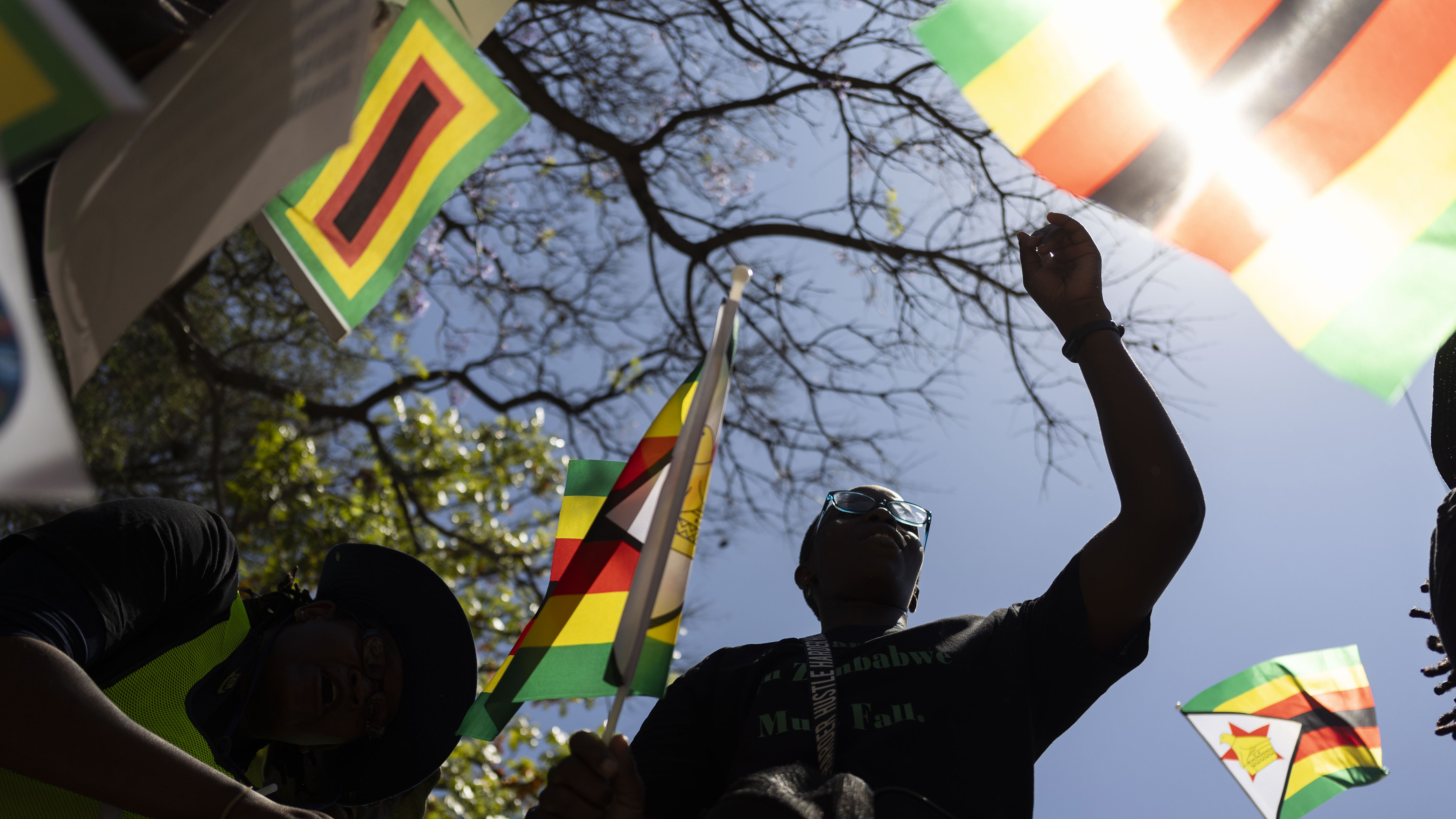
Greenlighting Zimbabwe Sanctions
In the case of Zimbabwe, three EOs were issued by President Bush between 2003 and 2008, generally in line with similar actions taken by the United Kingdom. The first EO (EO 13288) declared the national emergency to be based on “the actions and policies of certain members of the Government of Zimbabwe and other persons to undermine Zimbabwe’s democratic processes or institutions, contributing to the deliberate breakdown in the rule of law in Zimbabwe, to politically motivated violence and intimidation in that country, and to political and economic instability in the southern African region.”
Unlike current best practices, where targeting is undertaken through the issuance of steady and slowly escalating tranches of sanctions that can be carefully messaged to the targets (and those not yet targeted), EO 13288 targeted 77 high-level individuals, companies, and properties at once, up to and including President Mugabe and senior officials of ZANU-PF, their family members, and most key entities and companies in the Zimbabwean economy. Similarly, there were no substantive criteria in the EO; the names were simply listed in an annex without explanation as to what they were alleged to have done or, importantly, what they may be able to do to be removed from the list. (Note: This was not sloppy or incomplete work, but rather it reflects how presidential annexes and Treasury sanctions packages were constructed and issued in the early, post-9/11 period, when the use of sanctions began to truly transform. By the late 2000s, those practices had evolved further into the practices generally seen today.)
The subsequent EO in 2005 (EO 13391) expanded the sanctions target list to a total of 128 individuals and 33 entities, principally the farms from which white farmers had been evicted. EO 13391 also added one substantive sanctions criterion—“to have engaged in actions or policies to undermine Zimbabwe’s democratic processes or institutions”—as well as derivative criteria related to those targets (i.e., their family members, those providing assistance to them, and any property they owned). This allowed for more designations in the subsequent years. By 2008, when the final EO (EO 13469) was issued, there was more focus and transparency—in line with current practices. This EO expanded the criteria to include anyone who was a “senior official of the Government of Zimbabwe” or involved in human rights abuses, political repression, or public corruption.
The response from Zimbabwe was strong and immediate, and it remained consistent during the two-plus decades the sanctions were in place. President Mugabe and ZANU-PF denounced the sanctions in the strongest terms—for example, “racist, “neo-colonialist” and “illegal.” ZANU-PF quickly turned them into a propaganda tool, blaming sanctions for the economic ills of the country, alleging losses in the hundreds of billions.
Searching for an Off-Ramp
By the time President Joe Biden entered the White House in 2021, the Zimbabwe sanctions had become a procedural irritant at best and a policy obstacle at worst. To be clear, the Zimbabwean government remained unrepentant, despite a government of national unity with the opposition between 2009 and 2013 and Mugabe’s dramatic ouster from power in 2017 by his longtime comrade-in-arms Emmerson Mnangagwa.
The challenge, unfortunately, was that the sanctions program had become a distraction and increasingly indefensible. For a variety of reasons, the sanctions became more or less the only policy topic or debate in the bilateral relationship with Zimbabwe, overshadowing hundreds of millions of dollars of assistance provided by the U.S. government and other avenues of engagement. For ZANU-PF, fighting the sanctions became something of a raison d’être, and the United States too often could not point to the larger policy or strategy the sanctions were supposedly advancing. Many inside the U.S. government, as well as the Zimbabwean government and other stakeholders, increasingly felt that the sanctions themselves had become the policy, rather than a tool to advance policy.
In the intervening years, to try to ease these pressures, efforts had been made to cull the sanctions list to remove individuals who had died, were no longer active in politics, or had made clear breaks from ZANU-PF. Importantly, additions were also made, principally targeting so-called foreign enablers, such as Chinese investor and arms dealer Sam Pa and Kudakwashe Tagwirei, one of the key business partners of President Mnangagwa.
As discussions began at the State Department in the fall of 2022 to consider ending or transitioning the sanctions program, there were close to 100 individuals and entities remaining on the sanctions list connected to Zimbabwe. Despite regular efforts to update the list, there were designated individuals who had passed away (Mugabe, most notably). It was hard to even verify who or what some of the named individuals or farms were and why they were on the list in the first place, since the original listings did not come with a press release or a designation criterion. Moreover, the U.S. government was facing legal challenges from some former regime officials to get off the list. In other words, there was a clear need for some policy hygiene and a thorough scrub of the program.
Prioritizing Teamwork
The deeper issue affecting U.S. policy objectives, however, was that Zimbabwe sanctions had become a factor in U.S. relations with the rest of southern Africa. In 2019, the Southern African Development Community (SADC) designated October 25 as “a day for solidarity against sanctions imposed on Zimbabwe by the European Union, United States, and United Kingdom.” The Zimbabwean government had managed to reframe for its population and the broader region that it was the sanctions that were responsible for the country’s economic woes, which resulted in a flood of migrants into neighboring countries. It had become a cause célèbre, with an annual SADC celebration every year. In fact, African leaders started to raise the issue with Biden, including South African President Cyril Ramaphosa in the Oval Office in September 2022. U.S. policy goals in the region were at risk of being derailed by the sanctions debate. The Biden administration decided it needed to reevaluate the program, revamping it to better align with current policy objectives.
This became a guiding principle for the sanctions rethink. It was imperative to work with regional partners in any shift in U.S. approach toward Zimbabwe. This collaboration was integral to success. If a new approach generated further criticism from southern African governments, it was all for naught. And, conversely, if there was public support, or even a muted response, it would validate the entire exercise. Thus, U.S. officials initiated a dialogue with counterparts in the region about revising sanctions. It happened in Washington, D.C., coffee houses and in African capitals, even on the margins of the U.S.-Africa Business Summit. To be clear, the United States was not jointly plotting every step with its regional counterparts (or even agreeing on the final outcome), but there were important temperature-takings and quiet discussions about what progress might look like. This was invaluable to developing an approach that could adjust the way the United States used the sanctions tool while remaining focused on a strong policy overall on Zimbabwe.
Moving in a New Direction
The task the U.S. government set out for itself was significant: How does one retire an increasingly problematic sanctions programs without giving a free pass to a regime that continued to commit gross abuses of political, economic, and human rights? Fortunately, there was a new tool the U.S. government could turn to. The Global Magnitsky program (GloMag) was passed as a law by Congress at the end of the Obama administration and implemented by the first Trump administration in late 2017 through EO 13818. GloMag targets those responsible for serious human rights abuse or corruption anywhere in the world. Thus, there previously would have been essentially a binary choice: either removing the sanctions entirely and then dealing with the potential fallout or maintaining the program and continuing the messaging that was no longer landing with the intended audiences. GloMag presented a third way, which offered several advantages, including the following:
- As noted above, the Zimbabwe program already included human rights abuse and corruption as key criteria, such that the evidence and messaging would easily align.
- GloMag is a global program, allowing the administration to reference Zimbabwe’s targets alongside those from around the world and enabling a move away from singling out Zimbabwe as a national emergency over many other countries facing serious human rights and corruption issues that were not subject to the same treatment.
- GloMag had been positively received as a sanctions tool by SADC members (at least privately), particularly South Africa in the context of the designation of the Gupta network and Angola in the case of a network that had embezzled billions.
- It enabled the United States to update its approach, refocusing on new instances of corruption, such as Zimbabwe’s role in a massive, sophisticated network of gold smuggling and money laundering. It recentered U.S. sanctions on current violations, not actions perpetrated decades ago.
The decision to switch sanctions programs was not made overnight. U.S. officials spent close to two years, starting in the fall of 2022, to develop a plan of action and consult widely about the best way forward. In contrast to some policy actions, it was a truly deliberative process, which included direct and indirect conversations with congressional staffers, U.S.-based activists focused on Zimbabwe, and a handful of African officials. It also benefited from having a champion in the White House, providing focus and top cover for a major change in approach to achieve U.S. policy goals. This allowed U.S. officials to stress-test the idea, incorporating constructive feedback and securing buy-in from key stakeholders. While some interagency colleagues wanted to immediately dismantle the program, the consensus decision was to proceed slowly to keep different constituencies on board. In December 2022, the United States designated four Zimbabwean individuals (including President Mnangagwa’s son) and two Zimbabwean entities under various criteria pursuant to EOs 13391 and 13469, while removing seventeen Zimbabweans at the same time.
Credit: Source link
Comments are closed.