

Explainer: Russia’s Grip on Its Neighbors Is Loosening
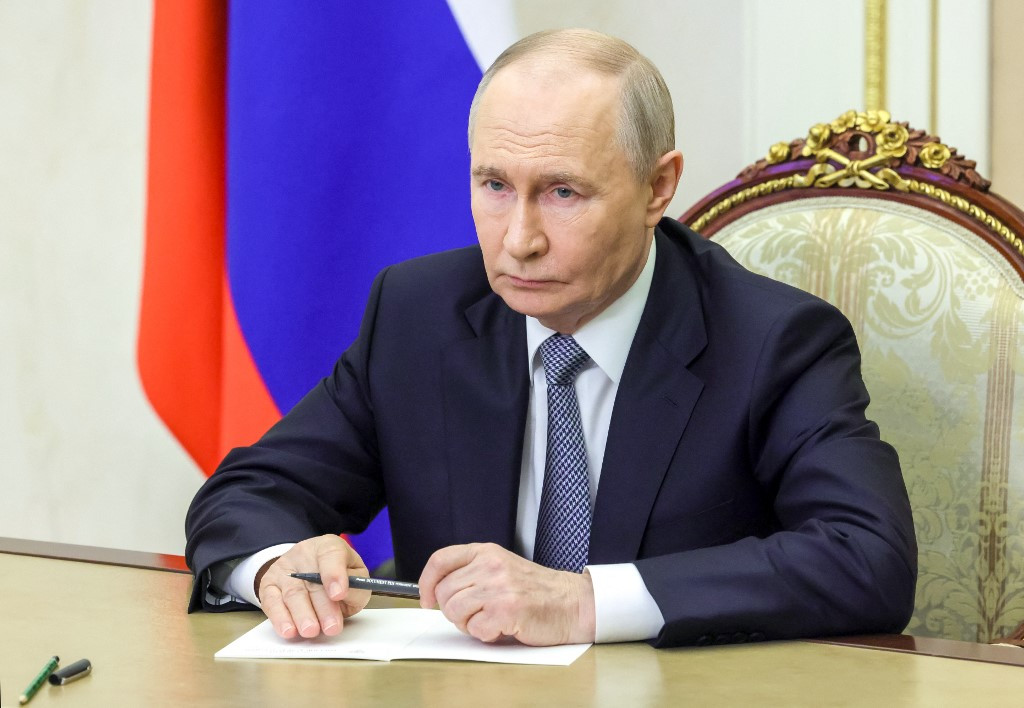
Russia’s war on Ukraine has triggered a massive geopolitical shift – not only in the Kremlin’s deteriorating relations with the West, but also across its decades-old sphere of influence in the former Soviet space and beyond.
With Russian ruler Vladimir Putin currently visiting Kazakhstan on a state trip, Kyiv Post examines how Moscow’s relations with neighboring countries are evolving as the war drags on.
JOIN US ON TELEGRAM
Follow our coverage of the war on the @Kyivpost_official.
Kazakhstan
Kazakhstan is the largest country in Central Asia, sharing the world’s longest continuous land border with Russia and hosting a significant ethnic Russian minority in its northern regions.
Despite repeated attempts by Russian nationalists to question Kazakhstan’s statehood and territorial integrity – especially since 2022 – President Kassym-Jomart Tokayev has maintained a careful balancing act, preserving economic and security ties with Moscow while simultaneously deepening relations with China, Türkiye, the EU, and the United States.
Astana has also maintained indirect ties with Kyiv by refusing to recognize Russia’s claims over the so-called rogue republics of “DNR” and “LNR,” citing international law as the basis for its position.
Kazakhstan likewise rejected deeper military integration proposals within the CSTO (Moscow’s’equivalent’ of NATO) framework while being careful not to become a full-scale sanctions loophole for Moscow, despite pressure and the complexity of its economic relationship with Russia.
Other Topics of Interest
‘You No Longer Belong to Yourself Here’
A woman who once planned her future abroad returned to Ukraine and joined the army. Today, as an evacuation medic, “Bandana” helps keep wounded soldiers alive.
Instead, the country expanded military cooperation with NATO member Türkiye. In May 2022, during Tokayev’s visit to Ankara, Kazakhstan signed a memorandum on military-technical cooperation involving the assembly and maintenance of Turkish ANKA drones under license.
Aibek Barysov, chairman of Kazakhstan’s Association of Defense Industry Enterprises, later openly stated that NATO standards are “more modern and safer,” making them more attractive for Kazakhstan’s defense sector.
The tensions occasionally spill into public view. During a meeting with Putin in the Kremlin in 2024, Tokayev notably delivered part of his speech in Kazakh – a subtle but symbolic gesture given Moscow’s rhetoric surrounding Russian language and influence in the post-Soviet space.
Relations deteriorated further after Russia halted Kazakh oil exports to Germany via the Druzhba pipeline – a key route supplying Germany’s strategically important PCK Schwedt refinery – citing alleged “technical reasons.”
Meanwhile, the Court of the Astana International Financial Centre (AIFC) authorized the enforced recovery of Gazprom assets in favor of Ukraine’s Naftogaz worth $1.4 billion.
Ahead of the visit, Putin published an article praising the “good relations” between Moscow and Astana. Still, regardless of the summit’s outcome, the broader tensions are unlikely to disappear. That is one of the reasons why Kazakhstan has increasingly looked toward the Trans-Caspian route, deeper ties with China, and expanded transport and energy corridors that reduce dependence on Russian territory.
Armenia
Armenia was long considered one of Russia’s closest allies in the South Caucasus. It hosted a Russian military base, relied heavily on Moscow for security guarantees, belonged to the CSTO, and remained deeply tied to Russian energy and trade networks.
Although Yerevan expressed only limited support for Ukraine at the beginning of the full-scale invasion, the Nagorno-Karabakh conflict fundamentally altered the relationship.
For years, Armenia depended on Russia as a security guarantor in its standoff with Azerbaijan. But when Baku launched military operations and eventually regained control of Nagorno-Karabakh in 2023, many Armenians saw Moscow’s response as abandonment. Russian peacekeepers were present in the region, yet the Kremlin did little to prevent the outcome.
Since then, Yerevan has steadily moved away from Moscow.
Armenia froze its participation in the CSTO, deepened ties with the European Union and the United States, and increasingly positioned itself as a potential bridge between Europe and Asia rather than merely a Russian outpost in the Caucasus.
It also expanded cooperation with Ukraine. In 2023, Armenia sent its first humanitarian aid shipment to Kyiv, followed by additional assistance packages in both 2024 and 2025.
The shift became especially visible in 2026 when Armenia hosted the European Political Community summit in Yerevan, attended by figures including Emmanuel Macron and Ukrainian President Volodymyr Zelensky.
Despite Kremlin threats that Armenia could lose preferential gas pricing if it continued moving away from Russian-led structures – accompanied by increasingly hostile Russian state propaganda targeting Prime Minister Nikol Pashinyan – Yerevan continues pursuing its own line.
On May 26, US Secretary of State Marco Rubio visited Yerevan to sign what was described as a Charter on Comprehensive and Strategic Partnership alongside Armenian Foreign Minister Ararat Mirzoyan.
The sides also signed a framework agreement concerning the “Trump Route for International Peace and Prosperity,” envisioned as part of the Middle Corridor trade network and linked to the Armenian-Azerbaijani provisional peace agreement signed in Washington last year.
Meanwhile, Pashinyan – currently campaigning ahead of elections – has pledged to negotiate visa-free travel with the EU within two years. His Civil Contract party currently leads Armenian polling.
Moldova
For decades, negotiations over Transnistria – the Russian-occupied separatist region inside Moldova – centered around granting the territory a form of “special status” within Moldova as part of a broader political settlement.
That approach is now changing.
Instead of focusing primarily on political symbolism and autonomy arrangements, Chișinău increasingly prioritizes technocratic reintegration: economic harmonization, unified customs and tax systems, infrastructure integration, and gradual demilitarization.
Part of this shift is already visible in practice. Moldova has begun removing special tax and customs privileges previously enjoyed by Transnistrian businesses while gradually integrating the region into Moldova’s broader economic and regulatory system.
The European Union appears increasingly supportive of this strategy.
During a recent visit to Chișinău, EU foreign policy chief Kaja Kallas stated that the withdrawal of Russian troops from Transnistria should become part of Europe’s future demands toward Moscow. She also stressed that the unresolved conflict should not obstruct Moldova’s European integration.
For the Kremlin, however, this shift represents a direct challenge to Russian influence.
After failing to interfere with Moldova’s 2025 parliamentary elections – which saw pro-EU President Maia Sanduretain power – Moscow renewed emphasis on passportization and the “protection of Russian citizens” narrative.
In May, Putin signed a decree simplifying the issuance of Russian passports to Transnistrian residents, raising concerns in both Kyiv and Chișinău.
Azerbaijan
President Ilham Aliyev continues to maintain pragmatic relations with Moscow and has avoided openly confronting the Kremlin.
Still, relations between Russia and Azerbaijan have visibly deteriorated since the full-scale invasion of Ukraine.
One turning point came after the December 2024 crash of an Azerbaijani passenger aircraft near Aktau in Kazakhstan, which Azerbaijani officials and analysts increasingly linked to a Russian missile strike. Moscow’s refusal to fully acknowledge responsibility triggered a wave of anti-Russian sentiment in Azerbaijan and contributed to broader tensions.
Relations worsened further in 2025 after Russian police raids targeting ethnic Azerbaijanis in Yekaterinburg reportedly resulted in deaths in custody, prompting outrage in Baku. Azerbaijan responded by suspending several cultural exchanges with Russia, canceling diplomatic meetings, and raiding the local office of Russian state outlet Sputnik Azerbaijan.
At the same time, Azerbaijan has quietly expanded cooperation with Ukraine.
In January 2025, Zelensky met Aliyev amid growing tensions between Baku and Moscow. Azerbaijan consistently supported Ukraine’s territorial integrity and provided Kyiv with humanitarian and energy assistance throughout the war.
By 2026, ties deepened further. Zelensky visited Azerbaijan for talks focused on security and energy cooperation, while Aliyev publicly emphasized Azerbaijan’s strategic independence amid the changing regional order.
Energy and logistics play a central role in Azerbaijan’s growing importance.
As Europe reduces dependence on Russian energy, Azerbaijan increasingly serves as part of the infrastructure connecting Central Asia and the South Caucasus to European markets through routes bypassing Russia altogether – one of the more significant long-term geopolitical consequences of the war.
Georgia
Georgia presents something of a regional exception – at least at the governmental level.
Despite Russia invading the country in 2008, occupying roughly 20% of its internationally recognized territory through Abkhazia and South Ossetia, and spending years pressuring Tbilisi through “borderization” tactics, Georgia’s government has moved in an increasingly Russia-friendly direction in recent years.
Following the full-scale invasion of Ukraine, the ruling Georgian Dream party adopted a cautious approach toward Moscow, refusing to impose sanctions, avoiding harsh anti-Russian rhetoric, and repeatedly insisting that Georgia must not become “a second front” against Russia.
Prime Minister Irakli Kobakhidze and other senior officials increasingly portray the West – rather than Russia – as the force allegedly trying to drag Georgia into war.
Relations between Tbilisi and the EU deteriorated sharply after the adoption of the controversial “foreign agents” law, widely compared to Russian legislation used to suppress civil society and independent media. The move triggered mass protests, condemnation from Brussels and Washington, and effectively froze Georgia’s EU accession process despite overwhelming public support for joining the bloc.
Meanwhile, economic ties with Russia quietly deepened.
Trade turnover increased significantly after 2022, Russian migrants and businesses relocated to Georgia in large numbers, and direct flights between Russia and Georgia resumed after years of suspension.
Yet Georgian society itself remains deeply anti-Russian.
Following the 2024 parliamentary elections – widely criticized by the opposition as rigged – mass pro-European protests demonstrated that many Georgians still view Russia as the country’s principal threat. Polling consistently shows overwhelming support for EU and NATO integration despite the government’s increasingly confrontational stance toward Western institutions.
Hungary and Serbia
Hungary’s relationship with Russia entered a new phase after Péter Magyar replaced Moscow-friendly former Prime Minister Viktor Orbán.
Orbán’s government repeatedly delayed sanctions packages, criticized military aid to Ukraine, and framed Brussels rather than Moscow as the primary threat to Hungarian sovereignty.
While Magyar is hardly fully aligned with Kyiv – particularly amid ongoing tensions surrounding Hungarian minority rights in Transcarpathia – his government has nevertheless moved Hungary closer to the European mainstream on Ukraine.
One of the clearest signals came when Budapest dropped its objections to a major EU financial assistance package for Kyiv, unblocking billions in European support after months of deadlock.
Hungary also summoned the Russian ambassador following strikes on Transcarpathia – a move the Orbán government had consistently avoided.
Serbia presents the more unexpected case.
For decades, Moscow cultivated the image of Serbia as a “brotherly” Slavic and Orthodox nation emotionally tied to Russia through religion, anti-Western sentiment, and shared grievances over NATO and Kosovo.
But even that relationship now appears to be changing.
In a recent interview with Politico, Serbian Parliament Speaker Ana Brnabić openly pushed back against the notion that Serbia maintains “fraternal” ties with Russia.
“I would not exactly say we have brotherly relations with Russia,” she said, despite President Aleksandar Vučićcontinuing to maintain communication with Putin.
Brnabić insisted that Serbia is “fully aligned” with the EU on core values and reiterated Belgrade’s support for Ukraine’s territorial integrity, explaining Serbia’s refusal to impose sanctions on Moscow through the legacy of sanctions imposed on Yugoslavia during the 1990s.
At the same time, Serbia has quietly expanded military exports that Western analysts believe indirectly reached Ukraine through third countries – something Belgrade has never fully denied.