

Ali Haddad: Algeria’s oligarch who lost everything
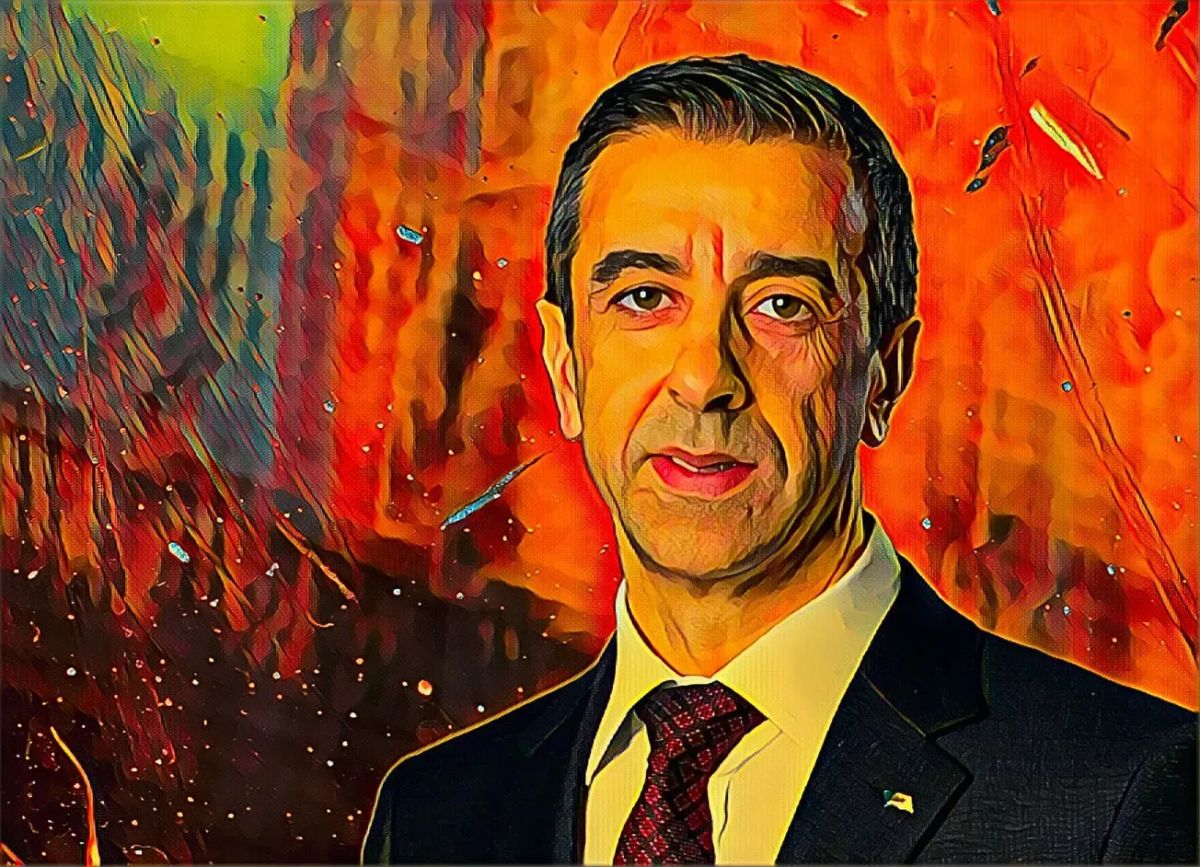
The arrest happened in the early hours of March 31, 2019, at a crossing on the edge of Algeria and Tunisia. Ali Haddad, the founder of the country’s largest private construction group and president of its most powerful employers’ organization, was stopped trying to leave the country. He was carrying two valid passports and a mix of foreign currencies. Within hours, President Abdelaziz Bouteflika, the man whose orbit Haddad had built much of his fortune within, was gone too, forced out by the army after twenty years in power. It was one night. It ended everything.
Haddad was born on January 27, 1965, in Azeffoun, a coastal town in the Tizi Ouzou province of Kabylie, Algeria. He studied at Mouloud Mammeri University of Tizi-Ouzou, graduating in 1988, and moved directly into business. In 1987, a year before founding his construction group, he and his brothers had already opened Le Marin, a seafront hotel in Azzefoun. The instinct to build was there before the money was.
He co-founded ETRHB (Entreprise des Travaux Routiers, Hydrauliques et Bâtiments) with his five brothers in 1988. In 1993, ETRHB signed its first significant contract, a 1 million euro deal to construct a highway in Kabylie. It was modest. What followed was not. By 2002, ETRHB was the largest privately owned construction company in all of Algeria, displacing every competitor in a market that foreign firms had long dominated.
Between 2006 and 2015, ETRHB’s turnover grew from $70 million to $400 million, with profits exceeding $150 million. The group expanded in multiple directions at once. In 2003, ETRHB entered the bitumen sector. In 2006, it launched SAVEM Spa, a vehicle distribution subsidiary. In 2009, Haddad added a media operation, publishing two newspapers and launching two television channels, giving him reach over public discourse that matched his grip on physical infrastructure. In 2010, he acquired 83% of USM Alger, one of Algeria’s most historic football clubs, for 700 million dinars. By 2015, ETRHB’s total assets were estimated at 99 billion dinars, close to one billion euros.
The international chapter of his empire revealed ambitions that extended far beyond Algeria. In 2011, Haddad acquired El Palace Barcelona, the former Ritz and one of the city’s most prestigious five-star establishments, for approximately €67.6 million through a Spanish holding company. He later added Hotel Miramar Barcelona and Gran Hotel La Florida to the portfolio. Three of Catalonia’s grandest hotels, owned by a builder from Kabylie.
In November 2014, Haddad was elected president of the Forum des Chefs d’Entreprises, Algeria’s most influential private sector employers’ organization, a position that placed him at the intersection of business and political power. In November 2017, then-US Secretary of State Rex Tillerson gave Haddad a personal copy of the 1795 Peace and Friendship Treaty between Algeria and the United States, a symbolic gesture that underlined how far his influence had traveled.
The fall was proportionate to the height. At the time of his arrest, prosecutors said ETRHB had accumulated more than 450 bank credits exceeding €700 million and had been awarded over 270 projects worth approximately €7 billion, largely through political connections rather than competitive tenders. In July 2020, an Algerian court sentenced him to 18 years in prison and an 8 million dinar fine for illegally obtaining privileges, public contracts and squandering state funds. On appeal in November 2020, the sentence was reduced to 12 years. Additional convictions followed in 2021 and 2022.
In 2021, the Algerian Supreme Court rejected Haddad’s appeal and transferred the entire ETRHB group, all subsidiaries included, to the state treasury. The Barcelona hotels followed. In August 2025, the Algerian National Investment Fund officially received full ownership of El Palace Barcelona after a judicial transfer process completed through Spanish courts, closing the last visible chapter of his international portfolio.
Haddad is currently serving his sentence at Tazoult prison in eastern Algeria. His net worth, once estimated at $300 million, is now a matter for the courts rather than the markets. The company he spent three decades building belongs to the state. The hotels he bought in Barcelona belong to the state. What remains is the story: a man from a coastal Algerian town who built the biggest private construction empire in his country’s history, and lost every piece of it in the years that followed a single night at a border crossing.
Crédito: Link de origem