

Mali says April 25 attacks aimed to ‘decapitate’ leadership, vows no talks with armed groups
Oumar Sankare
08 May 2026•Update: 08 May 2026
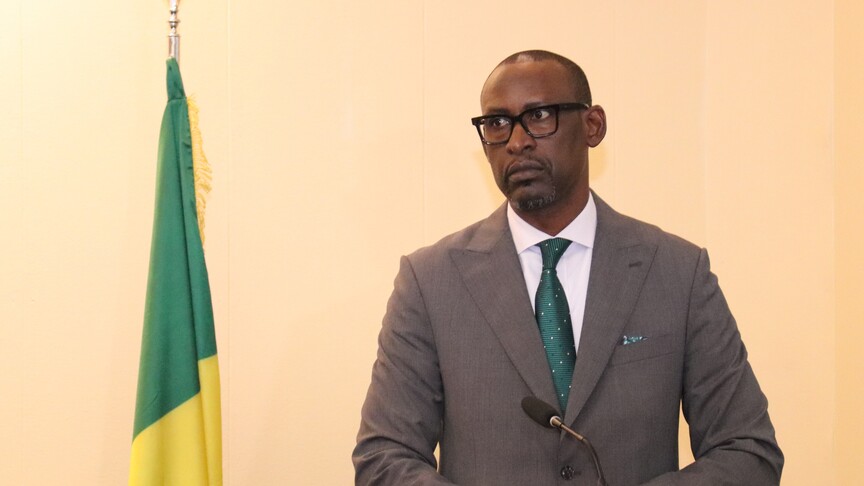
Malian Foreign Minister Abdoulaye Diop said Thursday that the April 25 coordinated attacks were part of a broader effort to destabilize the country and overthrow its transitional leadership.
He accused unnamed foreign-backed sponsors of supporting armed groups operating in the north.
Speaking at a media briefing with diplomats accredited to Mali, Diop said the attacks targeted strategic state figures and institutions, including the residence of transitional President Gen. Assimi Goita in Kati, and the home of late Defense Minister Gen. Sadio Camara, who was killed.
“What happened on April 25 aimed at nothing less than decapitating the country’s leadership,” said Diop. “Mali will not bow down.”
He said the attacks were “complex, coordinated and planned with internal and external sponsors,” and claimed armed groups in northern Mali had allied with terror organizations — something he said authorities had warned about since the attack on a Timbuktu boat in September 2023.
Diop also accused Ukraine of having “publicly claimed logistical support for terrorism operating in the Sahel,” while describing the conflict as a “hybrid war” conducted by proxy against Mali and the Alliance of Sahel States (AES), which includes Mali, Burkina Faso and Niger.
He said Mali would not negotiate with terror-armed groups, particularly those aligned with the Front de Liberation de l’Azawad (FLA), but added that authorities remained open to accepting repentant fighters willing to return to the “republican framework.”
The minister said additional security measures had been deployed nationwide, including around diplomatic missions, and confirmed that a judicial investigation opened by Bamako’s military tribunal on May 1 remained ongoing.
“The state of Mali remains standing. Mali may sway, but Mali will not capsize,” he said.
Russian Ambassador Igor Gromyko, dean of the diplomatic corps in Bamako, condemned the April 25 attacks and expressed solidarity with Mali’s authorities and population.
“These barbaric attacks directed against the civilian population and state institutions are totally unjustifiable,” he said at the briefing, adding that Moscow stood ready to provide “necessary assistance to its Malian friends.”
Gromyko also praised the Malian armed forces and said the attacks had been repelled “with the support of the Africa Corps of the Russian Defense Ministry.”
Mali has faced persistent insurgencies linked to armed groups and separatist factions for more than a decade. The transitional authorities, led by Gen. Assimi Goïta since a 2021 military takeover, have increasingly shifted security partnerships toward Russia while distancing themselves from Western allies, particularly France.
France completed the withdrawal of its troops from Mali in 2022 after deteriorating relations with transitional authorities, who accused Paris of violating Mali’s sovereignty and failing to effectively address insecurity. French forces had been deployed in Mali since 2013 under anti-jihadist operations.
Bamako has since strengthened military and political cooperation with Russia, which has become one of the transitional leadership’s main security partners. Malian authorities have also deepened coordination with Burkina Faso and Niger through the Confederation of Sahel States and its unified regional force.
The Malian government said the April 25 attacks killed civilians and military personnel, including Camara, whom authorities have since described as a national hero.
Credit: Source link