

2030 World Cup in Morocco, Portugal, Spain could be hotter
The 2030 World Cup could be even hotter than 2026
The 2030 World Cup could have even bigger heat concerns than what plagued some matches this year in the U.S., Mexico and Canada.
Here are the hosts four years from now
In late December 2024, FIFA announced Morocco, Portugal and Spain would co-host the 2030 World Cup, after three opening matches in Argentina, Paraguay and Uruguay commemorate the 100th anniversary of the first World Cup.
June is winter in the Southern Hemisphere, so we’re not concerned about extreme heat for those opening matches.
Weather in your inbox
But north Africa and western Europe in summer is a different story.

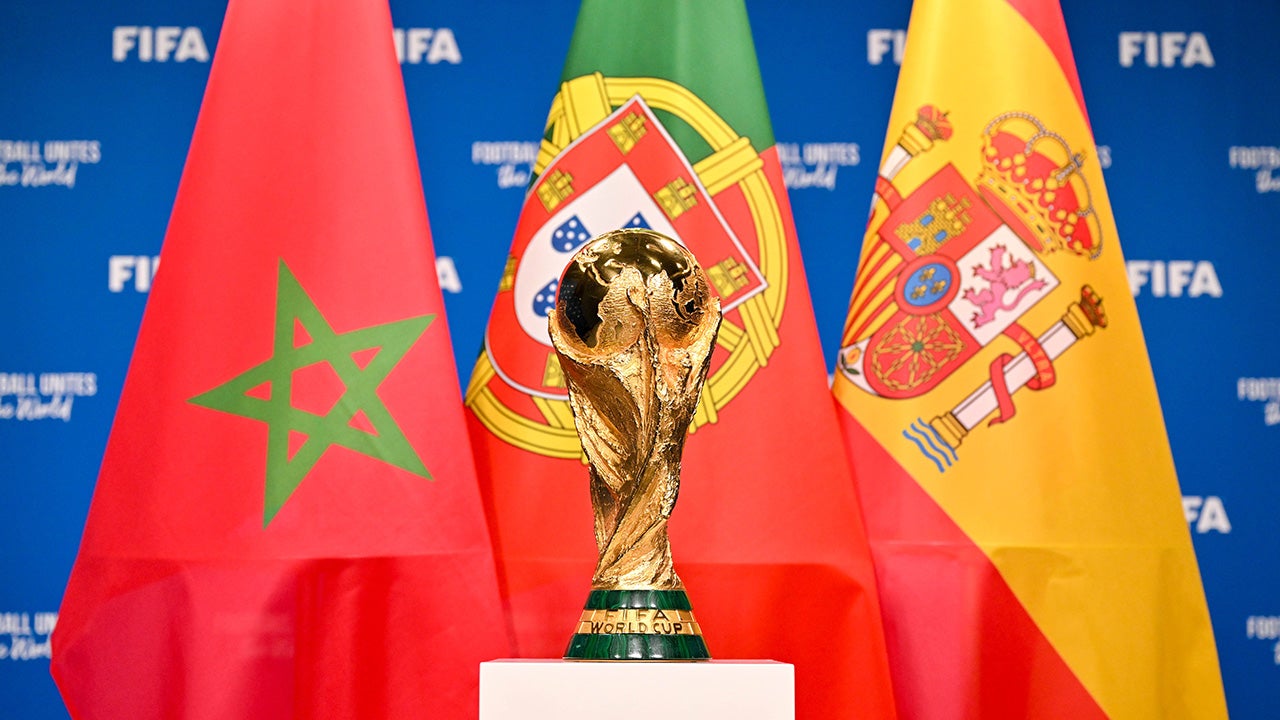
A view of the FIFA World Cup Winner’s Trophy with the flags of the FIFA World Cup 2030 hosts Morocco, Portugal and Spain during a trophy shoot at the Home of FIFA on December 11, 2024 in Zurich, Switzerland.
(Harold Cunningham – FIFA via Getty Images)
What’s average in June and July?
The sites and stadiums that will host the matches in 2030 in Morocco, Portugal and Spain are expected to be finalized by FIFA in December.
The possible hosting cities are a mix of those close to the coast and farther inland, and that can have a big impact on temperatures and humidity.
Cities closer to the coast, such as Barcelona, Casablanca and Lisbon, tend to benefit from cooler breezes from the Mediterranean Sea or Atlantic Ocean.
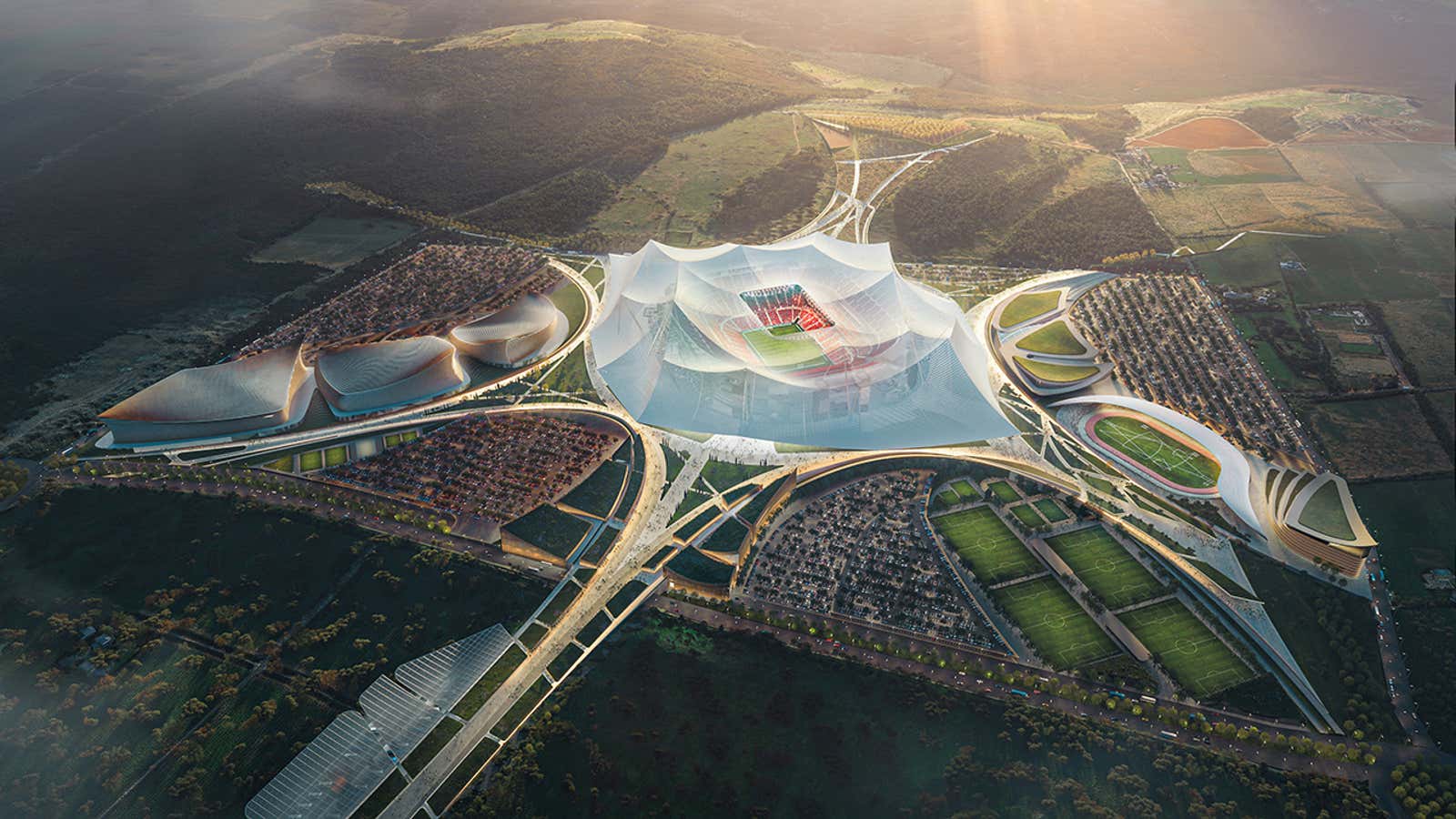
Image of the Grand Stade Hassan II football stadium to be finished near Casablanca, Morocco, in advance of the 2030 World Cup. It’s expected to have a capacity of 115,000 fans, the most of any football stadium in the world.
(Oualalou + Choi)
But more inland locations can be much hotter.
For instance, Madrid’s average highs in June and July range from the mid-80s to low 90s.
Two of Morocco’s inland candidate cities — Marrakesh and Fez — have average July highs in the mid-upper 90s.
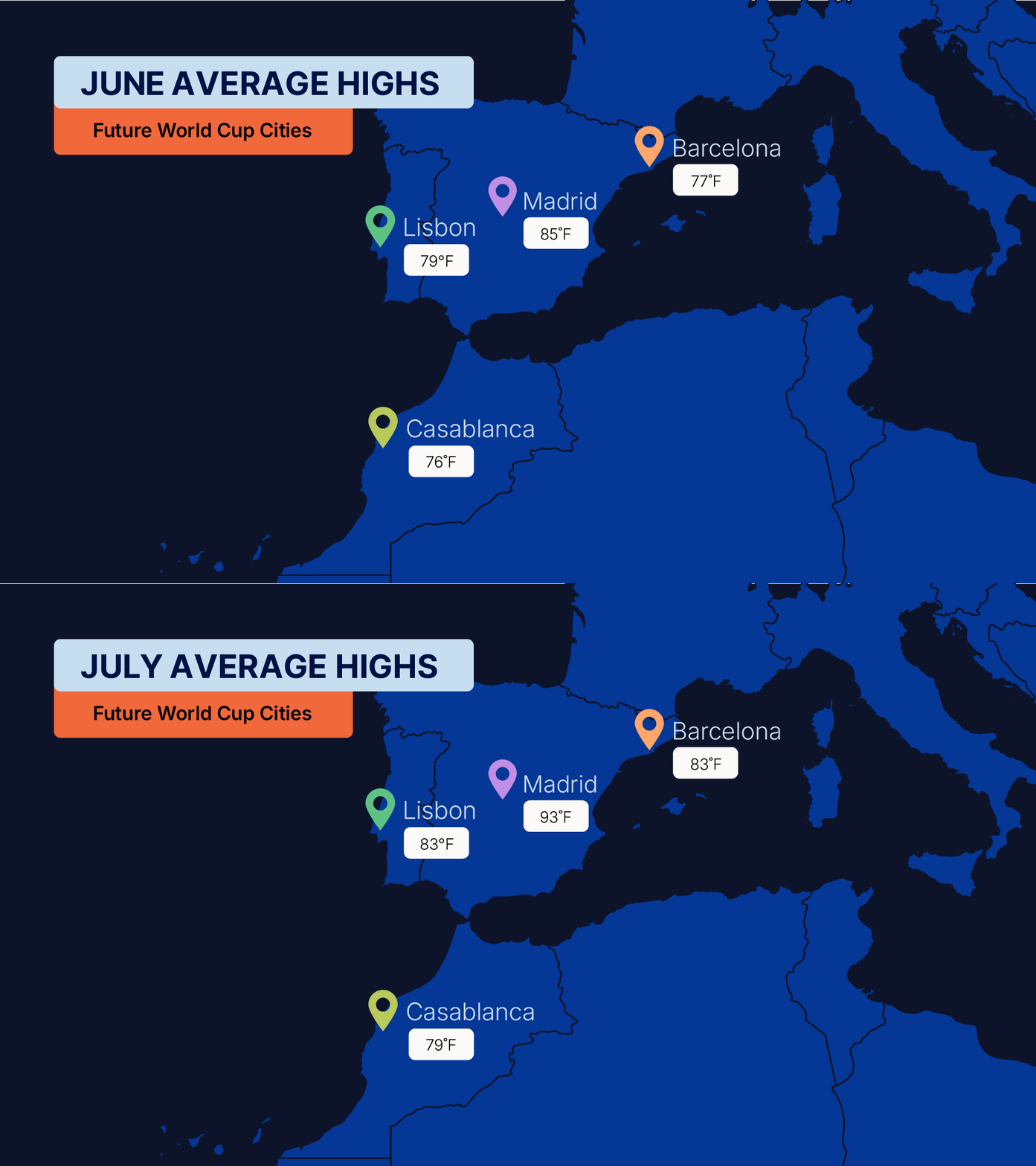
This animation shows average June and July temperatures for some likely host cities for the 2030 World Cup.
(Data: WMO)
It can get hotter
Those stats above are just averages.
Portugal and Spain were among the countries roasted by three separate heat waves from late May through mid-July this year.
Barcelona’s Fabra Observatory spiked to almost 105 degrees on July 8, its record high in over 100 years, according to the World Meteorological Organization. That happened just after western Europe had its record hottest June.
And on May 30, Madrid’s Barajas Airport soared to almost 98 degrees, 24 degrees hotter than their average May high temperature.
A national May heat record was smashed in Portugal (just over 104 degrees) as a heat dome piped in blistering hot air from Morocco.
So, if it can get that hot in May before the tournament starts, it’s certainly capable of that in June or July.
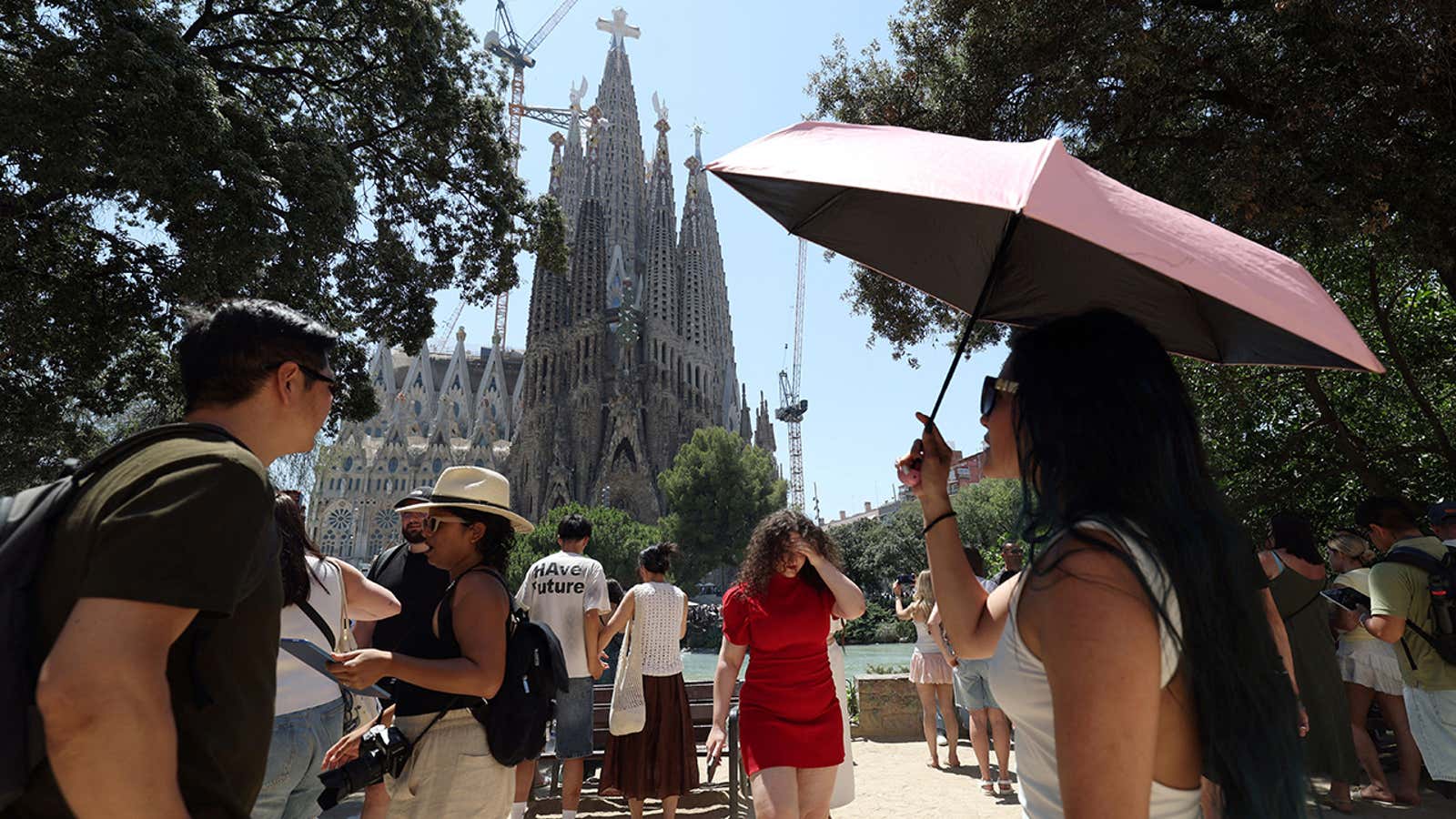
A woman uses an umbrella to protect from the sun during a heat wave while visiting La Sagrada Familia in Barcelona on July 7, 2026.
(Lluis Gene/AFP via Getty Images)
While some match sites may be closer to the cooler coast, given what we’ve seen in 2026, both in North America and Europe, it’s probably safe to assume FIFA will continue its policy of hydration breaks in 2030.
And if you think that 2030 is risky, the World Cup in 2034 is set to take place in Saudi Arabia, where summer temperatures can reach 120 degrees.
But while the exact dates have yet to be finalized, rest assured those 2034 matches will not be played in the heart of a Middle East summer.
Jonathan Erdman is a senior meteorologist at weather.com and has been covering national and international weather since 1996. Extreme and bizarre weather are his favorite topics. Reach out to him on Bluesky, X (formerly Twitter) and Facebook.
Credit: Source link