
👨🏿🚀TechCabal Daily – Dangote’s encore

Happy salary week! 
There’s something special about firsts, and we’ve got two worth talking about today.
 Voting for the first time in 2027? Our friends at Zikoko are profiling 50 first-time voters for an exclusive feature, and they want to hear your story! Fill out this form, and they’ll reach out.
Speaking of firsts, TC Mzansi launches TODAY!  At 12 PM WAT, the very first edition of our Southern African tech newsletter lands in inboxes. We’ve spent a week telling you what’s coming. Today, you get to see what we’ve been cooking.
There’s still room on the guest list. Join the waitlist and catch the first edition!
And there’s more. TC Daily is getting a redesign this week. We’re making some changes to give you an even more delightful reading experience. We can’t wait to show you what we’ve been working on and, of course, hear what you think.
—Emmanuel
TC Mzansi, our newsletter covering South African tech, launches today.
Don’t miss it

- Dangote weighs refinery share sale
- Baobab raises $50m
- Kenyan banks seek more time
- South Africa plans $5.7m AI fund
- World Wide Web 3
- Job Openings
Capital Markets
Dangote considers selling his personal shares as refinery IPO demand surpasses supply
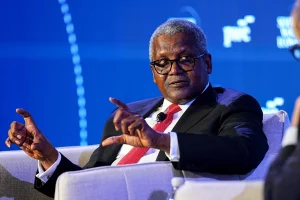
Aliko Dangote, the Nigerian billionaire and founder of the Dangote Group, is in talks with Nigeria’s Securities and Exchange Commission (SEC), the country’s capital market regulator, about selling part of his personal stake in Dangote Petroleum Refinery and Petrochemicals FZE, Bloomberg reported on November 19.
Explain like I’m new here: Dangote opened the refinery’s initial public offering (IPO) on September 14, offering investors a chance to own a piece of the business. The refinery initially offered about 4.1 billion shares at ₦525 ($0.40) per share, targeting ₦2.15 trillion ($1.6 billion). However, applications reached ₦5.85 trillion ($4.3 billion), with nearly 4 million investors.
In the original IPO, investors were buying shares offered by the refinery. In a secondary sale, an existing shareholder sells some of the shares they already own.
The IPO also included an option to sell up to 30% more shares if demand justified it. Dangote currently owns about 87.3% of the refinery. After the original offer, his stake would fall to roughly 84.4%. If the full additional share option is used, it would drop further to about 83.6%. A separate sale of his personal shares could provide another way to accommodate demand without requiring the refinery to issue more shares.
What does this mean for investors? The proposed sale could give investors who applied for shares but received fewer than they requested another chance to buy into the refinery. However, the discussions do not mean the sale has been approved or that every investor who applied will receive the shares they requested. The SEC still has to review the proposal and approve the final allotment.


Meet Fincra at PAPSS Cowry 2026 in Addis Ababa, Ethiopia.
Moving money across Africa? Meet Fincra at PAPSS Cowry 2026. Book a slot at Booth P2, Addis Ababa, 26–27 Nov. Book a meeting now.
Funding
Baobab raises $50 million in bonds to expand small business lending in West Africa

Baobab, the microfinance group owned by Egypt’s Beltone Holding, has raised CFA 30 billion ($50.2 million) through two sustainability-linked bond issues in Côte d’Ivoire and Senegal. The group raised CFA20 billion ($33.5 million) in Côte d’Ivoire and CFA10 billion ($16.8 million) in Senegal. Both bonds mature in five years, with a one-year grace period before principal repayments begin.
Explain like I’m new here: Baobab is in the business of lending money to people and businesses that traditional banks may overlook. In 2025, Baobab had a €957 million loan portfolio and €555 million in customer deposits. It disbursed €1.2 billion in loans during the year and reported a net profit of €1.47 million. By raising CFA francs in the markets where it operates, Baobab would not have to rely on foreign-currency borrowing, which can cause a mismatch between the currency it borrows and the currency in which it lends.
A new chapter: The fundraising comes about ten months after Beltone completed its $197.6 million acquisition of Baobab in January 2026. The deal gave the Egyptian financial services group an established microfinance network across seven African countries, including Senegal, Côte d’Ivoire, Mali, Burkina Faso, Madagascar, the Democratic Republic of Congo and Nigeria.
What it means: African small businesses face an estimated $331 billion shortfall in financing. Baobab bets its microfinance model can serve some of these businesses. The new money could help it extend more loans, particularly to women-led enterprises, while supporting private education providers and green projects.
You know your customers. Build cover that shows it.
You already have a great product. With MyCover.ai, create tailored insurance for your customers across fintech, e-commerce, logistics, and more, built around your product and their needs. Get started here .
Banking
Kenya’s big banks want more time
Kenyan banks and the central bank are already arguing over one capital deadline. Now, the country’s biggest lenders want to push it back further.
Top Kenyan banks have asked the Central Bank of Kenya (CBK) to delay new capital requirements by at least 12 months, arguing that implementing them during the 2027 election year could slow lending to businesses and households.
The rules are scheduled to take effect on January 1, 2027.
Explain like I’m new here: The CBK wants stricter rules for banks considered too important to fail. These are large, highly connected lenders whose collapse could disrupt the wider economy.
Under the proposed rules, these banks would have to hold additional capital buffers of 0.5% to 2.5% of their loan books. Banks falling below a specified capital ratio of 8.625% would also face restrictions on paying dividends to shareholders.
The idea is to ensure Kenya’s biggest lenders can absorb losses without risking the financial system.
Why the pushback? Kenya’s banks are worried about losing momentum. Private-sector credit growth recovered from a 2.9% contraction in January to 10.6% growth in September 2026.
The Kenya Bankers Association (KBA) argued that requiring banks to hold more capital could limit lending, particularly to small businesses and farmers, just as credit demand is recovering.
Another disagreement already exists: The CBK and Kenya’s Treasury are at odds over when all commercial banks must meet a KES 10 billion ($77 million) minimum capital requirement.
The CBK is sticking to December 2029, while Treasury wants to extend the deadline to 2032. The industry’s request for a one-year pause concerns different rules aimed specifically at the biggest banks.
Zoom out: Kenya’s smaller banks are fighting for more time to raise their minimum capital. Now, the largest lenders want more time to build additional buffers. The CBK wants a banking system strong enough to withstand a crisis. Banks want enough room to keep lending through an election year.
Venture Capital
South Africa returns from Silicon Valley with a $5.7 million AI plan

South Africa went to Silicon Valley with 300 delegates and big AI ambitions. It returned with a R100 million ($5.7 million) startup fund proposal, and the man who put the first money on the table wasn’t a Silicon Valley billionaire.
President Cyril Ramaphosa has announced plans for a venture capital fund to support South African AI and technology startups, with the government promising to match contributions from private investors.
Explain like I’m new here: South Africa wants to build a stronger AI industry, but developing AI products can be expensive. Startups need access to powerful computers, particularly graphics processing units (GPUs), to train and run AI models.
Between November 14–21, Ramaphosa led a week-long delegation of ministers, entrepreneurs, researchers, and students to California, the United States, to attract investment and learn from the world’s biggest AI companies. The delegation met executives from Google, Microsoft, and Cisco, although critics questioned the absence of some of Silicon Valley’s most prominent CEOs.
State of play: During the visit, Andile Ngcaba, founder of investment firm Convergence Partners, proposed the fund and offered to contribute R25 million ($1.4 million), provided other investors joined him.
Ramaphosa backed the proposal and said the government would match private-sector contributions. However, the government hasn’t specified its contribution, and no foreign investors have been confirmed as funders.
Between the lines: South Africa went looking for international AI investment, but the fund’s first named backer is a local entrepreneur. Ngcaba’s offer is also conditional; the R100 million ($5.7 million) remains a fundraising target.
Zoom out: AI startups need more than investment capital. They need expensive computing power, skilled workers, and customers willing to pay for their products. The proposed fund could help with some of those costs, but its immediate challenge is getting investors to commit the remaining money.
CRYPTO TRACKER
The World Wide Web3
Source:

|
Coin Name |
Current Value |
Day |
Month |
|---|---|---|---|
 Bitcoin |
$61,261 |
+ 3.30% |
– 24.34% |
| Ether |
$1,726 |
+ 3.81% |
– 27.55% |
| Pieverse |
$3.76 |
+ 9.81% |
+ 257.89% |
| Solana |
$71.32 |
+ 3.12% |
– 30.16% |
* Data as of 06.00 AM WAT, November 23, 2026.
Job Openings
- Sparkle Nigeria — Business Growth Manager — Lagos, Nigeria
- Tech Safari — Content Lead — Nairobi, Kenya, and Abuja, Nigeria (remote, anywhere in Africa)
- CredPal — Credit Underwriter — Lagos, Nigeria
- Pesa — Social & Influencer Marketing Manager — Remote (Nigeria)
- Bamboo — Product Manager (Misan) — Hybrid (Lagos, Nigeria)
- Àngeles Sostenibles — Operations Associate — Abuja, Nigeria
- Coinomad — Sales Manager, Business Development Manager — Nigeria
- Sumsub — Senior Anti-Fraud Analyst — Remote (anywhere)
- AfriChange — Compliance Specialist — Remote (Nigeria)
- Scouthappy — Growth Lead for Fintech (Stocks) — Remote (Nigeria)
- Daya — Growth Product Manager (Daya Coins) — Remote (Nigeria)
- Qore — Site Reliability Engineering (SRE) Manager — Lagos, Nigeria
- Afreximbank — Student and Postgraduate Internship — Cairo, Egypt
Looking for more opportunities? There are additional openings on TechCabal’s job board. We’ve also cleared out outdated listings to keep opportunities fresh for job seekers. If you’re hiring and would like to feature an open role, please submit it via this form.

-
Huang: The boy who moved between China and South Africa wants to make Africa’s money move
- The ex-banker connecting 2,000 Kenyan farms to hotels, schools, and supermarkets
- African startups don’t need to move to Dubai to attract Gulf money
- Nigeria’s $1 trillion stock market ambition needs its tech startups
Written by: Yemi Kareem and Emmanuel Nwosu
Edited by: Emmanuel Nwosu & Ganiu Oloruntade
Want more of TechCabal?
Sign up for our insightful newsletters on the business and economy of tech in Africa.
- The Next Wave: futuristic analysis of the business of tech in Africa.
- Francophone Weekly by TechCabal: insider insights and analysis of Francophone’s tech ecosystem
P:S If you’re often missing TC Daily in your inbox, check your Promotions folder and move any edition of TC Daily from “Promotions” to your “Main” or “Primary” folder and TC Daily will always come to you.

Crédito: Link de origem