

Yemen displacement deepens healthcare crisis amid fighting
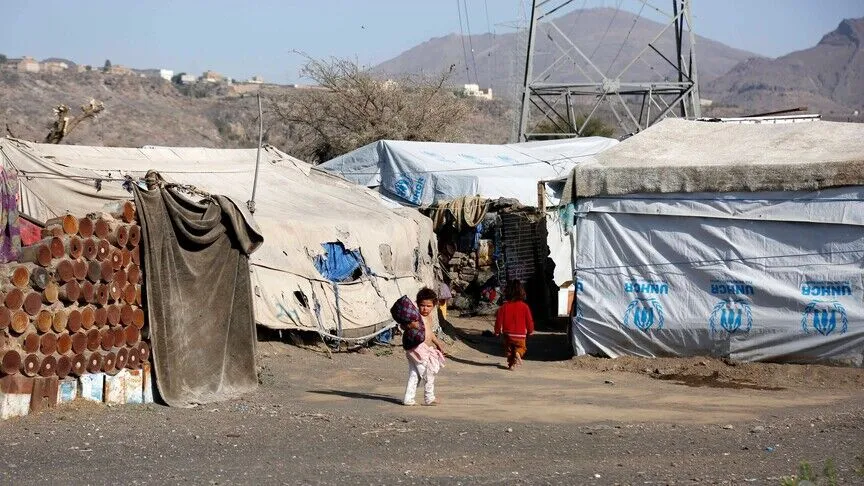
SANA’A, Yemen (MNTV) — More than 100,000 people have been displaced in Yemen as renewed fighting and shifting front lines disrupt healthcare services, leaving families struggling to reach medical treatment amid worsening humanitarian needs.
Arab News reported that aid organizations are seeing thousands of families flee airstrikes, shelling and armed clashes, with many arriving in safer areas without adequate shelter, food, water, clothing or healthcare.
Islamic Relief said displacement was increasing daily in Taiz, Lahj and Aden as fighting intensified.
The latest escalation is placing additional pressure on a health system already weakened by more than a decade of conflict, economic difficulties and reductions in international assistance.
Humanitarian agencies estimate that more than 22 million people, roughly two-thirds of Yemen’s population, require humanitarian assistance, while more than 5.2 million remain internally displaced.
Islamic Relief said essential services, including healthcare and water supplies, are already severely overstretched.
Cuts in international aid have also forced some critical services to close, making it harder for displaced communities to obtain basic assistance.
The situation is particularly severe in the western city of Mokha, where fighting and changing front lines have disrupted medical services and restricted the movement of patients.
Marc Schakal, an operational cell manager and humanitarian leader with Médecins Sans Frontières, told Arab News that Mokha General Hospital is currently the only functioning medical facility in the area.
Hospital capacity has been reduced as some medical workers have left and some patients have avoided seeking treatment because of security concerns. Road access has also become unreliable, while the airport has recently been targeted by airstrikes.
MSF is working to maintain its medical operations in Mokha and is engaging with the Houthis to preserve access for humanitarian healthcare.
Schakal said several medical facilities had been damaged or rendered unusable during fighting over the past 10 days, forcing patients to travel farther for treatment.
The disruption has also affected Yemen’s medical referral system, which normally allows patients to receive initial treatment before being transferred to facilities capable of providing more advanced care. Closed roads and insecurity are making those transfers increasingly difficult.
Hospitals in Aden have also received people wounded in the fighting. The city serves as a major center for humanitarian and medical operations, but the arrival of displaced families is adding pressure to services that are already operating beyond capacity.
Displaced families face additional risks beyond injuries and lack of medical treatment. Aid workers have warned about inadequate sanitation, limited access to food and the potential spread of disease, particularly among children who have not received vaccinations.
Pregnant women face particular dangers because movement between areas can make it difficult to obtain emergency obstetric services when complications arise.
The renewed fighting is concentrated across several western and southern areas, including Taiz and parts of the Red Sea coast.
Mokha’s location near the Bab Al-Mandab Strait, a major maritime passage connecting the Red Sea with the Gulf of Aden, has also heightened concerns about the wider consequences of instability along the coast.
The latest escalation follows years of relative calm along several Yemeni front lines. The conflict dates to the Houthi takeover of Sanaa in 2014, while a UN-brokered truce in April 2022 substantially reduced large-scale fighting without producing a lasting political settlement.
Although the truce formally expired later that year, reduced hostilities broadly continued along many fronts.
Humanitarian organizations have warned that the renewed violence could quickly undermine those gains. The UN’s 2026 humanitarian plan has identified major needs in healthcare, water, sanitation and hygiene, with damaged infrastructure and limited services increasing health risks.
MSF is preparing emergency measures in Aden and remains ready to expand operations in Mokha if patient numbers increase.
The organization is monitoring the movement of front lines while preparing for both an increase in conflict-related injuries and further displacement that could overwhelm communities receiving newly displaced families.