

White House silent on embassy effort for gay Atlantis cruise
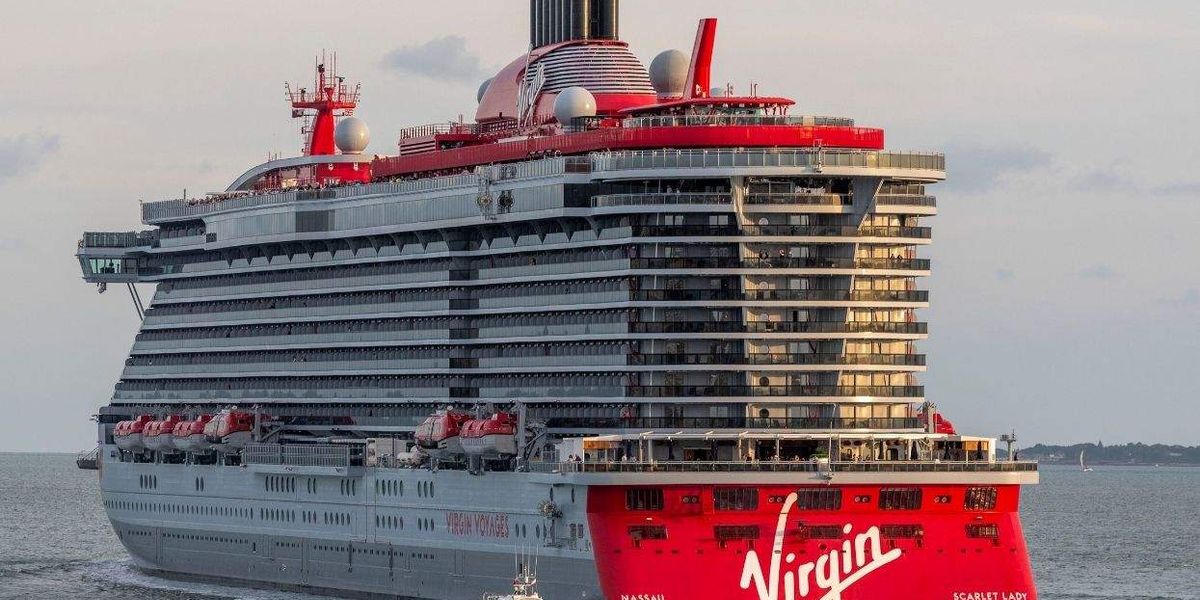
Just after midnight Friday, with the Egyptian coastline close enough to see, a harbor master radioed the Scarlet Lady one instruction: Turn around. Days earlier, Turkey had already barred the ship from two ports over “moral values.” Now Egypt was withholding entry too. Aboard, roughly 1,900 LGBTQ+ travelers on an Atlantis Events charter, including Broadway star Patti LuPone, booked to perform for the group, were living out, in real time, an old message delivered in a new form: You are not welcome here.
Rich Campbell, founder and CEO of Atlantis Events, which specializes in large-scale gay vacations, was heading to dinner around 9:30 p.m. that night when the Scarlet Lady’s captain called him to the bridge. “I think we’ve got a problem,” the captain said. Campbell had already spent days absorbing Turkey’s rejection. Now Atlantis and Virgin Voyages, which had redirected the ship toward Alexandria so passengers could see the pyramids at Giza and the newly opened Grand Egyptian Museum, didn’t have the clearance to enter Egyptian waters at all.
Related: Turkish government blocks gay cruise carrying Americans from docking, citing ‘moral standards
By 12:30 a.m., the order was final. Campbell and Virgin executives spent the rest of the night on calls with the company’s Miami office, trying to find a port that could take a ship carrying 1,900 people on short notice.
What began as an expensive Mediterranean vacation had turned into an international episode, one in which two governments treated a shipload of LGBTQ+ tourists as a political problem.
Related: LGBTQ+ cruise rescues 11 refugees adrift in the Gulf of Mexico
Turkey’s sudden rejection
Campbell told The Advocate in an interview from the ship on Monday that there was no real mystery about why Turkey called off the planned stops in Kuşadası and Istanbul. “One hundred percent,” he said, when asked if the group’s LGBTQ+ identity was the reason. “That’s clear. There’s no disputing that.” Officials in Aydın province cited moral concerns; Campbell said conservative groups had circulated hostile material about Atlantis before officials intervened, just days before the ship was set to sail.
“I am shocked,” LuPone wrote on social media. “A ship — a magnificent ship — full of gay men. And me. Denied entry to Turkey simply because of who is on board. I am furious, but I am sailing, as the ship will make other ports of call.”
Campbell said he wouldn’t treat the decision as representative of the Turkey Atlantis had visited 13 times over 25 years. “That’s not Turkey,” he said. “That’s not the Turkey we’ve experienced.” Groups had toured historic sites, eaten in restaurants, and shopped without incident on every prior visit. “We come, we shop, we eat, we take the tours, see the sights and leave and spend a whole bunch of money,” he said.
Colin Wright, a 55-year-old patent attorney from Palm Springs, California, and his husband, Toby Bryan, a 54-year-old banker, had weighed the trip carefully. Their 10th wedding anniversary fell that same weekend, and they’d booked the cruise six months earlier. Turkey was “right on the bubble” of places they’d consider, Wright said when he spoke with The Advocate from Montenegro on Sunday, but Istanbul’s cosmopolitan reputation and Atlantis’ long history there had reassured them. “If we were going to do Turkey, doing it with a large gay group actually gave us a feeling of safety and legitimacy,” he said.
When Turkey canceled, Atlantis substituted Alexandria, and Wright booked an 11-hour excursion to Giza. He’d seen the pyramids before — his parents lived in Alexandria in the 1990s — but was eager for the new museum. Then, as the ship crossed the Mediterranean after stops in Mykonos and Santorini, that plan disappeared too.
Related: Yet another passenger dies on world’s biggest gay cruise
A ship turns around in the night
Campbell said Egypt had never given Atlantis trouble before; the company had visited multiple times, including the previous two years. This time, he said, officials simply failed to complete the routine review of the passenger manifest. “It was delayed and stalled and pushed back,” Campbell said. He suspects a mid-level official either feared approving the ship after the Turkey controversy or was told to sit on the request until it was too late — a theory, he stressed, not a fact. “I genuinely believe the Egypt situation was effectively collateral damage from what happened in Turkey.”
Once the ship was ordered to turn around, its options were bound by geography — a vessel that size can only move so fast, and few ports could take it on short notice. By 2 a.m., Campbell and Virgin executives had a plan to shift the ship’s already-scheduled stop in Crete back a day and add a new stop in Montenegro. Passengers received a letter overnight explaining the problem with Egypt, and by 9 a.m., the captain announced the new route to applause. Wright called the hours in between the trip’s emotional low point — “that feeling a little bit adrift.” Campbell, speaking two days later, disputed any suggestion that guests were left without a plan for long, noting the new itinerary went out within hours of the turnaround. Either way, Crete and Montenegro couldn’t replace Istanbul, Ephesus, or the pyramids, but they gave the voyage somewhere to go.
Related: Egypt turns away cruise ship with mostly gay men after Turkey blocked same voyage from docking
“A political football kicked around the Mediterranean”
By the time Wright spoke to The Advocate, he was docked in Montenegro, with Dubrovnik, Zadar, and Venice still ahead before a flight home, and he said Atlantis and Virgin had handled a nearly impossible situation well. “I feel like they’re the victims here,” he said. “They’ve taken what was potentially a really bad set of lemons and turned it into somewhat of a jar of lemonade.” He understood the criticism of travelers who spend money in countries with poor LGBTQ+ rights records, and acknowledged that his wealth, race and citizenship shaped the risks available to him, but Atlantis had visited both countries repeatedly, and the itinerary hadn’t felt reckless when he and Bryan booked it.
He also suspected the timing wasn’t coincidental, pointing to broader regional tensions, including a dispute over Pride displays tied to the World Cup in Seattle. “I do think Egypt timed the rejection of us to maximize the waste of time for us,” he said, noting the ship burned two days at sea when Egypt could have simply said no from the start. By then, the trip was becoming an anniversary vacation again rather than an international incident. “Being a political football kicked around the Mediterranean was not fun, but it’s also a good story,” he said.
Related: Nine men busted for drugs while trying to board massive Atlantis gay cruise in Miami
A cruise and a caricature
Comedian Brad Loekle — who spoke to The Advocate the day before Wright, as the ship sailed between Crete and Montenegro — was marking his 15th season performing for Atlantis, across 79 countries. He said the public image of the company, with thousands of shirtless men and packed dance floors, for days, describes only its single largest annual sailing; most cruises are smaller and destination-focused, mixing comedy, cabaret, drag, and fine dining alongside performers like LuPone, who was giving concerts on this very sailing. “For most of us, Atlantis is the summer camp that we never had as kids, as little gay, effeminate, bullied kids,” he said. “We didn’t get it then, but we’re making up for it now.”
He rejected the idea that gay travelers should have expected to be barred, and pointed out that Atlantis cruises routinely depart from Florida ports despite that state’s own record on LGBTQ+ rights. “I have never had a gay person say to me, ‘I can’t believe you guys are going to leave from a Florida port,’” Loekle said.
He also worried about the Egyptian guides, drivers, and small businesses that lost income when the port call collapsed. He said that a guide who’d arranged a private tour for him asked him not to judge the country by its government. “Oh, honey, you’re preaching to the choir,” Loekle said he told him. Passengers were refunded for canceled excursions, but the guides waiting onshore had no comparable remedy.
The diplomats who tried — quietly
Campbell, reached as the ship neared the end of its detour, said the U.S. Embassy in Ankara pushed hard in the days before the sailing to reverse Turkey’s decision. He said the staff was “amazingly supportive, frankly far beyond what we expected,” and told him there was no legal barrier that should have kept the passengers out. But the timing worked against them. Atlantis learned of the problem only shortly before departure, while diplomats were also occupied with NATO-related business in Turkey that same week, where President Donald Trump was in attendance. Given two or three weeks’ notice, Campbell said, more might have been possible.
That private effort contrasts with the government’s public silence. The Advocate contacted the Turkish and Egyptian embassies, the White House, and the State Department; none offered an attributable response. A White House spokesperson directed The Advocate to the State Department, which directed inquiries to the countries involved and pointed only to a general travel advisory page. The reticence stood out because the same company faced a strikingly similar episode at the same Turkish port a quarter-century earlier, and the U.S. response then was far more public.
The ghosts of Kuşadası
In September 2000, Turkish police prevented Atlantis passengers from continuing their sightseeing near Kuşadası, quietly rounding them up, the New York Times reported at the time. Campbell recalled officers “politely” offering passengers “a ride back to the ship” and returning them aboard. American diplomats protested directly to Turkey’s foreign ministry, and the State Department publicly said it was “dismayed” and had raised the matter with Turkish officials. The next day in Istanbul, Turkish officials staged an elaborate welcome, including bands, children, and a red carpet to undo the damage. “The next day we went to Istanbul, and everything was not just fine, it was fabulous,” Campbell said.
That episode, he added, taught Atlantis that a single local act of discrimination doesn’t necessarily reflect a lasting national policy. The company kept returning for 25 years.
Other companies in LGBTQ+ travel spoke up where Washington didn’t. “VACAYA stands firmly behind our friends at Atlantis Events following the recent denials of their planned stops in Türkiye and Egypt,” Randle Roper, co-founder and chief experience officer of the cruise operator VACAYA, said in a statement to The Advocate. He said that his company has sailed to all seven continents, including past stops in both Turkey and Egypt, without ever being turned away from a port. He called the denials part of a broader pattern, tying the boldness of the rejections to shifting rhetoric from the current U.S. administration, and argued that it’s imperative that all other LGBTQ+ businesses stand united when one is targeted.
“The world’s treasures belong to all of us,” Roper said.
Not writing off a country
As far as returning, Campbell said Turkey and Egypt weren’t actually scheduled on next year’s itinerary to begin with, so nothing changes there in the immediate term, but he isn’t ruling either country out permanently. Before Atlantis returns, he said, the company would need direct assurance from officials that another ship wouldn’t be turned away. “They don’t have to put a rainbow flag on the pier,” he said. “But they do have to give us an assurance that we’re welcome there.”
Loekle’s response was more immediate. When LuPone, furious over Turkey’s decision, gave a defiant public statement of allyship, passengers ran with it. In Crete, they found T-shirt shops offering instant printing and had shirts made that read “I’m furious and I’m sailing” — LuPone’s own words — and then posed for photos with her wearing them. “That’s one of the things I love about our community,” Loekle said. “People will throw shit at us, and we find a way to turn it into sunshine.”
Credit: Source link
Comments are closed.