

Vandalism, arson & looting occur as Gambians protest blackout in Greater Banjul
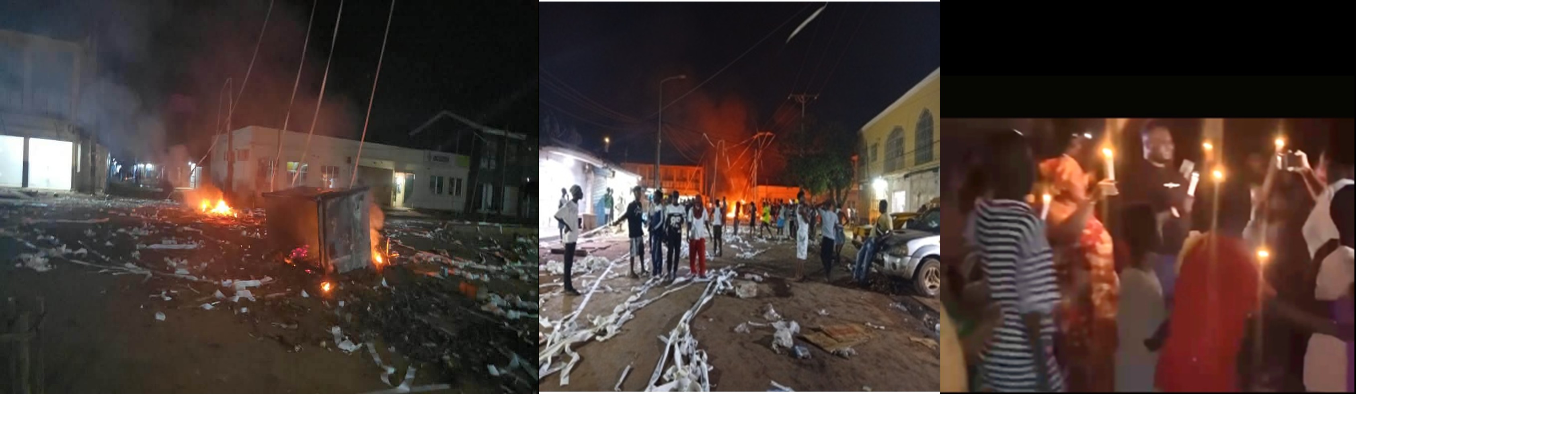
Thousands of Gambians poured onto the streets on Monday night in a wave of anger and defiance, protesting what they described as the relentless and crippling power outages that have plagued the nation. The unrest, which ignited in the capital city of Banjul, quickly spread across the Greater Banjul Area (GBA), engulfing Westfield, Tabokoto, Brikama, Busumbala, Bakau, Brufut and beyond. The message was stark and unified: “Bring back our lights – enough is enough.”
From Tabokoto to Latrikunda, the demonstrations took on a fiery edge. Protesters set tyres ablaze on the main highway, hurled stones to block traffic, and smashed bottles across the tarmac. Makeshift furniture belonging to roadside vendors was reportedly seized and thrown into the flames, adding to the chaos and smoke that choked the night air.
While the protests were initially driven by frustration over electricity cuts, the atmosphere quickly descended into violence and lawlessness. Eyewitnesses recounted scenes of angry youths turning to vandalism and looting. Shops were broken into, and the NAWEC sub‑office at Latrikunda near Cow-Junction was stormed, with documents and equipment tossed into the street. Protesters allegedly attempted to set the office alight, while others stole items from within.
The violence did not stop there. The door of a Mauritanian‑owned shop in Tabokoto was reportedly broken, while another nearby store was attacked. Witnesses claim the shopkeeper was assaulted, his phone snatched, and his bag of detergent stolen in the melee.
Banjul protest
Banjul was lit not by electricity but by candlelight on Monday night, as hundreds of residents thronged the streets chanting “Bring back our light! Bring back our light!” in a dramatic protest against what they described as prolonged and unbearable disruptions to essential services.
Led by the Member of Parliament for Banjul North, Hon. Modou Lamin B. Bah, the demonstration cast a striking image of a capital city plunged into darkness, with citizens demanding immediate intervention from government and the National Water and Electricity Company (NAWEC).
Addressing the crowd, MP Bah declared: “Enough is enough.” He argued that the persistent power outages and low water pressure had gone beyond inconvenience, now constituting a crisis undermining livelihoods, health, education and dignity. “The Gambia, our beloved country, and particularly our capital city, is at a breaking point,” he warned.
According to the lawmaker, residents have endured weeks—if not months—of erratic electricity supply and crippling water shortages. He stressed that Banjul, as the nation’s capital and face to the international community, should not be struggling to provide its people with basic services. “We are the capital city of this nation. We are the face of The Gambia to the world. Investors come here. Tourists pass through here. Government institutions are headquartered here. Yet, the very basic services that define a functioning capital are failing us daily,” Bah said.
He highlighted the toll on small businesses, particularly cold stores, food vendors, barbershops and tailoring enterprises, all dependent on reliable electricity. Students, too, are struggling to study at night, while health facilities face dangerous interruptions to critical services.
Beyond electricity, Bah underscored the hardship caused by low water pressure, leaving households unable to cook, wash or maintain sanitation. “How can mothers cook, wash, and care for children when there is no water?” he asked, stressing that reliable electricity and clean running water are not luxuries but essentials.
While acknowledging challenges such as infrastructure, fuel costs and maintenance, Bah insisted these should not serve as excuses for inaction. “The people are tired of press releases and promises. What we need now is action, and we need it immediately,” he said.
He called for the publication of a transparent load‑shedding schedule, deployment of water tankers to severely affected communities, urgent repairs to pumping stations and leakages, and backup power systems for hospitals, schools and markets. For the long term, he urged accelerated investment in renewable energy, grid stability and water infrastructure.
“The capital deserves 24‑hour power and 24‑hour water. Anything less is unacceptable,” Bah declared.
The protest ended with a clear message from residents: Banjul wants its light and water restored—and it wants action now.
Credit: Source link