

UN agencies say funding shortages may affect humanitarian interventions in Sudan
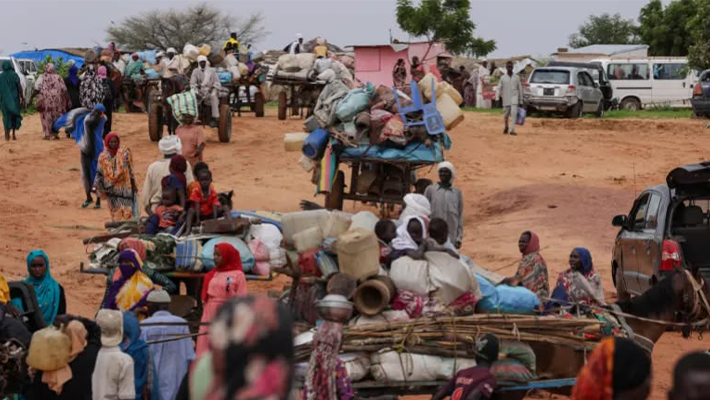
United Nations humanitarian agencies have warned that Sudan’s humanitarian system may collapse within weeks if urgent funding is not provided to sustain aid operations in the war-torn country.
The Director-General of the International Organisation for Migration (IOM), Amy Pope, warned on Monday that humanitarian agencies could be forced to scale back assistance amid severe funding shortages.
“We simply can’t turn our backs on the people of Sudan when they need us most. The entire humanitarian system could collapse within weeks if we don’t act now,” he said.
Sudan has been embroiled in a brutal civil conflict since 2023 between rival militaries and their backers.
About 8.6 million people remain internally displaced and 19.5 million people currently face crisis levels of food insecurity, compounded by maritime disruptions and drought caused by the El Niño weather pattern.
The acting director of World Food Programme, Carl Skau, following his eight-day trip to Sudan, said the crisis in Sudan “by far does not get the attention it deserves.”
He added that WFP has the presence and capacity to deliver an effective humanitarian response but mostly constrained by funding.
He stated, “It is possible to make a difference. Our main problem is funding. There is a risk we will have to scale back quite significantly in the next few weeks unless more funding is provided.”
Mr. Skau said WFP recently expanded its humanitarian aid service in Sudan, noting that with extraa humanitarian funding, the UN and its partners could expand the air service and reach more civilians in need.
“We need to step up,” Mr. Skau said. “We cannot continue to fail these people.”
During his trip, Mr. Skau visited communities and local displacement camps in El Obeid, El Fasher, Khartoum and other areas.
He spoke to women who had to return home without water after a tank ran out and people who walked up to five days to reach IDP camps after their villages were destroyed.
Mr Skau said he saw hundreds of thousands who fled violence in El Fasher living in “an endless ocean of grass huts” while visiting North Darfur town of Tawila.
According to the statement, Mr Skau found a “daunting city” hollowed out by the RSF’s brutal 18-month siege on the city, which ended in late October.
Mr Skau added, “I have seen a lot in this job and beyond. El Fasher was quite special. It illustrates what conflict leaves behind, and it underlines the urgency of bringing an end to the conflict. People deserve to be supported with basic humanitarian assistance.”
The war between Sudanese Armed Forces (SAF) and the paramilitary Rapid Support Forces (RSF) continues to endanger civilians and drive people from their homes, according to the UN’s aid office (OCHA).
“We once again call on all parties to the conflict to protect civilians and civilian infrastructure, and to allow rapid, safe, unhindered and sustained humanitarian access to all those in need across Sudan,” OCHA said.
Credit: Source link