

Trump stripping Haitians of TPS leaves big hole in Miami: Opinion
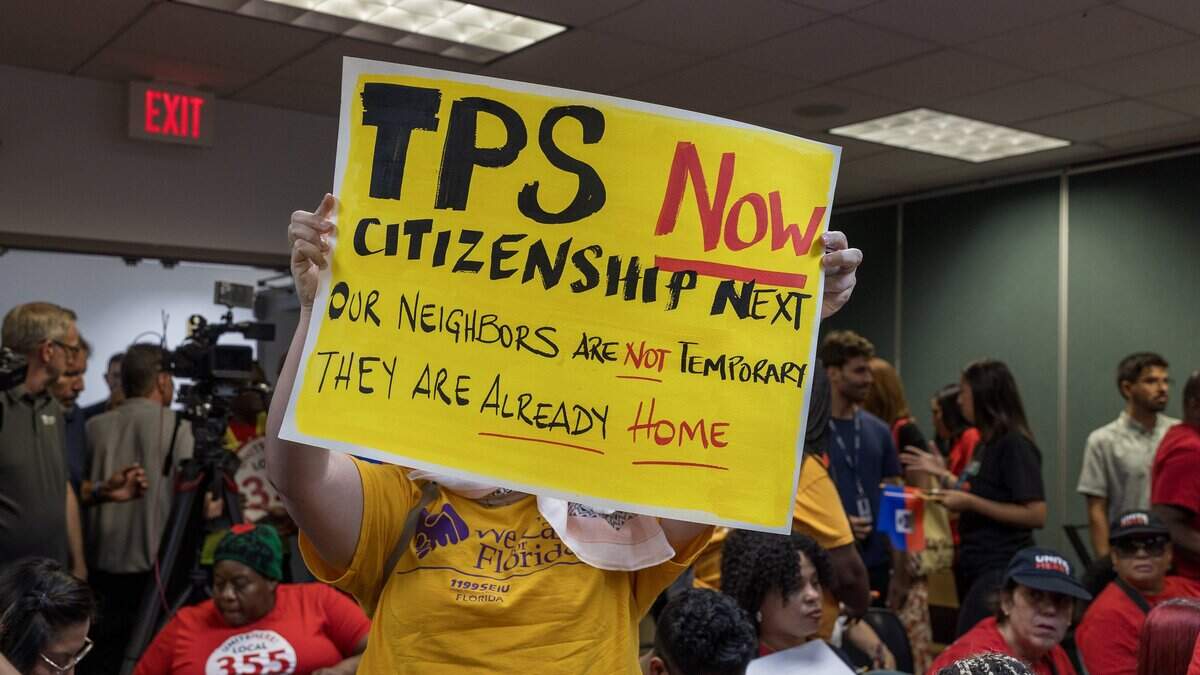
Airport and hotel food and beverage workers with the UNITE HERE Local 355 union hold a press conference at Fort Lauderdale-Hollywood International Airport, Friday, July 10, 2026, demanding an extension of Temporary Protected Status (TPS) for Haitians.
pportal@miamiherald.com
As hundreds of thousands of our Haitians neighbors, here under Temporary Protected Status, face deportation, I can’t help but think of the fallout their leaving will have on our community.
I shudder when I think about what they will face when they go back to a country that is foreign to many of them. I can feel the fear and pain of the many families that will be broken up; homes that were lovingly built, and businesses that were built from the ground, left abandoned. And their children, some of our newest citizens, left behind at the mercy of others.
In the early years, when many Haitian immigrants risked their lives to come to America, where they believed life would be better for them (and it was), our community expanded to include them.
It wasn’t easy at first. Our differences were great The Haitian people brought with them a new culture, and to many of us, a new religion — Vodou — that we struggled to understand. Although they were Black immigrants, many American Blacks were suspicious of Haitians. While we looked alike, our culture was vastly different.
The years passed. We began to understand each other, and we learned to appreciate their colorful and historical culture and the richness it added to our own American culture. We soon learned that we had more in common than the color of our skin.
We learned to respect their religion and delight in their culture. We frequented their businesses — especially their restaurants. We became friends. And as they became citizens and ran for political office, we voted for them. America was now their new home.
While creating a new life for themselves — taking advantage of educational opportunities, working hard, paying taxes, getting involved in community and state politics — Haitians made themselves almost indispensable.
For example, our healthcare industry would literally die without Haitian doctors, nurses and healthcare aides. Now, their TPS status is all but gone.
In an op-ed piece in last Sunday’s Herald, Miriam Singer, president and CEO of Jewish Community Services of South Florida, wrote:
“Haitian TPS caregivers have filled essential positions for years. They pay taxes, support local businesses, raise families and strengthen neighborhoods. Most importantly, they provide compassionate, lifesaving care that cannot be replaced overnight. Beyond the workforce implications lies an undeniable humanitarian reality: Haiti continues to endure extraordinary violence and instability, and for many TPS recipients, returning is neither safe nor realistic.”
When I spoke to my friend and colleague, Jacqueline Charles, the Herald’s Caribbean correspondent and a Pulitzer Prize-finalist, she echoed Singer’s remarks.
“Some of these people haven’t been back to Haiti in 16 years — not since the earthquake in 2010, or even longer,” she said. “People don’t have houses to go back to. There are no jobs in Haiti. Cap-Haïtien, Haiti’s second-largest city, is bursting at the seams.”
Charles, who flew to Port-au-Prince last month and visited a camp, said that in the makeshift camps that many of the 1.5 million people displaced by armed gangs call home, there are no latrines.
“Women and girls are being raped. Six million people are going hungry. They need humanitarian assistance. Haiti is a country that is unstable, where the conditions are not conducive for people to stay,” she said. “Security isn’t just about fearing kidnappings and gang violence. It’s also about knowing where your next meal is coming from. You do not have that in a country where the economy has bottomed out.”
Charles said conditions are so bad in Haiti that the U.S. government urges its citizens not to go there, and if they do, to leave their DNA samples and dental records so their remains can be identified.
“If the country is not safe for one group of people, how can it be safe for another? This is the question Haitians are asking.”
The Haitians being kicked out of the U.S. help contribute nearly $5 billion annually in remittances to Haiti’s economy. What happens to that support, or to the people who are forced to return to neighborhoods where gangs have shuttered hospitals, refugees have overtaken schools and every day is a fight for survival?
NFL player returns home to host backpack giveaway
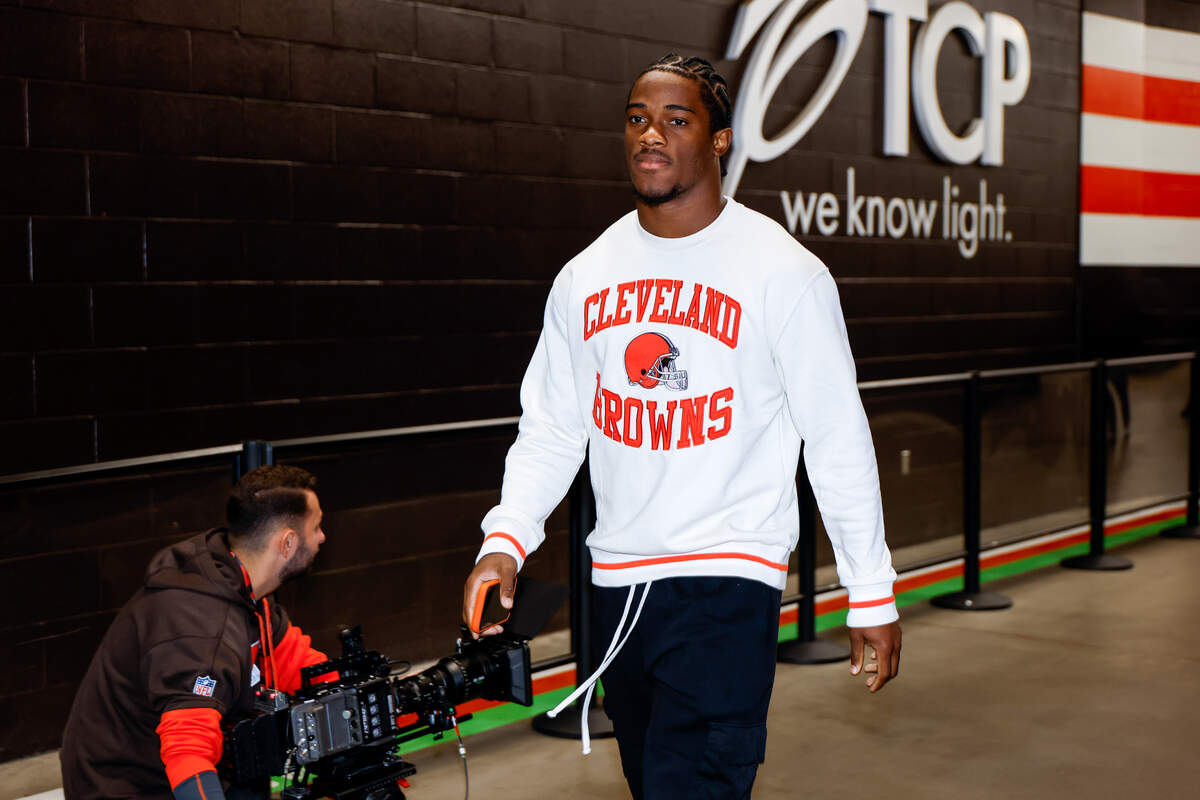
Kudos to our very own homegrown hero Myles Harden, who on last Saturday hosted the first Backpack Giveaway for the children and families at The Church of God Tabernacle (True Holiness) and those who live in area surrounding the Liberty City church.
Myles’ family has attended the church, 1351 NW 67th St., for three generations. The backpacks were filled with essential school supplies, but more important, the event was an opportunity for Myles to inspire and encourage the youngsters.
He grew up attending the church’s Sunday school, and throughout his college career he was an annual recipient of the Ethel Goldstein/Ida Belle Johnson Memorial Scholarship Award administered through the church.
A cornerback for the Cleveland Browns, Myles grew up in Miami Gardens. He is a 2020 graduate of Miramar High School and is a graduate of the University of South Dakota. In his talk to the youngsters, he urged them to stay in school and focus on their education, trust in God and believe in themselves.
The youngsters were treated to food and games and fellowship. Several students received prizes, including Ke’Lani Wright, 5, who won a gift card; Makayla Jadotte, who received a laptop; and Audrey Oyefesobi was awarded a 50-inch television.
“I feel happy knowing the students who received a backpack, filled with school supplies, will have the tools they need to begin the new school year, prepared and ready to learn.”
Myles’ gesture of kindness and his giving back to the community and church family is a testament to his upbringing. His parents are Norris Harden and Valerie Sanctious-Harden of Miami Gardens. His grandmother is Missionary Bobbie Harden, a longtime member of the church.
Comments are closed.