

Trump administration sends Cubans to Liberia, Equatorial Guinea
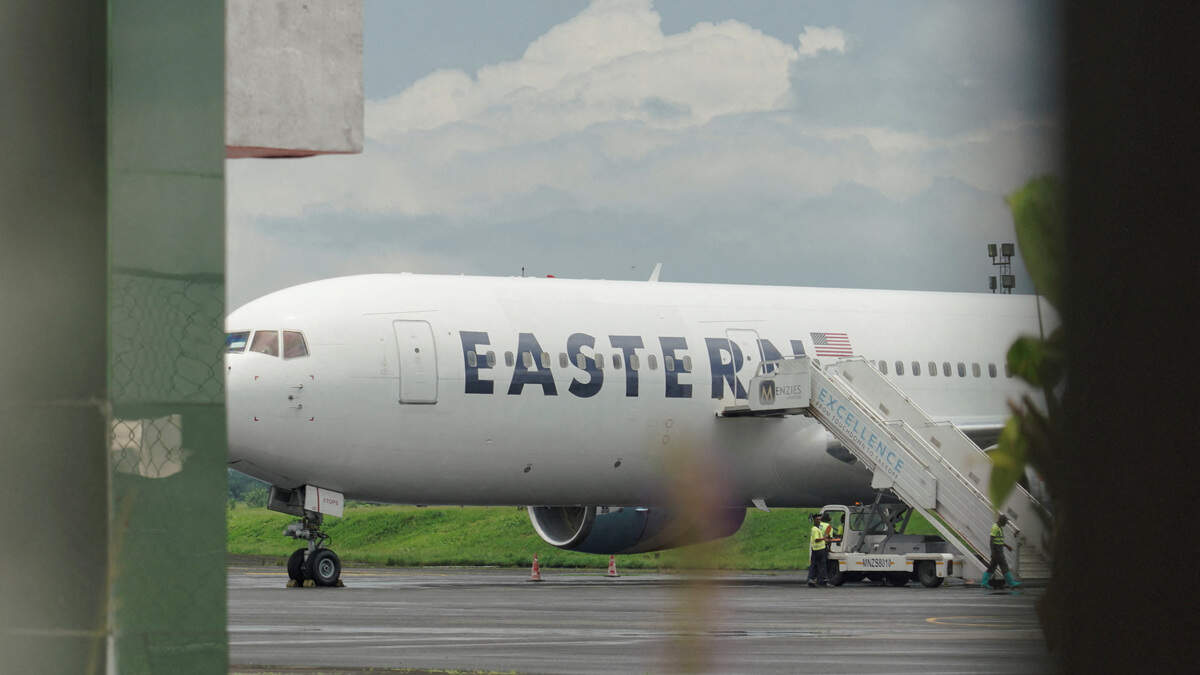
A plane carrying deportees from the United States arrives at Roberts International Airport, Harbel, near Monrovia, Liberia, on Aug. 20, 2026.
REUTERS
When immigration officials told the Florida men that they were being deported to Africa, they were incredulous.
“We told them that we are not African,” said Carlos Rodriguez Lopez, a Cuban man from Miami who had been in Immigration and Customs Enforcement custody since April 2025. Alongside other shackled detainees at the Alexandria International Airport in Louisiana, he wondered if the administration would actually send him to Mexico.
READ MORE: Trump administration has sent 6,000 Cubans to Mexico, federal court says
But after a 15-hour flight on Aug. 19 with a layover in Senegal, it was clear to Rodriguez Lopez that their destination was not anywhere in North America. After landing in Liberia in West Africa, Rodriguez Lopez, along with others, refused to get off the plane, the men told the Miami Herald.
“They carried us out handcuffed, twisting the cuffs, hurting our feet and hands,” Rodriguez Lopez said. “They removed me from the plane, and then four people jumped on top of me, pinning me against the floor.” The Liberian government refused to accept them, so they were returned to the aircraft, they said.
The men eventually landed in Malabo, the port city capital of Equatorial Guinea, the west African country that has been ruled by the same family dictatorship for nearly six decades. Greeting the weary deportees under cover of night was an entourage of masked officers carrying rifles, they said. Soon, they were taken in a van to a hotel, still shackled, they said, where they were confined and put under watch in mid-August.
“I feel like I’m kidnapped in the middle of Africa,” Rodriguez Lopez told the Herald in a phone interview. He said he arrived in the U.S. on a raft from Cuba in 2013. He was living in Miami with his wife and daughter before being deported 6,000 miles away to Equatorial Guinea.

As part of its mass deportation efforts, the Trump administration has made agreements with other countries across Latin America and Africa to accept deportees that are not their own nationals. In exchange for multi-million dollar payments, these countries have become final destinations for immigrants the U.S. deems bureaucratic and diplomatic headaches. That includes Cubans that Havana will not take back because of their criminal records in the U.S.
Caught in the crosshairs of the far-flung deportations are long-time Sunshine State residents from Miami, Fort Myers, Tampa and Orlando. The Miami Herald spoke with four Cubans and one Brazilian man who were sent as part of a flurry of deportation flights across Africa in August. The men say they lack travel documents, freedom of movement and access to lawyers. Some said they have urgent medical needs that cannot be properly treated there.
“We are suffering. There are married adult men crying here…. This is the reality. They fear for their lives,” said Pietro Graza de Lima, a Brazilian man who said he had lived in Orlando for about seven years before being sent to Equatorial Guinea.
Rodriguez Lopez condemned the deportations, describing them as “pure corruption” and saying that they had been “exchanged for money.”
The State Department did not respond to questions about whether Cuba has been following its migration agreements with the U.S. But Cuba’s Interior Ministry announced the recent arrival of 127 Cuban deportees from the U.S., suggesting that deportations to the island are ongoing.
In a statement to the Herald about the deportation of the five Florida men, the Department of Homeland Security said that “all of these illegal aliens were deported to a safe third country.”
“We are applying the law as written. If a judge finds an illegal alien has no right to be in this country, we are going to remove them. Period. The Trump Administration is utilizing all lawful options to carry out the largest deportation operation in history, just as President Trump promised,” the DHS spokesperson said.
Equatorial Guinea has limited medical care, limited freedom of speech and arbitrary enforcement of the law. The third-country deportations also include places so dangerous the State Department warns Americans to not travel there, like the Central African Republic, a landlocked country where armed conflict and violent crime are rampant.
“They are deporting all of us Latinos to Africa. We are suffering far away from our families,” said Yasmany Moreno de Armas, a Cuban national, in videos chronicling his Aug. 1 deportation and stay in Bangui, the capital of the Central African Republic.
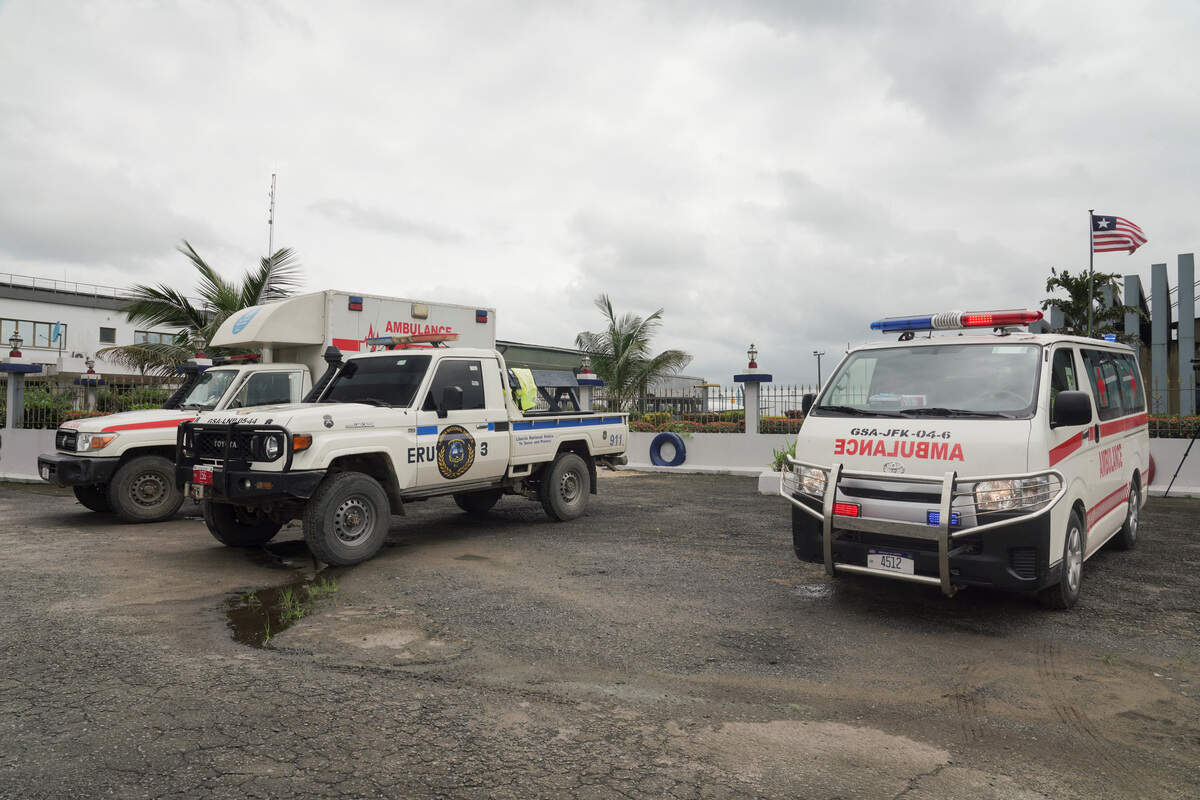
In videos depicting wooden structures and food markets, he says he is with other Cubans, and that he must always be accompanied by security agents while out and about. He said that he lived in the U.S. for a decade after fleeing persecution in Cuba. The Herald found that Moreno had an address in Hialeah and several traffic infractions, but could not locate any criminal history.
The U.S. has previously sent Cubans with serious criminal records to Africa. But the men say that even in the case of people with records, deportations should not be punitive.
Rodriguez Lopez said he had previously committed theft out of necessity, but the Herald could not locate a criminal record. His wife said he had spent nearly a year away because of stolen merchandise in his car in a 2019 incident and that’s when he received a deportation order.
“I don’t have a criminal record bad enough to be sent to the middle of Africa,” Rodriguez Lopez said.
A daughter waiting
Ygraine Ribot, Rodriguez Lopez’s wife, a U.S. citizen who lives in Miami, said the detention and deportation of her husband has been difficult on her family. She has had to pay bills and run her house without her husband while taking care of her 9-year-old daughter. Struggling with her father’s absence of over 16 months, the child does not want to sleep alone. “She tells me that when her father comes back, she will show him the drawings she’s made,” Ribot said.
The couple has been together since 2014 and were married in January 2025. Before being detained, they had been building a welding business together in Miami Gardens. “I have been contributing to my community; my neighbors like me,” said Rodriguez Lopez.
ICE picked up Rodriguez Lopez in April 2025, the couple said. For nearly a year and a half, he was shuffled around detention centers in Texas, Arizona, Louisiana and Florida, until arriving in the Alexandria International Airport in mid-August.
Ribot realized that her husband could be deported to Africa when news reports emerged about third-country deportations. “I started going crazy with the topic, paying attention to each news item,” she said.
The U.S. had initially tried to deport Rodriguez Lopez and the other men to Liberia on a flight also carrying Venezuelans and Colombians. But after the five men resisted getting off the plane, they said officials had forcibly removed them before returning them to the aircraft.
Eventually, the men arrived in Equatorial Guinea, where they said they were greeted by the hooded officers. “We thought they were going to kill us,” said Lima, the Brazilian man.
The men say the staffers at the hotel where they are being housed are treating them well, and they are receiving three meals a day. Officers say that they will help them obtain official documents. The deportees say there are about 40 of them at the hotel, but most are immigrants from other African countries like Nigeria, Cameroon and Egypt.
But the uncertainty is difficult. One described the hotel as an “abandoned property.” Another said there are people who have spent months there already. They have no idea when they will actually leave.
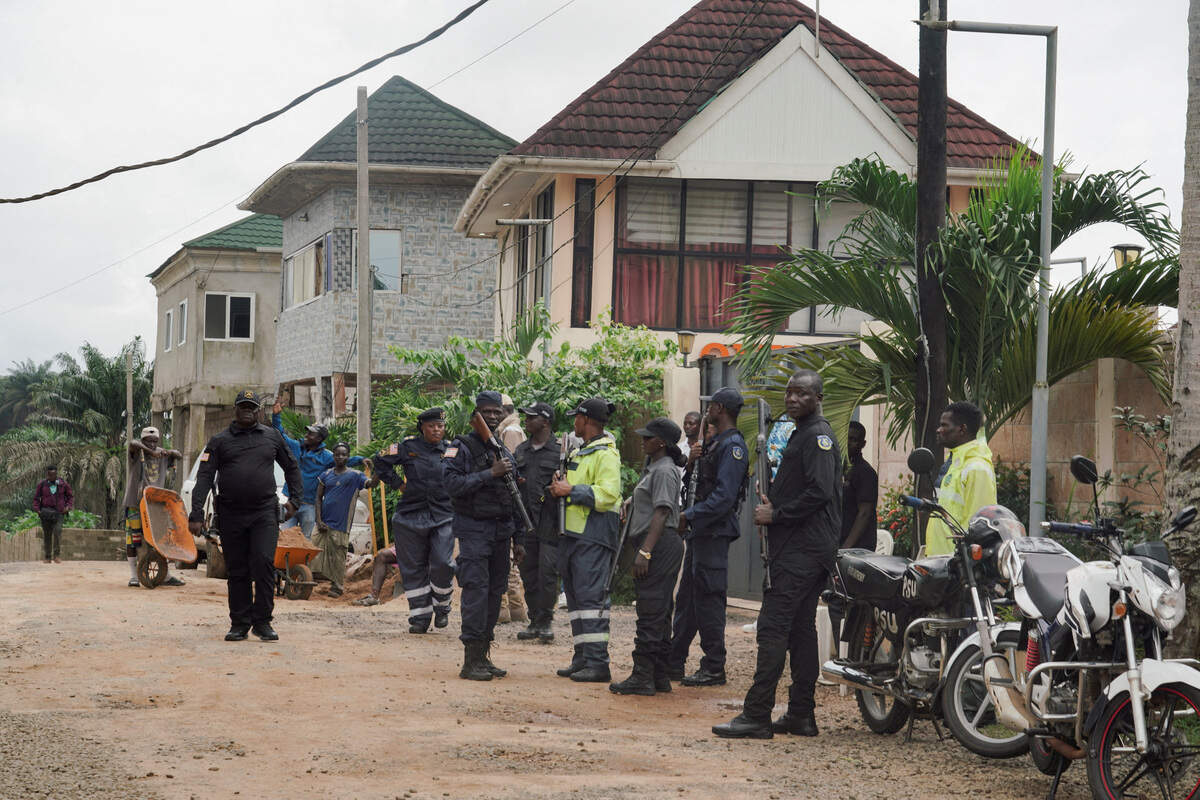
Guards are watching them, the men told the Herald. The detainees shared a photo of a man in black uniform holding a rifle, and another image of a truck belonging to the Gendarmería Nacional, a force in charge of internal security.
Some of the detainees have health concerns. Leonardo Sanchez, a 49-year-old Cuban man who lived in Lehigh Acres near Fort Myers before being deported to Equatorial Guinea, has undergone surgeries for life-threatening injuries. His abdomen is made of skin grafts from other parts of the body to cover his stomach, he said.
Sánchez said he had come to the U.S. in 2010 to be with his father and siblings. He told the Herald he got the injuries when he was stabbed and shot during a street fight nearly a decade ago.
Sanchez arrived in Equatorial Guinea with a fever, he said. He was taken to a clinic, where he received IV fluids, he said. However, they only had over the counter painkillers, when he usually needs opioids to manage his pain.
In Equatorial Guinea, he doesn’t know when he will next receive the care he needs, including surgery. The doctor in Equatorial Guinea said that “if he opened me up…the next day I’d be dead,” said Sanchez.
He also told the Herald he received injuries while getting off the plane that left him in pain.
“They carried me, four of them, and getting hit between seats, to pull me out of the plane. They threw me out of the plane, all the way down the stairs. I was handcuffed, but they carried me, four of them, knowing I’d had surgery, knowing the situation I was in,” Sanchez said.
Meanwhile, Lima told the Herald that he was missing a kidney and part of his intestines after being shot in Brazil. He also suffers from high cholesterol and depression, but hasn’t received the medications he needs.
“I can’t interrupt my treatment” he said.
‘Hugely problematic’
Multiple deportation flights from the U.S. have landed in Africa in recent weeks. Human Rights First, a watchdog group that tracks deportation flights, said that along with the flight that took the Florida men to Africa, the U.S. sent two flights from Arizona on Aug. 19 and 20 that landed in Rwanda and Mauritania. Another flight on Aug. 27 landed in Eswatini carrying two Mexican immigrants, the group said.
And on Monday, the group reported that a flight from Alexandria International Airport was en route to the island of St. Lucia in the Caribbean, another country with a deportation agreement with the United States, carrying third country nationals.
The Herald reviewed the agreements that the U.S. has made with several countries. Cameroon, for example, says that deportees from the U.S. would not face persecution. Equatorial Guinea makes similar promises. So does the Democratic Republic of the Congo, which is under a State Department “Do Not Travel” advisory because of crime, unrest, terrorism, and kidnapping. It is also dealing with an active Ebola outbreak.
But despite the diplomatic assurances, experts and lawyers have raised concerns about the third-country deportations.
“It’s hugely problematic. If a third-country anywhere in the world says ‘We promise we will not harm the person,’ that’s good enough,” said Andrea Jacoski, associate director of the Immigration Clinic at the University of Miami. Lima is her client. “It’s a tremendous and egregious violation of due process rights.”
The Trump administration is battling litigation in federal courts over the third-country deportations from watchdog groups as well as individuals at risk of being sent to a country that’s not their own. In one class action lawsuit in Massachusetts, one of the plaintiffs is a Cuban man with a deportation order who is married to a U.S. citizen. In February, a federal judge found that the Trump administration’s third-country removal policy guides were unlawful. He ruled that immigrants had the right to getting notice of a third-country deportation and to raise a country-specific claim before removal to any third country. The case is currently on appeal.
Orange County records show that Lima pleaded no contest to a third-degree felony charge of possession of methamphetamine and a first-degree misdemeanor charge for public masturbation at a park. His residency was listed as transient, suggesting he was homeless at the time.
But he had obtained protection from an immigration judge under the Convention Against Torture after the Board of Immigration Appeals sent his case back down to the lower courts. The international treaty prevents countries from sending people to nations where they could be harmed. The immigration judge in the case also simultaneously issued an order of removal.
Jacoski acknowledged that the convention statute has always allowed for removal of a person to a safe third country. But she added that, historically, if people said they were afraid of being sent to another country, they would receive “credible fear interviews” with an asylum officer.
But the Trump administration is “bypassing the whole credible fear requirement by saying they have diplomatic assurances of safety from harm as kind of a catchall,” said Jacoski.
In Equatorial Guinea, Lima and the others wondered when they will be able to leave the hotel — and the country — as their families in the U.S. wait for answers.
“They always talk about Cuba, Venezuela or other countries, but here, honestly, [human rights] are being violated too, and a lot,” Ribot said “The way my husband was deported was quite cruel. He’s the father of an American girl.”
This story was originally published September 2, 2026 at 11:47 AM.
Credit: Source link
Comments are closed.