
This Ebola epidemic has become the deadliest in DR Congo’s history: It has claimed 2.325 lives
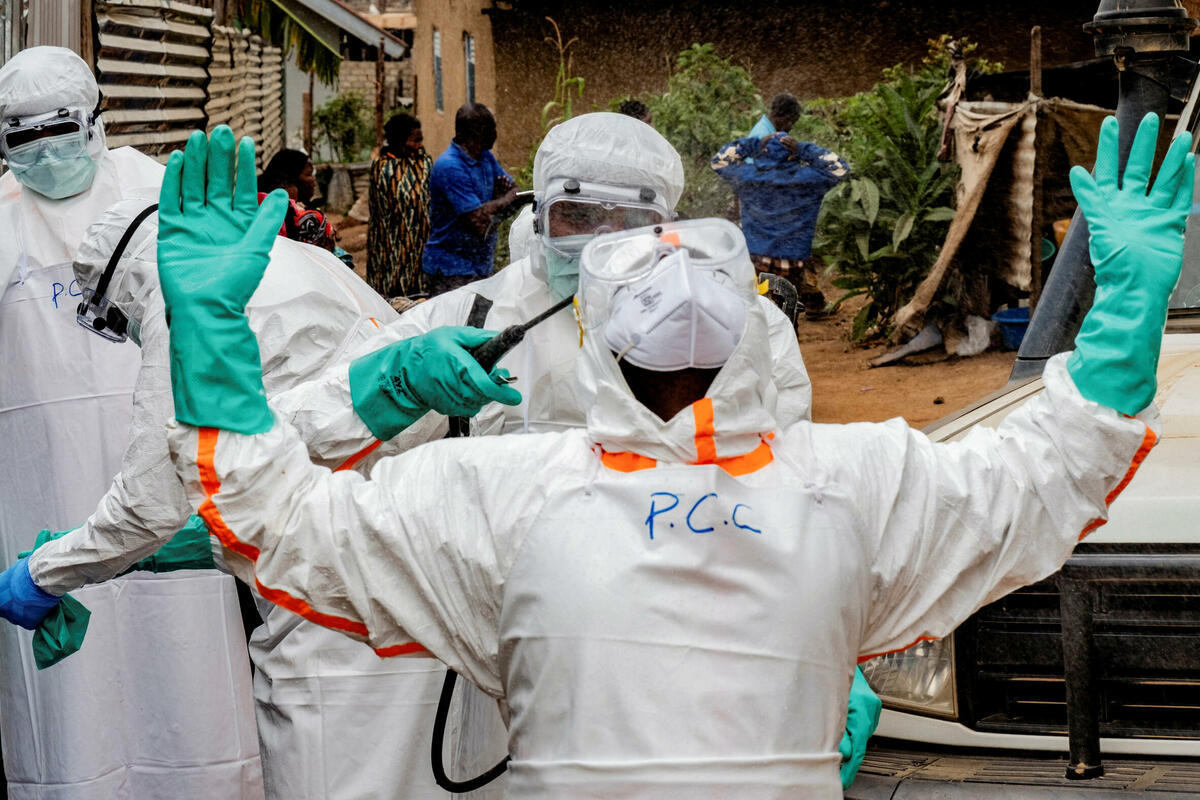
Members of the Civil Protection team, which is working to suppress the spread of the Ebola virus, in personal protective equipment disinfect themselves after handling the body of an unidentified man who the family says died of Ebola, Photo: Reuters
The Ebola outbreak in the Democratic Republic of Congo (DR Congo) has claimed 2.325 lives, government data released on Sunday showed, surpassing the death toll from the 2018-2020 outbreak and making it the deadliest in the country’s history, Reuters news agency reported.
The Congolese Institute of Public Health said in its latest report that the number of confirmed cases had risen to 4.945, including 101 new cases detected over the previous 24 hours.
The outbreak, the 17th in the Congo, was already the largest in the country’s history in terms of cases, after that record was broken in late July. The latest government figures show that the total number of deaths has surpassed the 2.299 recorded during the 2018–2020 Congo outbreak, which was the worst in the country’s history to date.
A total of 4.945 cases have now been confirmed, the data showed.
Three months after it was officially declared, the outbreak is second only to the 2014-2016 Ebola outbreak in West Africa, which saw 28.616 cases and 11.310 deaths in Guinea, Liberia and Sierra Leone, according to the World Health Organization.
It took almost five months from the declaration of that epidemic for the death toll to reach 1.000, while in the current epidemic in Congo, the number of victims exceeded 2.000 in less than three months.
There is no cure for the rare strain of Ebola virus
The current outbreak is caused by the Bundibugyo strain of Ebola virus, for which there are no approved vaccines or treatments. The outbreak has been spreading rapidly since it was declared on May 15, while weak health infrastructure, local community resistance and instability have hampered efforts to detect cases and respond to them in a timely manner.
The proportion of people who die after a confirmed infection, known as the case fatality rate, has risen from around 20% in early June to 46%, according to government data. This means that almost every other confirmed case now ends in death.
Experts say the trend does not mean the virus has become more deadly. Instead, it points to persistent deficiencies in epidemiological surveillance, case detection and access to health care.
“It’s common for the mortality rate to decline as an epidemic progresses because contact tracing improves and patients are detected and treated earlier,” said Thomas Parrish, a public health expert recently deployed to the Democratic Republic of Congo with Doctors Without Borders.
“Instead, we continue to see a large number of cases being detected very late, when the chances of successful treatment are lower, with many cases only being identified after people have died in their communities,” he said.
A small number of experimental vaccines and therapies are currently being tested, while international health agencies are assessing whether existing Ebola treatments can provide protection. Evidence so far is limited to animal studies.
The epidemic had previously spread to neighboring Uganda, but authorities there managed to limit the number of deaths to two people and the number of confirmed cases to 20, before declaring the end of the epidemic in that country last month.
Ebola is transmitted through direct contact with bodily fluids of infected people, whether living or deceased. It can cause fever, vomiting and diarrhea, and in severe cases, internal and external bleeding.
Download the app and follow the news


FOLLOW US ON

News
Credit: Source link