

The Many Lives of Eid al-Adha, From Morocco to South Asia
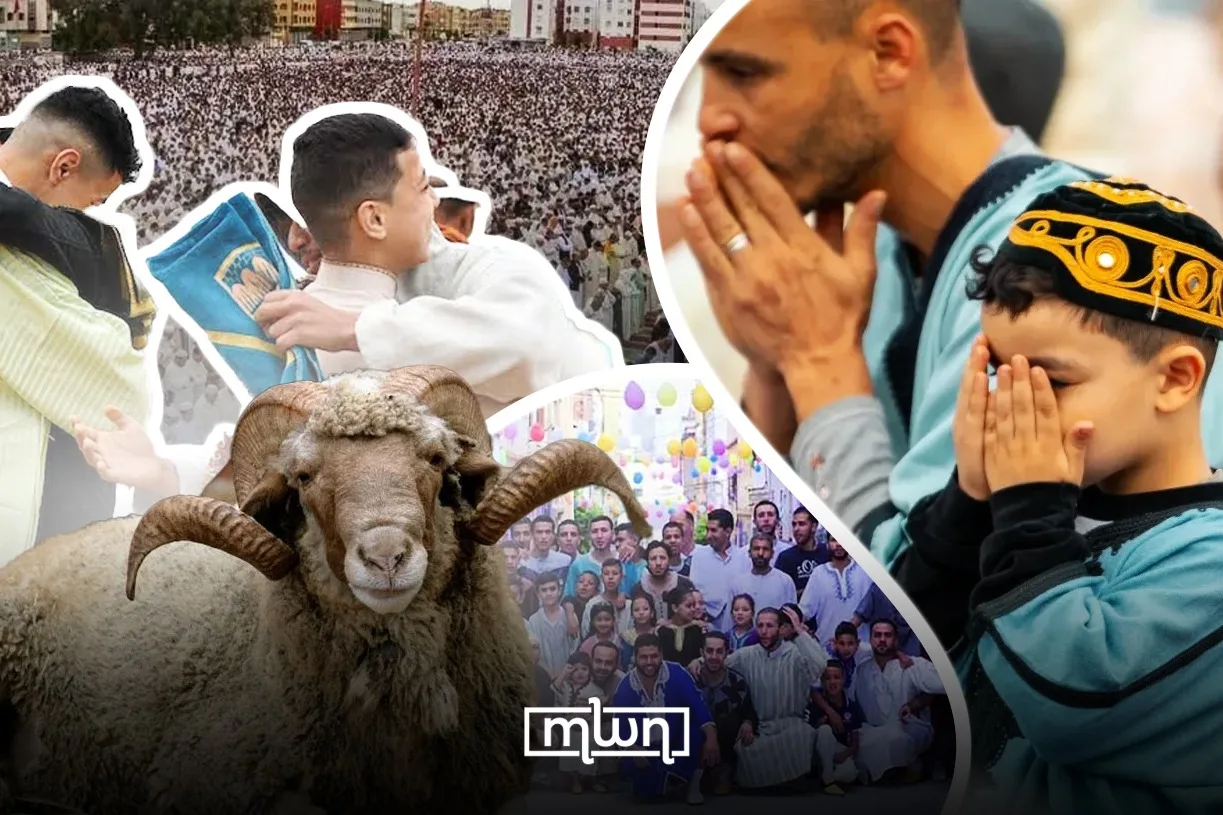
Casablanca — Eid al-Adha is known across the Muslim world as the Feast of the Sacrifice. In Morocco and much of North Africa, many simply call it Eid el-Kbir, the Big Feast. The name fits. It is religious, social, economic, culinary, and, in some places, almost theatrical.
The holiday falls on the tenth day of Dhu al-Hijjah, the last month of the Islamic lunar calendar. It comes at the end of the Hajj pilgrimage in Mecca and recalls the Quranic story of Prophet Ibrahim, who was ready to sacrifice his son in obedience to God before a ram was provided in his place.
The ritual sacrifice, known as Udhiyah or Qurban, is meant to express devotion, charity, and solidarity. Traditionally, the meat is divided between the household, relatives, neighbors, and people in need.
The faith behind the feast
Eid al-Adha is tied closely to Hajj. Pilgrims gather at Mount Arafat on the ninth day of Dhu al-Hijjah, then move through Muzdalifah and Mina, where the stoning of the devil recalls Ibrahim’s rejection of temptation. Around the world, Muslims who are not on pilgrimage mark the same spiritual moment from home.
The sacrifice is not just about meat. Islamic rules define which animals may be used, including sheep, goats, cattle, and camels, and set conditions for their age and health. The slaughter takes place after the Eid prayer and within a limited window of days.
But the same religious frame looks very different from one country to another. In South Asia, Eid is often called Bakra Eid or Korbanir Eid. Bangladesh alone sacrifices an estimated 13 million animals annually, with temporary cattle markets filling major cities before the holiday. Families prepare liver dishes quickly after the slaughter, then move on to nihari, paya, korma, and biryani over the following days.
In Senegal and Mali, the holiday is Tabaski, the biggest national celebration of the year. In Dakar, sheep supply is managed through Operation Tabaski. Young people may wash family arms at the beach before the feast. Families gather around roasted mutton, onion sauces, rice, and potatoes, while children dress up in the evening to collect treats or pocket money.
In Southeast Asia, where it is known as Hari Raya Haji or Hari Raya Korban, the focus is often more communal. Slaughter is usually organized at mosques or community centers, with volunteer teams distributing meat. Meals may include ketupat, lemang, and regional stews.
For Muslims living in non-Muslim-majority countries, Eid often takes a more organized form. While some travel back to their home countries for the occasion, many who stay mark Eid by attending early prayers at mosques, public halls, or open-air spaces, before gathering with family and friends for meals at home.
Since home slaughter is restricted or illegal in many places, families usually arrange Qurban through licensed halal butchers, regulated slaughterhouses, mosques, or charities that perform the sacrifice locally or abroad. Some receive their share of meat, while others donate all of it to people in need.
Morocco’s Big Feast
In Morocco, Eid el-Kbir is one of the country’s most important religious and social moments. It mobilizes families, farmers, butchers, artisans, markets, kitchens, and whole neighborhoods.
The sheep itself matters. Moroccan households often pay close attention to breed, size, shape, horns, and appearance. The Sardi, from central Morocco, is one of the most prestigious breeds, known for its white fleece, black markings around the eyes and muzzle, and heavy spiral horns. Other breeds include D’man from southern oases, Beni Guil from the eastern plateaus, Timahdite from the Middle Atlas, and Boujaad from central plains.
Clothing is part of the ritual beauty. Men often wear a jabador or jellaba with belgha slippers. Women wear embroidered caftans, elegant jellabas, or practical and cool Gandouras.
Then comes the food. Moroccan Eid cooking follows a rhythm. On the first day, families usually eat organ meats because they spoil quickly. Boulfaf is the star, made with grilled liver wrapped in caul fat, seasoned with cumin, paprika, salt, and chili, then grilled again over charcoal. It is often served with mint tea. Tkalia, also called douara, uses tripe and other variety meats in a spiced sauce with garlic, cumin, paprika, ginger, preserved lemon, and olives.
By the second day, the sheep’s head and trotters are cleaned, charred, steamed, and served with salt and cumin, or used in couscous.
On the third day, bigger cuts are ready for slow cooking. Mrouzia, made with neck or spine cuts, ras el hanout, saffron, ginger, smen, honey, cinnamon, raisins, and almonds, is one of the most famous Eid dishes. Some families also prepare gueddid, dried strips of meat preserved for later use.
When tradition meets pressure
Morocco’s Eid is not only about celebration. It also reflects the country’s rural and urban divide. In villages, especially in mountain areas, the holiday remains collective. Families prepare together, slaughter at home, share labor, and gather for music such as Ahwach, with chanting, drumming, and circular dancing.
In cities like Casablanca and Rabat, Eid takes a different shape, but it does not disappear. Space is tighter, especially for families living in apartments, and the work can be more complicated. Some households rely on professional butchers, building courtyards, rooftops, garages, or municipal spaces to manage the sacrifice. Others coordinate with relatives who have more room.
But the spirit remains stubbornly Moroccan. Neighbors still hear the same morning movement in the stairwells, families still gather around grills, and the smell of charcoal, cumin, mint tea, and fresh meat still travels through the city—the setting changes, not the attachment.
For many urban families, Eid el-Kbir is still one of the few moments of the year when relatives come together, children watch the rituals closely, and old habits survive inside modern buildings.
There is also Bujlood, or Bilmawen in Tamazight, a carnival-like tradition seen in parts of southern and central Morocco, especially Amazigh-majority areas. Young men wear fresh animal skins, masks, bells, and hooves, then dance through the streets, chasing spectators in a mix of humor and fright. Many see it as a cherished Amazigh tradition, while some religious voices reject it. Either way, it remains one of Morocco’s most striking Eid scenes.
Read also: King Mohammed VI Performs Eid Al Adha Sacrifice On Behalf of All Moroccans
In recent years, climate and inflation have added pressure. Morocco has faced long droughts that reduced pastureland and weakened the national flock. Since 2016, the country has lost about 38% of its sheep population, falling from 11 million breeding females to 8.7 million in 2024.
In 2025, King Mohammed VI issued a rare directive calling for a pause on mass sacrifice, as sheep prices reached nearly $600, above the monthly minimum wage. The King performed two sacrifices on behalf of the nation, while the state launched aid programs to rebuild breeding herds.
Across the Islamic world, Eid al-Adha keeps the same spiritual heart. But from Moroccan boulfaf to Senegalese Tabaski, from South Asian biryani to Southeast Asian mosque courtyards, every country gives the Big Feast its own flavor, sound, and texture.
Still, the sacrifice is not meant to become a burden. In Islamic tradition, the Udhiyah is tied to ability. Families facing financial hardship are not expected to go into debt or strain their household to buy it.
For those who do perform the sacrifice, sharing is central to the ritual. The meat is traditionally divided into three parts, with one share kept for the household, one given to relatives and neighbors, and one reserved for the poor and people in need.
That is where Eid’s communal spirit lives most clearly. It is not only a family feast, but a wider act of care, making sure joy reaches beyond one home and into the community.
Morocco World News is also on X — check out our latest posts now! Get MWN on iOS and Android for instant access to breaking news.
Credit: Source link
Comments are closed.