

The Bodyguard Who Became Cuba’s Back Channel Now Faces Smuggling Allegations
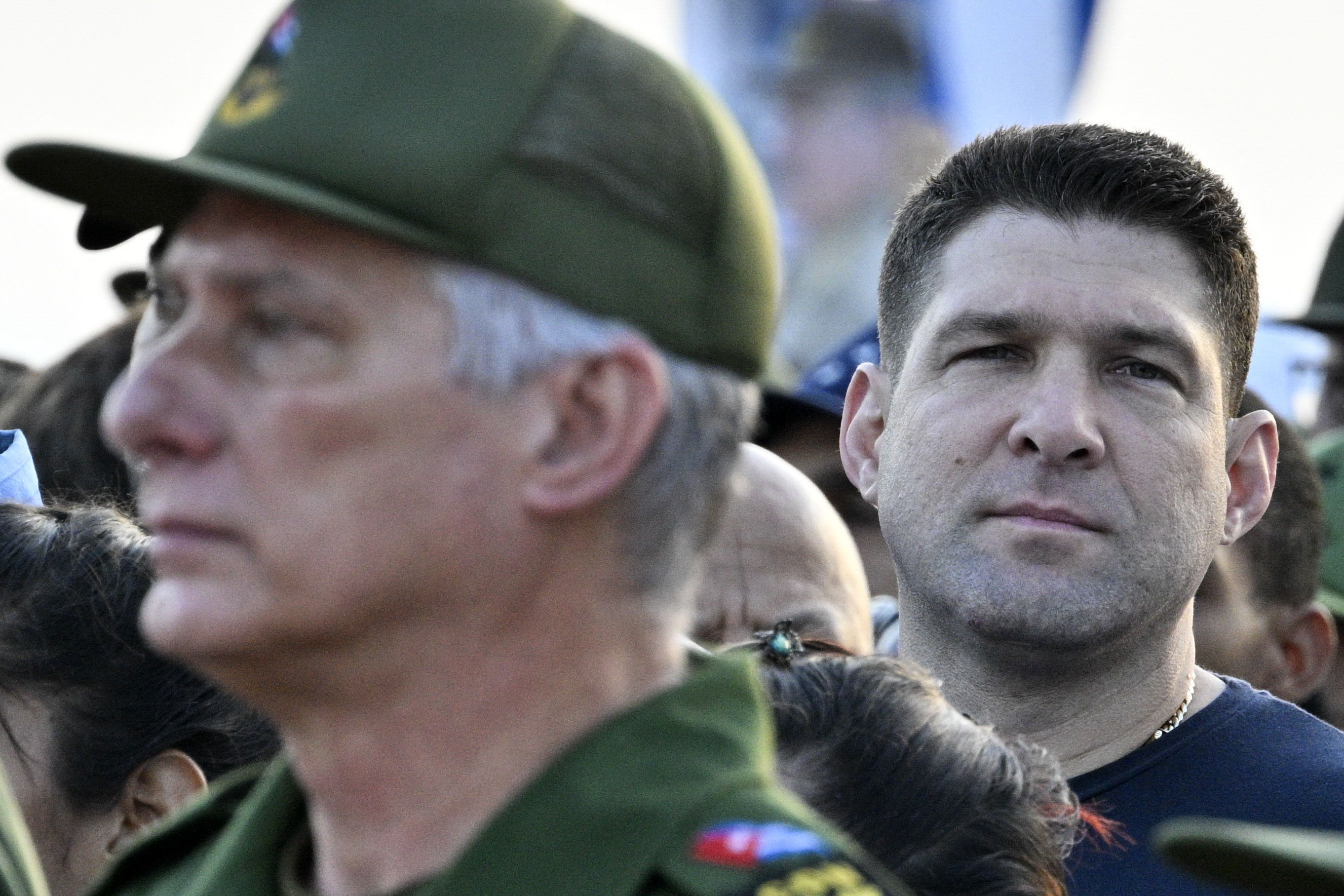
Photo by ADALBERTO ROQUE / AFP via Getty Images
Raúl Guillermo Rodríguez Castro — a 42-year-old colonel in Cuba’s Ministry of the Interior and the eldest grandson of former president Raúl Castro — has been named as an alleged protector of a smuggling and boat-theft operation that moved thousands of Cubans through Mexico, according to a New York Times investigation published Aug. 11. Two men convicted in the case told U.S. investigators that Rodríguez Castro — nicknamed “El Cangrejo,” the Crab, after a childhood hand deformity — used his standing inside Havana’s power structure to keep smuggling routes running, according to court records reviewed by the paper.
From bodyguard to Washington’s back channel
For most of his public life, Rodríguez Castro was known only as the officer trailing his grandfather through summits with leaders as varied as Barack Obama and Vladimir Putin. That began to shift this year. He has met separately with U.S. Secretary of State Marco Rubio — a channel first reported by Axios back in February — and, in a newly reported detail, hosted CIA Director John Ratcliffe in Havana in May alongside Cuba’s interior minister and intelligence chief, according to Cuban outlet CiberCuba’s account of the investigation. He holds no elected or appointed political office. His second cousin, Denver-based researcher Arturo López-Levy, told the Times the once-anonymous bodyguard has gone from waiting outside the room to sitting inside every meeting. In his first interview with a U.S. outlet, published by USA Today in July, Rodríguez Castro put it plainly: “I can negotiate with anyone designated by the U.S.” — adding that he’d sit down with President Trump himself, given the chance.
A stolen speedboat, a Rolex, and a guilty plea
The allegations trace back to Operation Sisyphus, a years-long joint FBI and Homeland Security Investigations probe into a ring accused of stealing more than 600 boat motors and vessels off Florida’s southwest coast beginning around 2009, then shipping them to Quintana Roo to ferry migrants across the Caribbean. One of the group’s leaders, José Miguel González Vidal, pleaded guilty and is serving a 25-year sentence; he testified that he gave Rodríguez Castro a high-performance speedboat, a Rolex, a motorcycle and designer clothing in exchange for keeping Cuban customs and coast-guard patrols away, according to court documents cited by the Times. A second convicted member of the ring, Reynaldo Crespo Márquez, was separately questioned in a Miami courtroom about a conversation in which González Vidal described arranging to send Rodríguez Castro a boat.
Torture, ransom, and a death toll near 25
Migrants paid roughly $10,000 each for passage, and those who couldn’t cover the fee were reportedly held in safe houses, beaten and shocked with stun guns while relatives were pressured for ransom, based on court testimony described by Mexican authorities’ U.S. counterparts. Roughly 25 people are believed to have died during the crossings, according to court records the Times reviewed. David Bolton, a private investigator who says he stumbled onto the ring while working an unrelated case, was quoted by the Times describing the group as “the real pirates of the Caribbean”. Among the migrants the network is accused of moving out of Cuba, per a companion Times report, were future big-leaguers Yasiel Puig and shortstop Adeiny Hechavarría. U.S. prosecutors first indicted alleged members of the group in 2020, a case that has so far produced at least 21 convictions.
The case resurfaced publicly in April, when Mexican authorities detained Remigio Valdez-Lao — known as “El Milo” — identified as a key financier of the ring’s Quintana Roo operations, with his extradition to the United States reportedly pending.
Denials from Havana and Mexico City
Cuba’s government rejected the allegations. Deputy Foreign Minister Carlos Fernández de Cossío told the Times he didn’t doubt that Cuban-linked criminal networks operate elsewhere in Latin America, but maintained “there is no link to the Cuban government.” Foreign Minister Bruno Rodríguez went further the next day, calling the report a fabrication serving Washington’s interests — though he stopped short of naming Rodríguez Castro directly. In Mexico, a joint statement from the defense and navy secretariats, the attorney general’s office, the National Guard and the Secretariat of Security and Citizen Protection said the government has no independent evidence corroborating the specific links alleged between the criminal organization and the foreign officials or relatives named in the report — a narrower claim than a denial that the ring operated in Mexican territory, which years of U.S. prosecutions there have already established, per Aristegui Noticias.
What’s still unresolved
Rodríguez Castro has not been criminally charged, and it remains unclear whether he’s currently a target of the ongoing federal investigation. He also hasn’t been added to the list of Castro relatives already under U.S. sanctions — a list that includes Raúl Castro’s only son, Alejandro Castro Espín — even as he negotiates informally with U.S. officials on Cuba’s behalf. With Washington and Havana still exploring a limited diplomatic opening under the Trump administration, the allegations complicate the standing of a man increasingly treated as Cuba’s back channel to the White House.
© {{Year}} Latin Times. All rights reserved. Do not reproduce without permission.
Comments are closed.