

Sudan Crisis and War – Darfur to Kordofan – Modern Tokyo Times
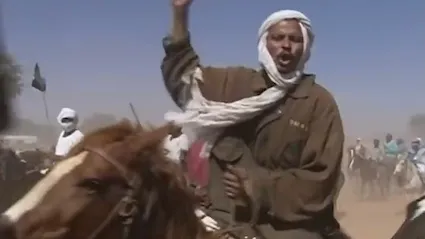
Sudan Crisis and War – Darfur to Kordofan
Kanako Mita, Sawako Utsumi, and Lee Jay Walker
Modern Tokyo Times
The war in Sudan grinds on with merciless force, tearing the country apart and transforming it into a fractured battleground divided between rival centres of military and political power. What began in April 2023 as a struggle between the Sudanese Armed Forces (SAF) and the Rapid Support Forces (RSF) has evolved into something far more destructive: a national catastrophe in which military competition, ethnic violence, foreign intervention, displacement, hunger and the collapse of civilian institutions have become inseparably intertwined.
On one side stands the RSF and allied militias, accused of systematic atrocities and ethnically targeted violence, particularly against non-Arab communities in Darfur. Opposing them is the SAF, which retains the backing of powerful regional and international interests while facing accusations of grave abuses against civilians. The United Arab Emirates has, in turn, accused elements within the Sudanese military establishment of harbouring pro-Muslim Brotherhood sympathies. Such competing narratives reveal the wider geopolitical complexity of Sudan. This is not simply a domestic civil war, but a conflict increasingly shaped by regional rivalries, weapons supplies, strategic interests and external actors. And caught between these competing centres of power are Sudan’s civilians.
UNICEF, the Food and Agriculture Organization (FAO), and the World Food Programme (WFP) warned in May 2026 that nearly 19.5 million people — approximately two out of every five people in Sudan — were facing crisis levels of acute food insecurity or worse. Around 135,000 people were experiencing catastrophic food insecurity, while 14 areas across Darfur and Kordofan remained at risk of famine. UNICEF further warned that more than 825,000 children could suffer severe acute malnutrition during 2026. The geographical concentration of this suffering is particularly devastating. Darfur and Kordofan have become synonymous with displacement, siege warfare, hunger and restricted humanitarian access. In such environments, food insecurity is not merely a consequence of war. It becomes intertwined with military strategy when roads are blocked, markets destroyed, agricultural production disrupted and humanitarian convoys prevented from reaching civilians.
The United Nations has described the consequences with chilling clarity: “Relentless violence, famine and disease are fuelling a rising death toll among children in Sudan, while attacks on healthcare and a lack of aid access hamper efforts to help them.”
This is the humanitarian face of Sudan’s geopolitical crisis. UNICEF has warned that the destruction of civilian infrastructure — including markets, health facilities, water systems and agricultural assets — has severely restricted food production and access to essential services. Around 40 per cent of health facilities were reported as non-functional in the May assessment, while approximately 17 million people lacked access to safe drinking water and 24 million lacked adequate sanitation.
Ricardo Pires, spokesperson for UNICEF, delivered an especially devastating warning concerning children: “Extreme hunger and malnutrition come for children first — the youngest, the smallest, the most vulnerable.” He added: “In Sudan, it’s spreading… These are children between six months and five years old, and they are running out of time.”
These are not merely statistics. They describe a generation whose childhood is being consumed by war. Across parts of North Darfur, UNICEF has reported catastrophic levels of malnutrition, warning that famine thresholds for malnutrition had been surpassed in Um Baru and Kernoi — areas that had not previously been considered at risk. UNICEF’s humanitarian reporting has also highlighted the devastating combination of displacement, disease, unsafe water and the collapse of healthcare.
The international community therefore faces a fundamental question: how long can humanitarian warnings be issued without corresponding political action? During previous UN investigations into atrocities and human rights violations, experts concluded that both the RSF and SAF had committed grave abuses against civilians. The allegations encompass killings, sexual violence, attacks on civilian infrastructure, forced displacement and other violations of international humanitarian and human rights law. Accountability cannot be selective. Whoever commits atrocities — regardless of military affiliation, ethnicity or foreign patronage — must ultimately face justice.
Darfur provides the most haunting historical warning. The region first burned itself into the world’s conscience during the 2003–2005 conflict, when Arab militias and forces associated with the Sudanese government were accused of campaigns of ethnic violence against Black African communities, including the Fur, Masalit and Zaghawa. Hundreds of thousands died or were displaced. Today, history appears painfully close to repeating itself. The fall of El Fasher to the RSF in late 2025 was followed by reports of mass killings and further displacement. The pattern is deeply disturbing: military advances are followed by attacks upon vulnerable communities, while civilians flee into areas where humanitarian assistance is already dangerously limited.
Yet Sudan’s tragedy cannot be understood solely through the SAF-RSF confrontation. It must also be understood through the internationalisation of the conflict. Weapons, drones, financing, political influence and strategic relationships have transformed Sudan into a battlefield in which external powers can shape events without necessarily bearing the immediate human cost. The BBC has reported that Amnesty International found evidence of weapons manufactured in Serbia, Russia, China, Turkey, Yemen and the United Arab Emirates being used in Sudan. The BBC has also reported allegations concerning external support for the RSF and Iranian weapons supplies to the SAF, while the parties concerned have denied various allegations.
This is where the language of geopolitics must confront the reality of humanitarian suffering. A drone manufactured thousands of miles away ultimately becomes more than a piece of military technology when it is used against a market, a village or a civilian convoy. A weapons shipment becomes part of Sudan’s humanitarian catastrophe when it enables another offensive. Financial networks, strategic partnerships and logistical corridors may appear distant from the starving child in Darfur — but they can determine whether that child receives food, medicine or nothing at all.
Massad Boulos, the senior Africa envoy for US President Donald Trump, accordingly called on the UN Security Council to “act to stop external financial and military support to the parties, such as drones and related technologies, from entering Sudan.” The statement goes to the heart of the problem. A peace process cannot succeed while the machinery of war continues to receive external sustenance.
Nor can Sudan’s humanitarian catastrophe be separated from the question of international attention. The Democratic Republic of the Congo, Ethiopia, Myanmar, Yemen and Sudan have all experienced devastating humanitarian emergencies, yet international attention remains profoundly uneven. Gaza and the Russian Federation–Ukraine war understandably receive enormous global scrutiny because of their scale and geopolitical significance. But sustained attention should not become a hierarchy of human suffering. Sudanese lives possess the same intrinsic value as lives elsewhere.
This disparity is not merely a media problem. It has geopolitical consequences. When a conflict becomes internationally forgotten, diplomatic pressure diminishes, humanitarian funding declines and perpetrators can begin calculating that the political cost of atrocities will remain manageable. UNICEF’s figures demonstrate how dangerous that neglect has become. Its mid-2026 assessment recorded more than 33.7 million people requiring humanitarian assistance, including 17.3 million children, while more than nine million people were internally displaced. UNICEF also reported a substantial funding gap constraining humanitarian operations.
The crisis is therefore simultaneously humanitarian, political, economic and strategic. Sudan’s suffering also extends beyond hunger. Children have been exposed to sexual violence, displacement, disease, attacks on schools and hospitals, and the destruction of the basic infrastructure upon which civilian life depends. UNICEF Executive Director Catherine Russell previously warned: “Children as young as one being raped by armed men should shock anyone to their core and compel immediate action… Sexual violence is being used as a tactic of war. This is an abhorrent violation of international law and could constitute a war crime. It must stop.” Such words should not disappear into the endless cycle of international statements.
Sudan’s past offers another warning. Decades of conflict, marginalisation and mass violence eventually contributed to the independence of South Sudan in 2011. Sudan now faces another possible transformation — not necessarily through formal secession, but through the gradual institutionalisation of rival territories, military economies and competing centres of authority. The SAF and RSF have already established competing spheres of control, while local militias, ethnic armed groups and external interests further complicate the political landscape. Sudan could therefore begin to resemble other fractured states where formal territorial sovereignty survives on maps while effective political authority becomes divided on the ground.
Such an outcome would be disastrous. Sudan is strategically important to the Red Sea, the Sahel, the Horn of Africa and the wider Arab world. Its instability affects Chad, South Sudan, Egypt, Ethiopia and the broader Red Sea security environment. It also intersects with Gulf rivalries, African security calculations, migration routes, agricultural interests, gold networks and international competition for influence. Consequently, Sudan cannot simply be treated as another forgotten African conflict.
The regional powers have responsibilities. Gulf states have responsibilities. Western governments have responsibilities. Russia, China, Iran, Turkey and other states with military, economic or diplomatic relationships with Sudan also possess responsibilities. And the United Nations Security Council cannot demand an end to atrocities while the wider international system permits the continued flow of weapons, money and logistical support that sustains the conflict.
The objective must therefore be more ambitious than another temporary humanitarian pause. Sudan requires a sustained diplomatic process capable of bringing the SAF, RSF and relevant civilian actors towards a genuine political settlement. It requires pressure on external sponsors. It requires humanitarian corridors and unimpeded access. It requires protection of civilians, accountability for atrocities and a serious international effort to prevent the further fragmentation of the country. Most importantly, Sudanese civilians must return to the centre of the international conversation.
The world cannot allow children to become the invisible casualties of geopolitical competition. Sudan’s tragedy is not inevitable. But ending it requires more than expressions of concern. It requires political courage, sustained diplomacy, humanitarian funding and a willingness to confront those who profit from perpetual war. The message from UNICEF is stark: children are running out of time. The message from the United Nations is equally stark: violence, hunger and disease are killing Sudan’s children. And the geopolitical message is unavoidable: as long as external weapons, money and strategic interests continue to sustain the war, diplomacy will struggle to defeat the machinery of destruction.
Sudan cannot survive further fragmentation. The price of inaction is already being paid — in children’s graves, emptied villages, shattered families and communities forced into exile. Sudan must break free from this cycle of death, impunity and geopolitical abandonment. Until that happens, millions of ordinary Sudanese people will remain trapped in the convulsions of war — displaced, starving and unheard — standing at the very edge of catastrophe.
Past SUDAN articles via MODERN TOKYO NEWS
https://moderntokyonews.com/?s=Sudan MODERN TOKYO TIMES – MODERN TOKYO NEWS – please check https://moderntokyonews.com
Please check Modern Tokyo News at https://moderntokyonews.com for articles going back over 12 years. Sadly, Modern Tokyo Times got hacked and lost 14 years of articles…

Modern Tokyo News is part of the Modern Tokyo Times group
http://moderntokyotimes.com Modern Tokyo Times – International News and Japan News
http://sawakoart.com – Sawako Utsumi and her website – Modern Tokyo Times artist
https://moderntokyonews.com Modern Tokyo News – Tokyo News and International News
PLEASE JOIN ON FACEBOOK
http://facebook.com/moderntokyotimes
Credit: Source link