

Skills Development, Technology Commercialisation As Fulcrum Of NASENI-Gambia Cooperation
The National Agency for Science and Engineering Infrastructure (NASENI) is exploring greater cooperation to deepen skills development, technology commercialization across West Africa with strategic partnership to boost investment in the sector.
Recently, NASENI commenced moves to deepen technology development, Technical and Vocational Education and Training (TVET), research, innovation, skills development and technology commercialisation cooperation with the Republic of The Gambia, with both sides agreeing to develop a comprehensive Memorandum of Understanding (MoU).
This move is imperative to boost skill development and technology commercialization in West Africa which are characterized by vibrant grassroots digital innovation—anchored by major urban hubs in Nigeria and Ghana.
The West African region features one of the youngest populations globally, which has motivated regional bodies like ECOWAS and national governments to revamp Technical and Vocational Education and Training (TVET) systems.
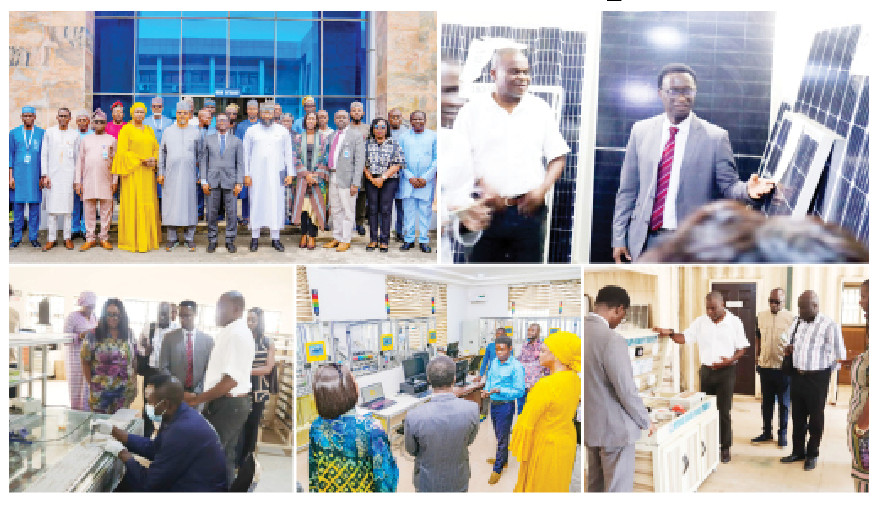
Recognizing this significant need, the high-level experiential learning visit by the Gambian Minister of Higher Education, Research, Science and Technology (GMoHERST), Professor Pierre Gomez and his delegation to NASENI Headquarters in Abuja on Wednesday, August 12, 2026, was a time for the Agency to showcase its technology ecosystem, research capabilities and network of specialised institutes.
The Gambian delegation, which had earlier visited selected NASENI facilities, including the Centre of Excellence and NASENI Solar Energy Limited (NSEL), among others, was briefed on the Agency’s interventions across renewable energy, agricultural mechanisation, electronics, power systems, advanced manufacturing, scientific equipment, aeronautics, solid minerals, machine tools, drone technology and other emerging areas.
Representing the Executive Vice Chairman/Chief Executive Officer of NASENI, Mr. Khalil Suleiman Halilu, the Director, Technology Business Development and Special Adviser on General Matters to the EVC/CEO, Engr. Bernard O. Ozigi said the Agency was positioned to serve as a technology development, transfer and commercialisation platform for Nigeria and other African countries seeking to build indigenous technological capacity.
Engr. Ozigi explained that NASENI operates through a network of specialised Development Institutes providing an integrated platform for research and development, prototyping, testing, manufacturing, technical training, technology transfer and commercialisation. He added that the Agency’s strategic direction was anchored on the principle of 3Cs- Creation, Collaboration and Commercialisation with increasing emphasis on taking research outputs beyond laboratories and prototypes into the marketplace.
According to him, NASENI had identified several areas with strong potential for cooperation with The Gambia, including renewable energy and solar photovoltaic systems, power electronics, embedded systems, industrial automation, agricultural engineering, advanced manufacturing, scientific equipment, materials development, aeronautics, drone technology, solid minerals processing and technical skills development.
He further disclosed that NASENI has strengthened its partnerships with universities, polytechnics, research institutions and indigenous private-sector companies, enabling the Agency to support curriculum development, technical training, certification, joint research, technology development and the commercialisation of locally developed technologies.
He added that the Agency’s commercialisation drive had recorded significant progress since the assumption of office of the EVC/CEO in 2023.
Earlier, Prof. Pierre Gomez said The Gambia was seeking to transform its higher education and TVET ecosystem through practical learning, institutional partnerships and stronger African cooperation. He said the delegation came to Nigeria to learn from NASENI’s practical approach to research, development, manufacturing and technology transfer with the intention of adapting relevant models to The Gambia.
Prof. Gomez expressed delight at the bold steps being taken at NSEL and NASENI and thanked them for the opportunity, stressing that the aim of the visit was to explore modalities for, and possible areas of collaboration in the renewable energy sector, with special focus on solar photovoltaic systems. “We are looking for several ways of generating energy in Gambia. Our goal is to partner and learn from you to help The Gambian youths” he added.
At the end of the elaborate visit the delegation pledged further discussions to cement productive collaboration. At NSEL and NASENI there are significant investments in the renewable energy sector, with special emphasis on solar panel production, installation, training, research, needs-tailored solar solutions, collaborations and partnerships which have produced impactful results among the youths in different parts of Nigeria.
An eye-catching aspect of the visit occurred when the delegates witnessed actual solar module production, saw various innovations, and products of research and development and went on to commit to deploying them, especially NSEL’s solar power trainer, to help their teeming youths.
“It’s time to move from the African thing of acquiring certificates without practical knowledge, we are ready for technology transfer,” the head of The Gambian delegation concluded. The visit opened a new vista of strategic partnership with countries not just in West Africa but the whole continent and made visible the readiness of NASENI to deploy its well-articulated expertise to combat the dearth of solar photovoltaic skills and knowledge in the Gambia.
Other members of NASENI team at the meeting include Acting Managing Director, Solid Minerals Machinery and Equipment Development Institute (SOMMEDI), Professor Ikyo Barnabas Achakpa; Overseeing Officer, NSEL, Mrs. Blessing Agbor; Overseeing Officer, Scientific Equipment Development Institute (SEDI), Minna, Dr. Mahmoud Jafar; and Coordinator Implementation Management Office (IMO) and Special Adviser on Institutional Reforms, Mr. Yusuf Kasheem among others.
NASENI and its partners across the West African region are optimistic about improved skills competence and technology commercialization. The Agency will support The Gambia to address persistent systemic gaps in formal technical training, erratic power infrastructure, and move public research from universities into scaled industrial manufacturing.
The NASENI-Gambia engagement comes at a time when African countries are increasingly looking inward for solutions to development challenges. Nigeria has a relatively large research, industrial and technical ecosystem, while smaller countries such as The Gambia can provide opportunities for adapting technologies to different scales and contexts.
The potential partnership demonstrates that African cooperation need not be limited to politics, trade and diplomacy. It can also be built around laboratories, workshops, engineering, innovation, skills and manufacturing. The larger lesson from the delegation’s visit is that The Gambia needs technicians who can install and repair solar systems, engineers who can design machines, researchers who can solve local problems, entrepreneurs who can commercialise inventions and institutions capable of turning knowledge into productive capacity.
This is where NASENI comes in; deploy its human resources and technological capabilities to drive renewable energy development, Technical and Vocational Education and Training (TVET), research, innovation, skills development to support The Gambia.
We’ve got the edge. Get real-time reports, breaking scoops, and exclusive angles delivered straight to your phone. Don’t settle for stale news. Join LEADERSHIP NEWS on WhatsApp for 24/7 updates →
Credit: Source link