

Sierra Leone country profile – BBC News
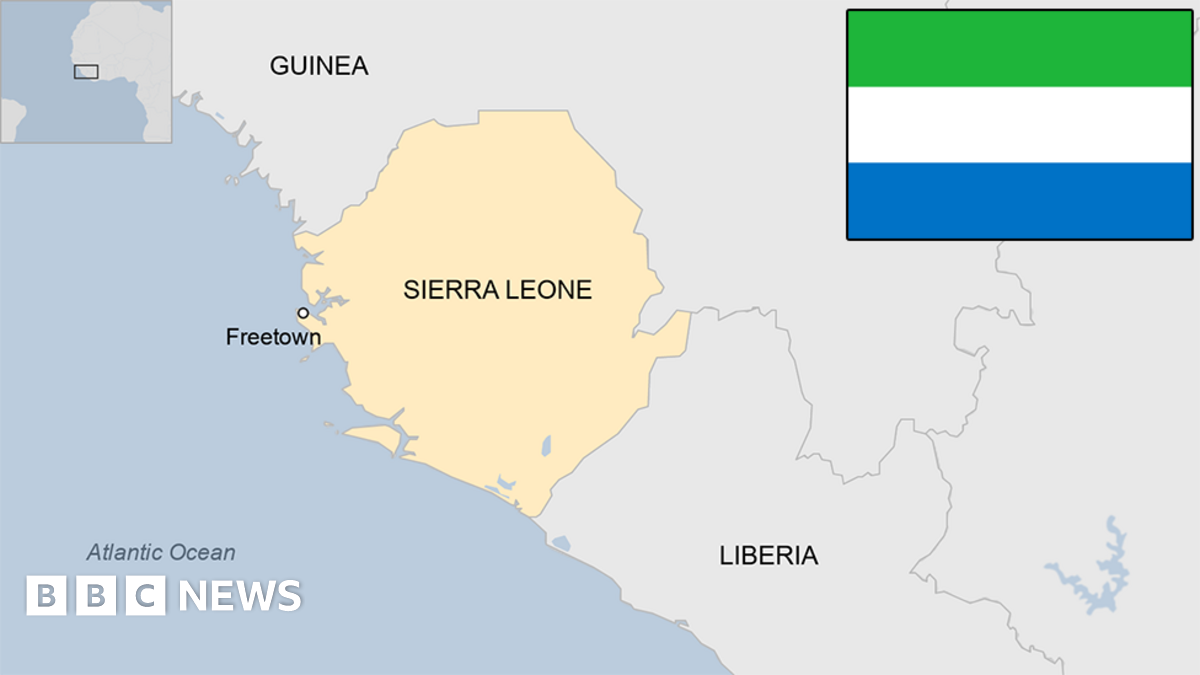
Some key dates in Sierra Leone’s history:
c 500BC onwards – Sierra Leone is settled by successive groups of peoples, though its dense tropical rainforest partially isolates the region from other West African cultures.
1462 – Portuguese explorer Pedro de Sintra maps the hills around what is now Freetown, naming them “Serra da Leoa” or “Serra Leoa” – Lioness Mountains.
1495 – Portuguese traders build a fortified trading post on the coast. They are followed by others, as as the Dutch, English and French who also establish trading stations which quickly began to primarily deal in slaves.
1787 – Following British defeat in the American Revolutionary War, thousands of Black Loyalists are settled in Canada, the West Indies or come to London. British philanthropists establish a settlement in Sierra Leone with the aim of lifting them out of poverty. British government officials are also involved, although their interest is in resettling a large group of poor citizens elsewhere away from London. This first settlement is attacked by locals, and struggles.
1792 – Black Loyalists are settled in Nova Scotia, Canada, after the American Revolution but face harsh northern winters and racial discrimination. Helped by philanthropists, nearly 1,200 decide to move to Sierra Leone and build the settlement of Freetown.
1808 – Freetown settlement becomes crown colony. With abolition of slavery, the Royal Navy begins delivered thousands of formerly enslaved Africans to Freetown, after liberating them from illegal slave ships.
1896 – Britain sets up a protectorate over the Freetown hinterland.
1961 – Sierra Leone becomes independent.
1967 – Military coup deposes Premier Siaka Stevens’ government, but he returns to power the following year and becomes president in 1971, after Sierra Leone becomes a republic.
1991 – Start of civil war. Former army corporal Foday Sankoh and his Revolutionary United Front (RUF) begin campaign against President Joseph Saidu Momoh, capturing towns on border with Liberia.
1992 – President Joseph Momoh is ousted in military coup led by Captain Valentine Strasser. Under international pressure, Strasser announces plans for the first multi-party elections since 1967. In quick succession, however, the country goes through several presidents after a series of coups.
2000 – UN forces – in the country to help end the war – come under attack in the east. Several hundred UN troops are abducted. Rebels close in on Freetown. British paratroopers are sent to Freetown to evacuate British citizens and to help secure the airport for UN peacekeepers, rebel leader Foday Sankoh is captured.
2002 – Civil war ends. UN mission says disarmament of 45,000 fighters is complete. Government, UN agree to set up war crimes court. British troops leave Sierra Leone after two-year mission to help end the fighting.
2003 – Rebel leader Foday Sankoh dies of natural causes while awaiting trial for war crimes.
2004 – First local elections in more than three decades; war crimes trials begin into atrocities committed by both sides during the fighting.
2014-2016 – Sierra Leone declares a state of emergency to tackle the deadly Ebola outbreak in West Africa which persists into 2016, killing more than 11,000 people in the region.
2023 – Gunmen attack the country’s main military barracks in Freetown, and free a number of inmates held in prisons amid political tensions following President Bio’s contested reelection.
Credit: Source link
Comments are closed.