

Russia announces ‘new phase’ in Arctic uplift as Chinese ship docks at Murmansk port
Elena Teslova
31 August 2026•Update: 31 August 2026
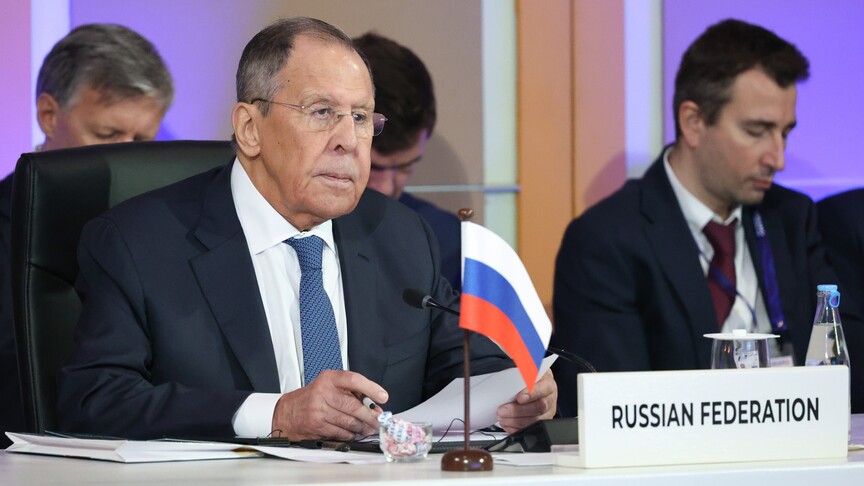
Russian Foreign Minister Sergey Lavrov on Monday declared a “new era of Arctic shipping” after a container ship from China arrived at the Russian port of Murmansk via the Northern Sea Route.
In an article published on the website Arctic.ru, Lavrov wrote that Western sanctions and NATO’s military buildup pose a direct threat to Russia’s security in the Arctic region.
“On 19 August, a landmark event took place in Arctic shipping. For the first time, a container ship from China arrived at the port of Murmansk via the Northern Sea Route, a vital part of the Trans-Arctic Transport Corridor. In collaboration with our international partners, this represents the start of a new phase in the development of Russia’s Arctic region, which accounts for at least 10 percent of the country’s GDP and is home to more than 2.5 million of our citizens,” he said.
Lavrov said China and India were among Russia’s closest partners on Arctic issues, adding that regular discussions are underway with Beijing to increase the frequency of container shipments through Russia’s northern waters.
Russia is also engaged in dialogue with New Delhi on Arctic issues, while Indian companies are involved in developing the resource potential of Russia’s Arctic region, he said.
The minister said that Moscow saw prospects for cooperation with Brazil, Indonesia, Iran and other BRICS members, as well as Belarus and other CIS partners.
South Korea and Singapore also remain interested in some Arctic projects despite their participation in Western sanctions against Russia, he said.
According to the Russian top diplomat, the biggest threat to the Arctic’s development is NATO, which continues pushing the Arctic toward militarization.
The minister mentioned NATO’s Arctic Sentry operation, launched in February, as well as military exercises and changes to the alliance’s command-and-control structures, saying such activity near Russia’s northern borders increased security risks and the possibility of incidents.
“Such military activity in the Far North poses a direct threat to Russia’s security. It also increases the risk of incidents that could trigger an armed confrontation with potentially disastrous consequences,” he said.
Lavrov also criticized the current state of the Arctic Council, saying its work had been effectively frozen since March 2022 following actions by its Western members.
“NATO and other Western countries make no secret of their true motives, openly declaring their intention to turn the Arctic into a new front for opposing the development of Russia and its like-minded partners,” he said.
Russia, he said, was ready to resume the council’s full-fledged work if all participants acted in good faith and took into account each other’s legitimate interests.
The Russian foreign minister said Moscow would continue developing the Arctic, focusing on natural-resource development, the Northern Sea Route, industrial and transport infrastructure, tourism, environmental protection and scientific research.
Lavrov also emphasized that Russia remained open to cooperation with countries prepared to work on the basis of equality and mutual benefit, adding that Moscow would defend its national interests in response to what it considers unfriendly or hostile actions.
Comments are closed.