
Rewriting the story together
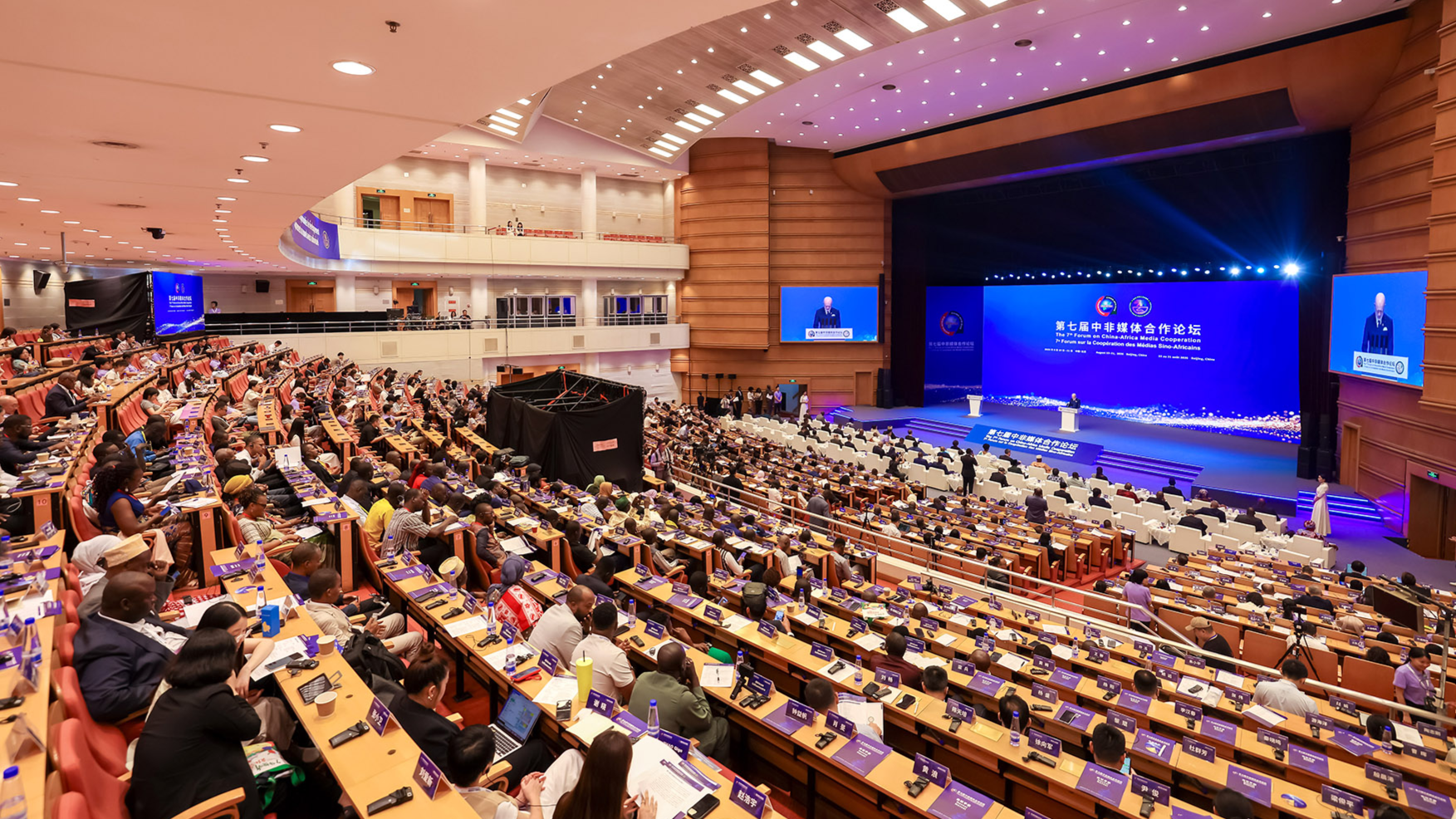
China-Africa media cooperation is expanding through co-production, training and technology, with greater emphasis on local voices and shared storytelling.
When asked how direct media partnerships could give African countries a greater role in shaping how they are represented internationally, Chernor Bah, Minister of Information and Civic Education of Sierra Leone, returned to a fundamental question: Who gets to tell the story?
“For years, Africa has been diminished and Africa’s story has been told by Western narratives,” Bah said. “Those narratives do not exalt us and they never make us really the heroes of our own stories.”
Bah’s concern was the extent to which Africans themselves help shape coverage of their continent. Closer China-Africa media cooperation, he said, offered “a huge opportunity to learn from each other” and to “author a different story” rooted in people’s experiences, cultures and aspirations.
That idea ran through discussions at the 7th Forum on China-Africa Media Cooperation, held in Beijing from Aug 19 to 21. Delegates noted that authentic representation requires practical involvement at every stage, from developing ideas and identifying sources to local-language reporting, editing and distribution.
The forum brought together about 400 representatives from China and 45 African countries, including a record 33 ministerial-level guests from African countries, according to the organizers. It was co-hosted by China’s National Radio and Television Administration, the Beijing municipal government and the African Union of Broadcasting.
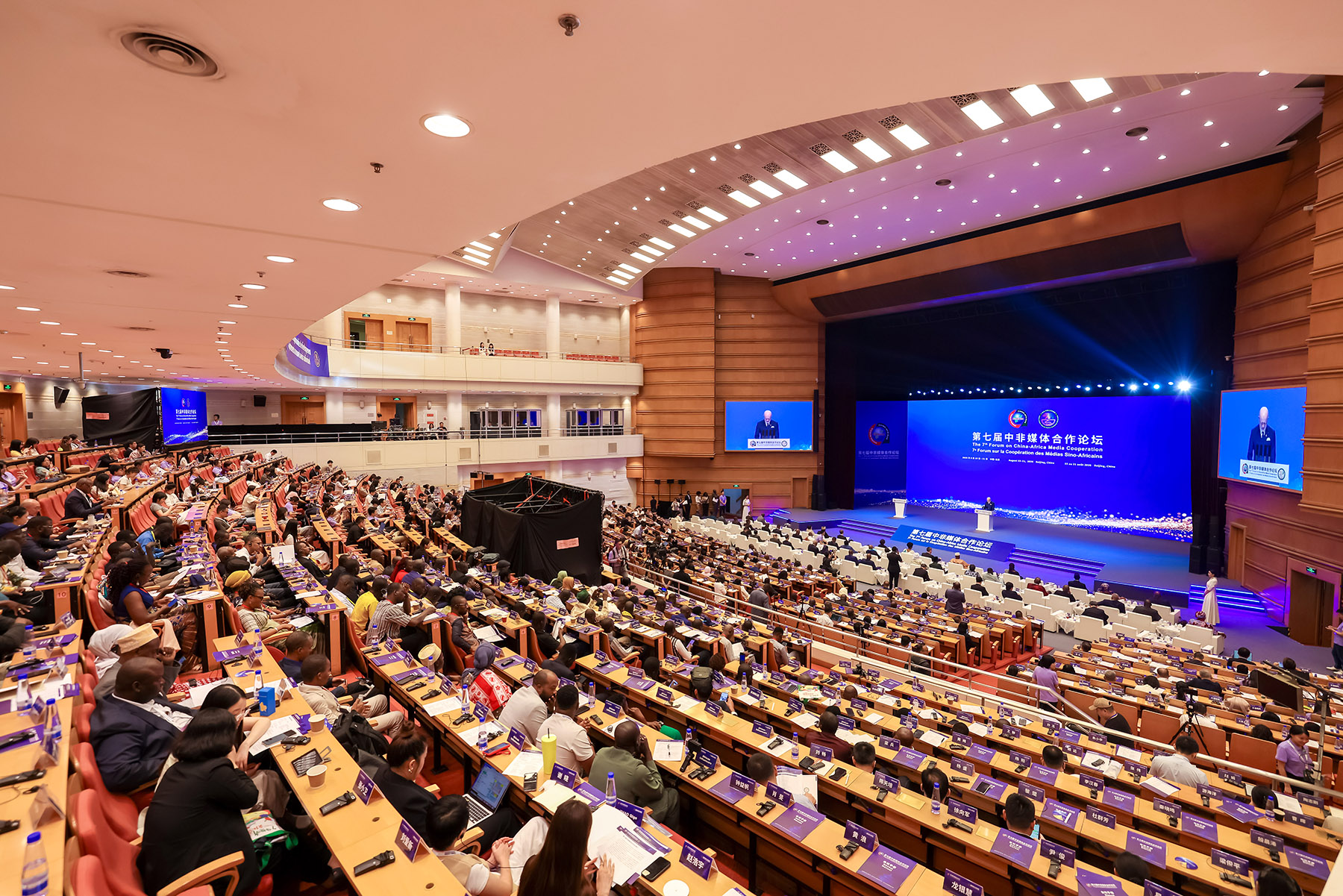
The forum came as 2026 marks the 70th anniversary of diplomatic relations between China and Africa and is the China-Africa Year of People-to-People Exchanges. Egypt became the first African country to establish diplomatic relations with the People’s Republic of China in 1956.
Co-production emerged as a main way to give local partners a role from the outset, bringing them into story development, editorial decision-making and production, rather than simply exchanging completed programs.
Dr Ismaila Ceesay, Minister of Information, Media and Broadcasting Services of The Gambia, said agreements reached with Chinese partners, including arrangements involving the country’s public and private broadcasters, should provide a foundation for moving beyond content exchange toward co-production, particularly of programs concerning young people, culture and history.
Chinese programs were already being broadcast weekly on two television stations in The Gambia, Ceesay said, while a coordinating team was being established to bring media organizations together around co-production.
He also identified modern technology, digital skills, technology transfer and newsroom modernization as pressing needs. Gambian professionals trained in China, he said, should apply and share their knowledge at home so that one training opportunity can benefit an entire newsroom.
Ceesay described young journalists as eager to demonstrate their abilities and adept at using technology to introduce their cultures and countries. Bringing Chinese and African journalists together during planning and production, he said, could also build lasting professional relationships and improve access to local languages, sources and knowledge.

Tech expands reach
Beyond policy discussions, the forum gave delegates a close look at the technologies increasingly shaping media production. They visited the 8K facilities of Beijing Radio & Television Station (BRTV) and the 33rd Beijing International Radio, TV & Film Exhibition (BIRTV 2026). The forum also featured three themed exhibition areas presenting China-Africa media cooperation, audiovisual innovation and cultural exchanges.
Displays included digital content management systems and a mobile production vehicle using 5G, AI and cloud tools.
Marie-Louise Diallo, deputy director-general of Guinea’s national daily Horoya, said she was highly impressed by BRTV’s technical capabilities, particularly the image quality offered by its 4K and 8K systems.
She also noted that Guinean journalists were participating in a training program in Beijing.
Infrastructure cooperation is also extending beyond broadcasting. Bah cited a project in Sierra Leone where, in July 2025, he led the signing in Beijing of a $5 million memorandum of understanding with China’s Diming Yimo (Tianjin) Printing Co Ltd to modernize Sierra Leone’s Government Printing Department, provide equipment and training, and support a national printing training institute.
Some displays also showed how technology could address another challenge raised repeatedly at the forum: language.
At a display by Xiaohongshu, or RedNote, an AI function translated speech and written messages in real time. An interactive map generated a postcard for a selected African country.
Speaking during a visit to BIRTV 2026, Jean Maurice Uwera, deputy spokesperson for the government of Rwanda, identified language as a practical obstacle to the wider circulation of audiovisual content.
“Chinese culture is quite rich, but there is always that barrier of language,” he said, adding that dubbing and subtitles could help productions reach audiences who might otherwise be unable to engage with them.
As AI plays a larger role in media production and distribution, the issue also extends to which languages such systems can recognize. Bah said African languages should be included in AI models and African partners should participate in developing them. Such cooperation, he said, could improve translation and digital tools for the communities whose stories they carry.
ALSO READ: Youth festival boosts China-Africa ties
Bah noted the exchange should also work both ways, with African stories reaching Chinese audiences just as Chinese stories reach Africa. Joint reporting and content creation, he added, could introduce audiences to everyday life, entrepreneurship, history, culture and the experiences of young people.
The forum released a joint declaration and announced 80 achievements in China-Africa cooperation in areas including production and exchange, professional development and media technology. According to the organizers, the declaration advocates sustained news cooperation, joint productions, program translation and mutual broadcasting, AI application and governance, and youth exchanges.
For Ceesay, the purpose of such cooperation ultimately comes back to how people understand one another.
The objective, he said, should be to “tell our story, tell the African story, tell the Chinese story” in a way that enables people to understand one another’s challenges, aspirations and history.
Contact the writers at shamim@21stcentury.com.cn
Comments are closed.