

NEA receives D5.8M surveillance items to boost community conservation
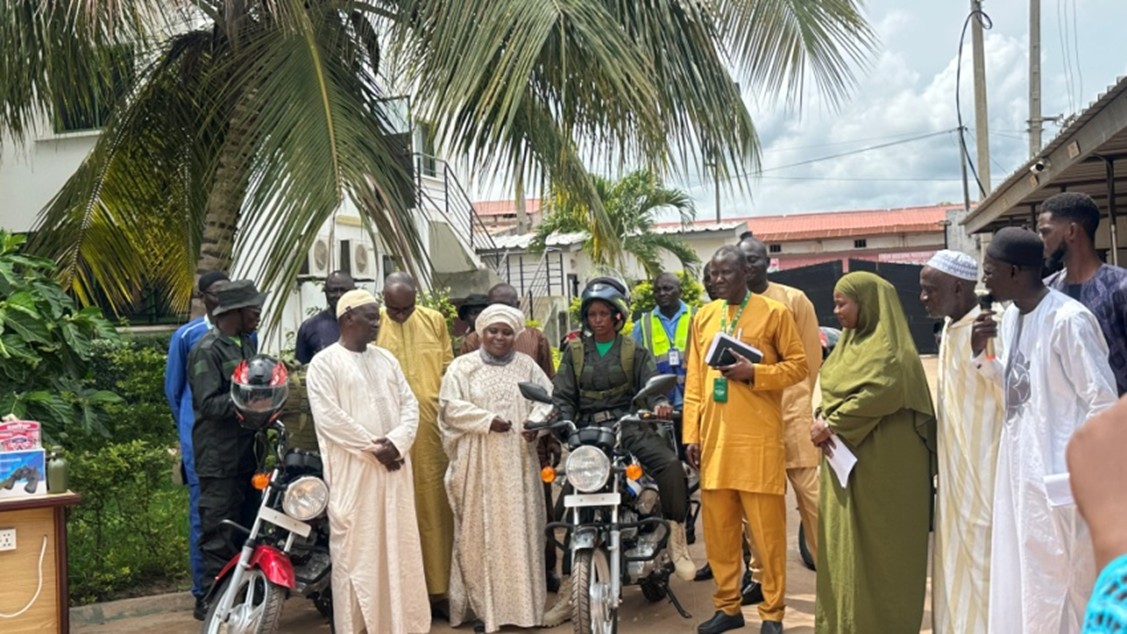
The equipment, procured under the GEF-6 Land/Seascape Planning and Ecosystem Restoration Project, was presented at the NEA grounds to communities in the Central River Region and Kartong. A total of 35 trained surveillance officers received motorcycles, uniforms and field gear to enhance monitoring and law enforcement in Indigenous and Community Conserved Areas, ICCAs.
Items donated include 35 motorcycles, 35 sets of field uniforms with bags, caps, boots and water bottles, 10 binoculars, 4 digital cameras and telescopes, 23 field guidebooks on birds, trees and mammals, as well as wheelbarrows, rakes and cutlasses.
Minister of Environment, Rohey John Manjang, said the initiative demonstrates government’s commitment to protecting biodiversity while empowering local communities to take ownership of conservation.
She described the establishment of ICCAs in Kartong and CRR as a major milestone in safeguarding ecosystems and promoting sustainable use of natural resources.
“One of the most commendable achievements of this project has been the recruitment of 35 surveillance staff from communities surrounding these protected areas. By employing local people, we are creating jobs while strengthening community ownership of biodiversity conservation,” she said.
The Minister noted that the motorcycles and monitoring equipment will improve patrols, data collection and response to illegal activities. She urged the new officers to use the materials responsibly.
“These materials are an investment in both conservation and the people entrusted with protecting these invaluable natural assets. Serve with honesty, dedication and professionalism because protecting the environment is our collective responsibility,” she added.
Project Coordinator Ousainou Touray said the five-year GEF-6 project, funded by the Global Environment Facility through UNEP and implemented by NEA, has invested US$5.6 million in ecosystem restoration and biodiversity conservation. The surveillance materials alone were procured at a cost of GMD5,839,823.
He said the project has also supported policy reforms, protected area management, beekeeping, sustainable livelihoods and capacity building. Community members have further participated in exchange visits to Kenya to learn best practices in community conservation.
NEA Executive Director Dawda Badjie urged the officers to use the motorcycles and equipment solely for conservation work. He warned that the motorcycles will be tracked to prevent misuse and expressed concern over past abuse of government resources.
“The success of this initiative depends on your integrity, professionalism and commitment to protecting our biodiversity,” he said.
CRR Governor Alhaji Ousman Bah commended the project for investing in community-led conservation. He encouraged beneficiaries to maintain the equipment properly, noting that effective stewardship could pave the way for similar initiatives nationwide. He also reaffirmed the regional administration’s support for the project.
Credit: Source link