

Morocco Orders Parties to Follow Data Rules, Flag AI Content Before September 23 Vote
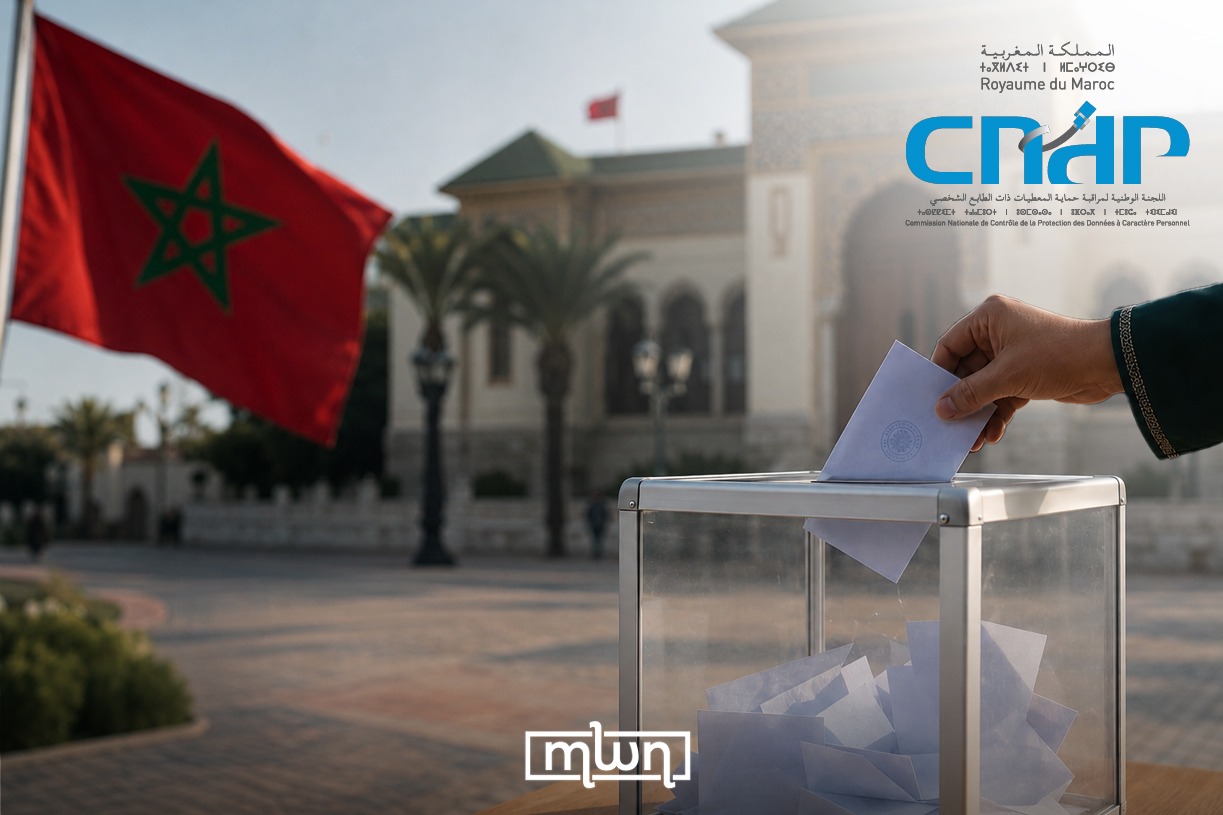
Marrakech – Morocco’s National Commission for the Control of Personal Data Protection (CNDP) has told political parties which rules they must follow when handling personal data throughout the coming legislative elections.
The elections for members of the Chamber of Representatives are scheduled for Wednesday, September 23. Ahead of the vote, the commission reminded parties of their obligations under existing law and under recognized principles of data protection. It then moved to inform citizens, and the electorate in particular, of the same requirements.
The first obligation concerns notification. Parties must comply with Law 09-08 by declaring any processing of personal data to the CNDP before that processing begins, as required by Article 12 of the law.
The commission also pointed to limits on how data may be used. Parties must respect the stated purpose and the retention period of the data they gather, in line with Article 3. Exploiting a person’s political opinion without explicit consent is prohibited under Article 21.
Direct outreach drew a specific warning. The commission cautioned against any direct marketing without prior consent, citing Article 10 of Law 09-08.
Artificial intelligence formed a separate part of the guidance. The CNDP called on parties to flag any content produced by AI, referencing Article 447-2 of the 2018 Penal Code and Articles 39, 51, and 53 of Organic Law 53-25 on the Chamber of Representatives.
The commission then returned to the core principles of data handling. It recommended collecting personal data fairly and transparently, again under Article 3, and guaranteeing the rights of the people whose data is processed, as set out in Chapter II, from Article 5 to Article 9.
Two further points addressed the chain of responsibility. Subcontracting must be governed by contracts that comply with Law 09-08, under Articles 23 and 25. Any transfer of data must also follow the law, under Articles 15 and 18 and Chapter V, Articles 43 and 44.
The CNDP asked all concerned parties to respect the rules, cooperate, and take responsibility for protecting personal data. To support the process, it opened a direct line, 3020, for questions about the rules and for tracking anything tied to data protection across the different phases of the vote.
The guidance lands as the electoral calendar accelerates. The filing of candidacy declarations runs from Monday, August 31, to Wednesday, September 9. The process has two steps: candidates first file through a dedicated electronic platform, then submit the original dossier to the authority that receives the declarations.
The official campaign follows. It opens in the first hours of Thursday, September 10, and closes on Tuesday, September 22, at midnight, one day before the vote.
Data protection is not the only field under tighter rules. The Higher Council of Audiovisual Communication (CSCA) fixed an electoral period for broadcast media running from August 15 to September 22, requiring pluralism, balance, and a clear separation between news and commentary. The council also barred the broadcast of election-related opinion poll results from August 26 through the close of voting.
AI content faces parallel scrutiny in that space. Broadcasters may not air election material generated or altered by AI that could mislead the public, though such content is allowed for information, explanation, or verification when its artificial nature is clearly marked.
The overlap points to a shared concern across the two bodies. Both the CNDP and the audiovisual regulator have moved to limit how personal data and machine-generated content are used as the campaign draws voters’ attention.
The attention to AI marks a new element in this cycle. This is also the first legislative election in which AI-generated content has drawn dedicated rules. When Moroccans last voted in 2021, such tools were not yet in wide public use, so the requirement to label machine-generated material is a new addition to the electoral framework.
For the CNDP, the message to parties is that the electoral contest does not suspend the duties they owe to the people whose data they collect.
Read also: Morocco’s 2026 Elections: What Voters Need to Know Before September 23
Credit: Source link
Comments are closed.