

Memories of Cuba for sale in Little Havana shop
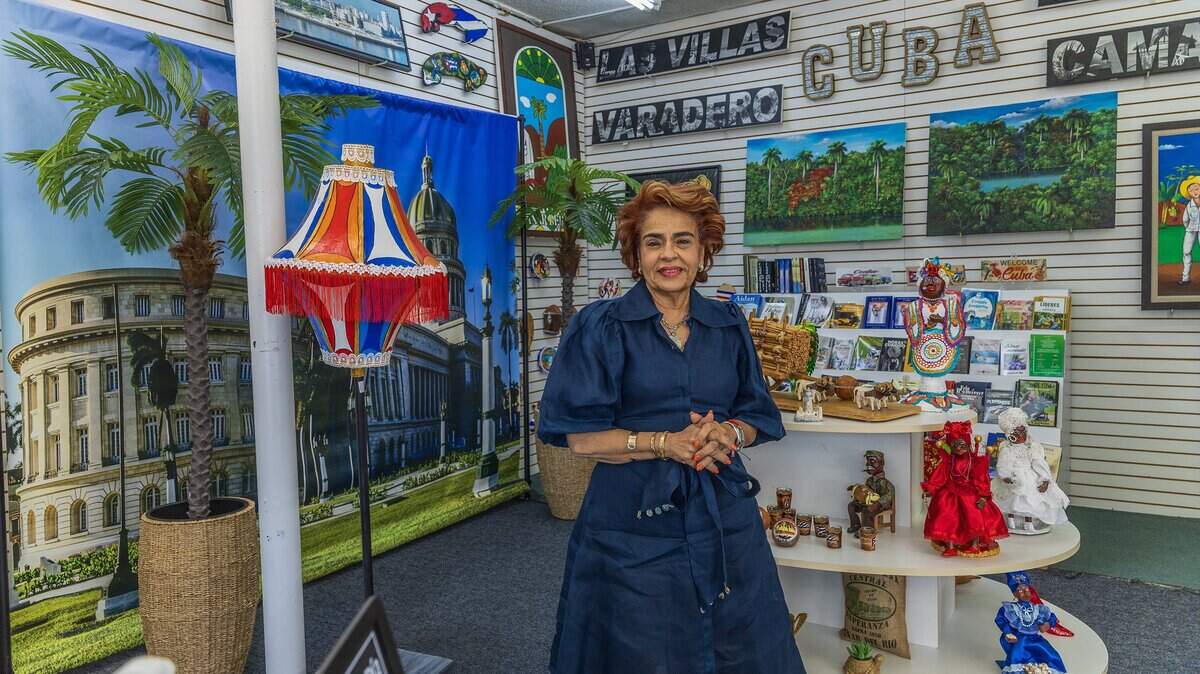
Carmen Álvarez is the owner of the Sentir Cubano shop—located at 8th Street and 31st Avenue in Miami—which sells items, maps, photos, and board games dedicated to preserving Cuban heritage. Sentir Cubano has expanded its activities to include book presentations and documentary screenings on Saturdays.
pportal@miamiherald.com
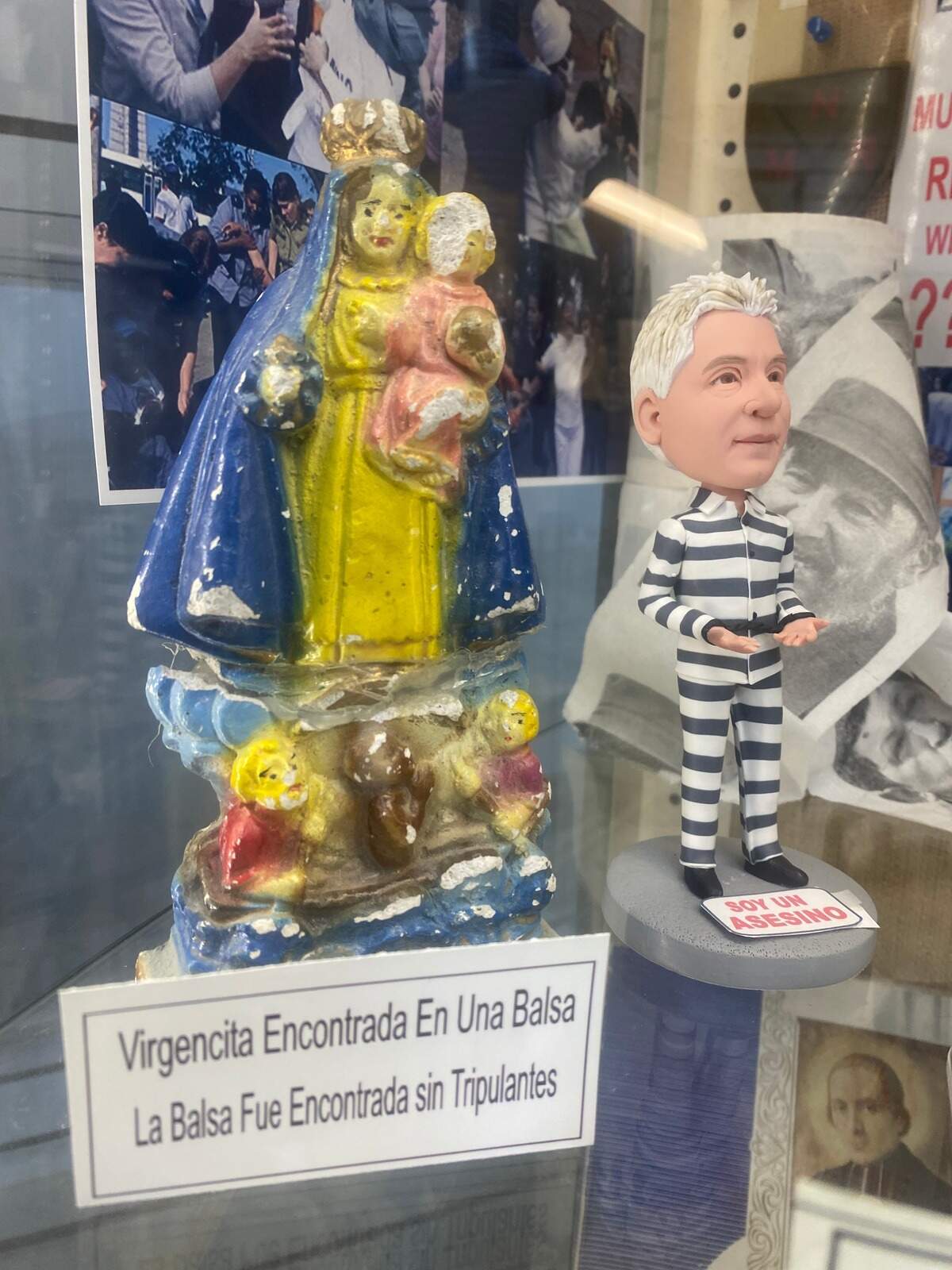
What do a book of poetry, a cigar humidor, a 1928 map of Cuba, an image of the dictator Miguel Díaz-Canel in a prison uniform, and a Virgen de la Caridad found on an empty raft have in common?
They are all part of a Cuban ritual, though far from sacred, in the middle of Miami on Calle Ocho and 31st Avenue. Sentir Cubano started more than 20 years ago as a souvenir shop and today, with increased ambitions, has become a social and cultural center where literary gatherings and book and documentary presentations are held on Saturdays at 2 p.m.
“I wanted to create a place where Cubans could sit and share their opinions. That’s how it used to be, a boiling pot,” says owner Carmen Álvarez, remembering the days when Sentir Cubano benefited from the proximity of the Libreria Universal, a bookstore that left a void when it closed in 2013 after 48 years of bringing books and Spanish-language culture to Miami.
A natural conversationalist, Álvarez had the vision to set up a small salon where visitors could do what Cubans love most: talk. Among school yearbooks from Colegio de Belén before 1959, photos of music legends like Benny Moré and politicians like Eduardo Chivás — the leader of the Partido Ortodoxo — Álvarez says she was born in Tampa with the Cuban national anthem playing in the background.
.jpg "IMG_6690 (1).jpg")
To relax her mother during delivery, the doctor decided to bring her the sounds of her homeland. Digna, as Álvarez’s mother was named, worked until the last months of pregnancy at the gas station she owned with her husband.
Those were the hard exile years, when Cubans expected to celebrate the next Christmas in Havana and conditioned the sale of their house on the fall of Fidel Castro, while trying to build businesses and careers because the stay did not seem short.
“When I’m here I feel like I’m in my grandparents’ time, like that painting,” Álvarez says, pointing to a picture of a Cuban landscape and a peasant with a machete in his hand.
Memories of paradise
Sentir Cubano holds that prosperous paradise so many Cubans remember.
“My father had a business in Victoria de las Tunas and came to the United States every year to buy cars. He told me that American cars were driven in Cuba before they were driven here,” Álvarez recounts.
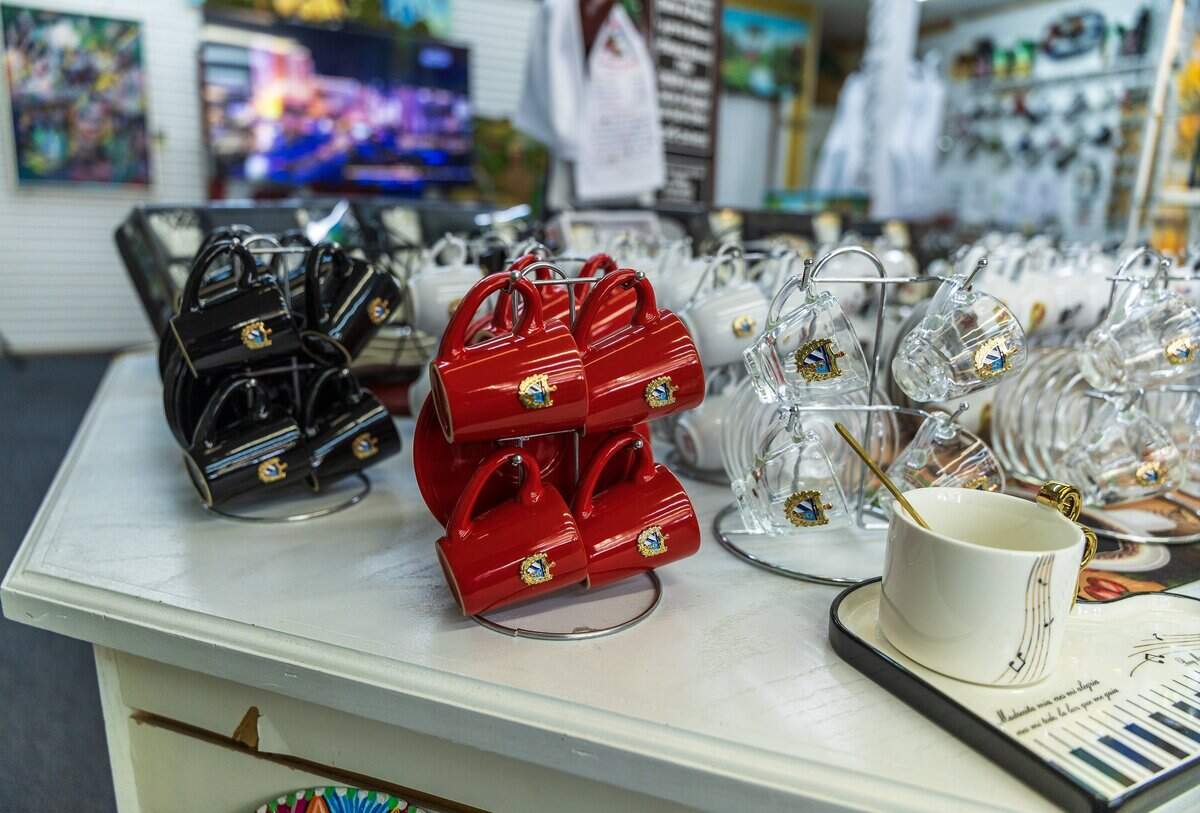
The shop also carries that note of nostalgia for those born on the island. There’s a section dedicated to coffee makers of many sizes and colors; reproductions of El Morro castle with a small slot for a paper roll that tells the story of the fortress; and maracas made in Cuba by artisans.
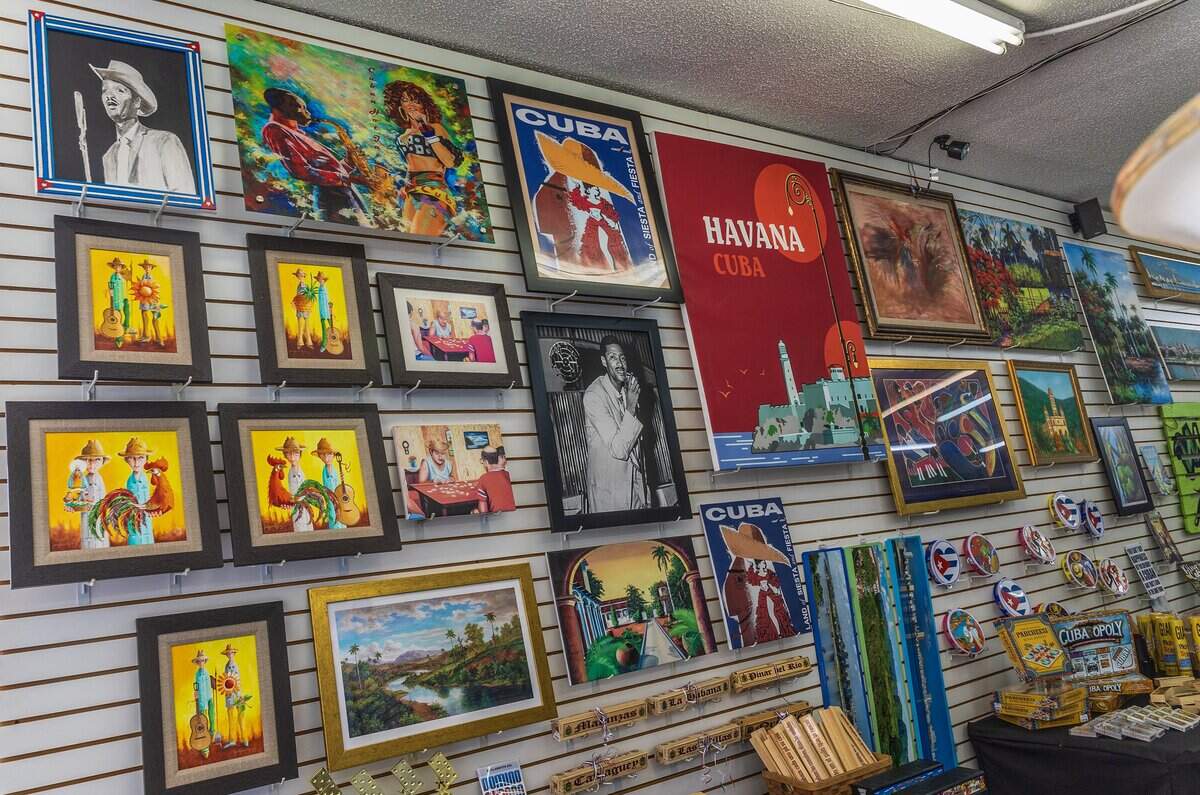
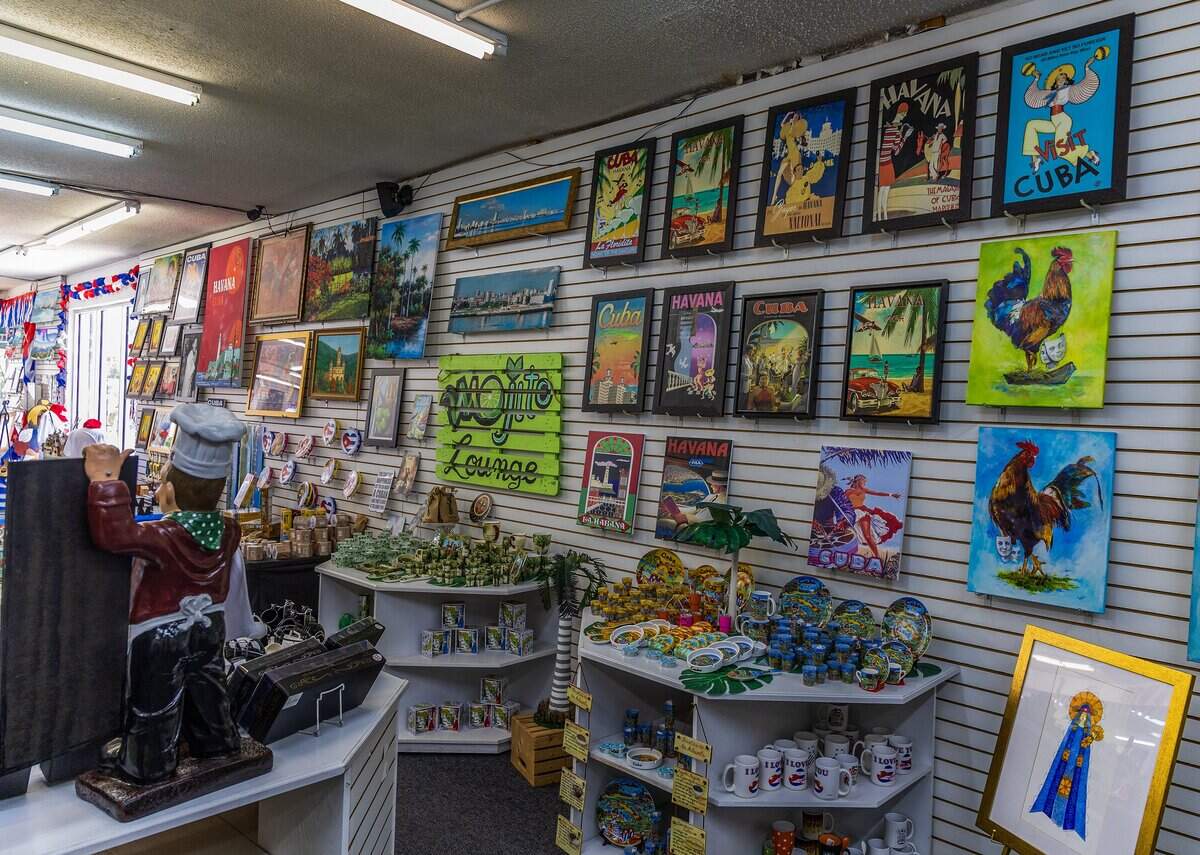
Like a bazaar without order to be explored slowly with the pleasure of discovering gifts, memorabilia and items of historical value, Sentir Cubano also has a section aimed at those who have never visited Cuba.
Cubanómetro has 200 trivia questions — it’s a game about Cuban identity and traditions created by two young men, Carmen says.
There is also Cuba-Opoly, a Cuban-style Monopoly game designed to bring the family together around a table to test their knowledge of the lost island. Other traditional games add to the selection: cubilete, trompo, yaquis, parchisi, Chinese checkers and tambourines.
Valuable and old books like “A Taste of Old Cuba” by María Josefa Lluriá de O’Higgins, with more than 150 recipes — “delicious, authentic and traditional,” as the cover proclaims — revive memories of the author’s childhood in pre-Castro Cuba.
A ‘gift’ for Díaz-Canel and other Cuban humor vendettas
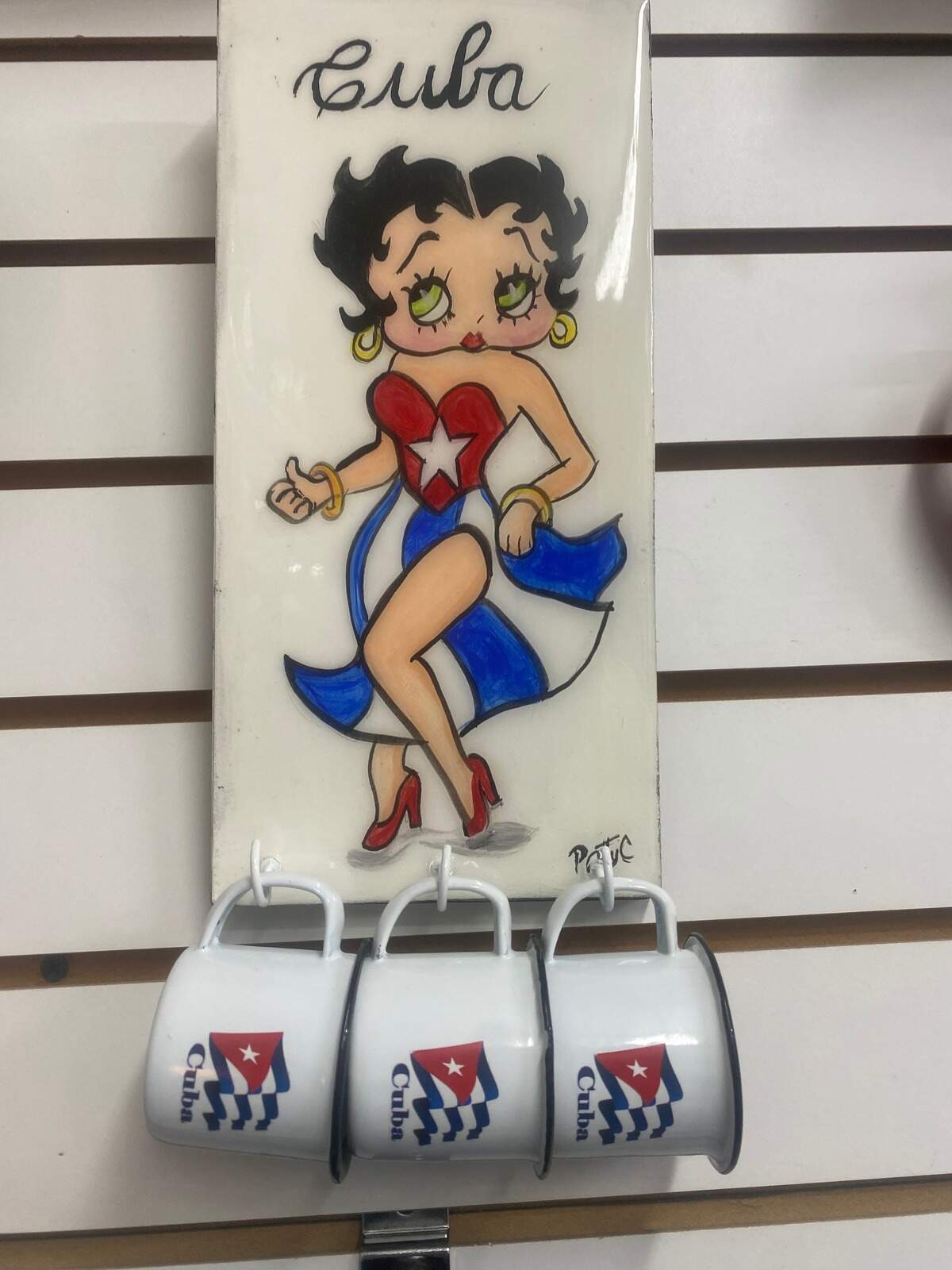
Sentir Cubano carries items that brighten the day, like a Betty Boop figure that is the centerpiece of an aluminum espresso cup set — with the Cuban flag, of course. That irony — that an American cartoon star is so popular on the island — is not surprising. So many have dreamed of Betty Boop’s curves under a red dress that the little doll appears on birthday cakes, balloons, even on the license plates of many Cubans in Miami.
.jpg "IMG_6688 (1).jpg")
That is one of the shop’s advantages: Cuban-ness is not always obvious. Sometimes you want to give a wooden cigar humidor with a touch of luxury. Or you’re looking for a Cuban detail to send to a friend in France, but you’re determined not to pick something trite. At Sentir Cubano you can find that flamboyant orange ceramic tile to place by the entrance, in the kitchen, on the terrace or in the patio — next to a malanguita plant — just as your grandmother dreamed.
But the shop’s best humorous gesture is in the restroom, open to customers, who certainly want to grant a wish. The toilet bowl has Díaz-Canel’s face painted on it, so people can leave their deserved offering.
The dictator will go down in history for saying, “La orden de combate está dada” (The combat order has been given) when Cubans took to the streets to demand freedom on July 11, 2021. Pure catharsis that exiles can dedicate in the name of those silenced on the island. You can also bring the fun home: They sell a target game with Díaz-Canel’s face.
The business expands
Carmen and her husband, anti-Castro activist Santiago Álvarez, bought Sentir Cubano from its founders, Miguel and María Vázquez, just under two years ago.
With the change of ownership, they inherited the merchandise in the shop and began buying new items, Carmen says, showing a bust of José Martí that once stood in the office of Cuban ruler Fulgencio Batista and that people have tried to buy from her for a large sum. But she won’t sell it, because beyond her admiration for Martí, the bust has become a sort of guardian of the place.
Actor Ricardo Becerra, who worked with the previous owners, now handles publicity and the social media for Sentir Cubano.
“I’m like the store’s ambassador in several places, not just on social media,” says Becerra, one of the protagonists of the film Plantados, directed by Lili Vilaplana. “Sometimes I go to a place wearing a Sentir Cubano guayabera. That’s intentional.”
Becerra says Sentir Cubano hosts two regular monthly literary gatherings: Lunetreando, presented by Editorial Lunetra and run by writer and editor Pablo Socorro, and the Peña de la Buena Suerte, organized by editorial Velámenes and presented by the writer Juan Carlos Recio.
The other Saturdays are filled with various cultural events, such as the X Convención de la Cubanidad (10th Convention on Cuban Identity) on Aug. 8, in tribute to José Lezama Lima, coordinated by the Ego de Kaska foundation and Ediciones Exodus. On Aug. 22 singer Marcelino Valdés will present his album De Valdés a Valdés, in which he performs songs by composer Marta Valdés.
Sentir Cubano combines culture, history and celebration, as it has a department for customers who come to buy or rent what they need to throw a Cuban-themed party.
One of the objects Carmen Álvarez considers most valuable is a reproduction of a boat like those that brought Cuban migrants during the Mariel exodus.
“It was made by an American who, when Mariel was distributing hot dogs and hamburgers to those arriving in Key West. She gave it to me,” she said.
“I think we Cubans have to come together, because we’ve had many exoduses. If we Cubans don’t unite, we’re not going anywhere,” Carmen noted.
Thanks to the generosity of those who donate objects, or the indifference of others who inherit Cuban items from their parents, Sentir Cubano’s collection has grown.
Carmen receives them with love and displays them in that labyrinth of Cuban-ness, as colorful and sometimes as moving as the nation’s history and its exile.
“I like to emphasize an image of the Caridad in tatters,”Becerra said, “a little plaster virgin found on a raft at sea that had no crew. It’s one of the objects with the most meaning.”
Sentir Cubano, 3100 SW EighthSt, 305-644-8870.

Sarah Moreno cubre temas de negocios, entretenimiento y tendencias en el sur de la Florida. Se graduó de la Universidad de La Habana y de Florida International University. @SarahMoreno1585
Comments are closed.