

Kemayah Challenges Silence in US$19M Drug Bust | News
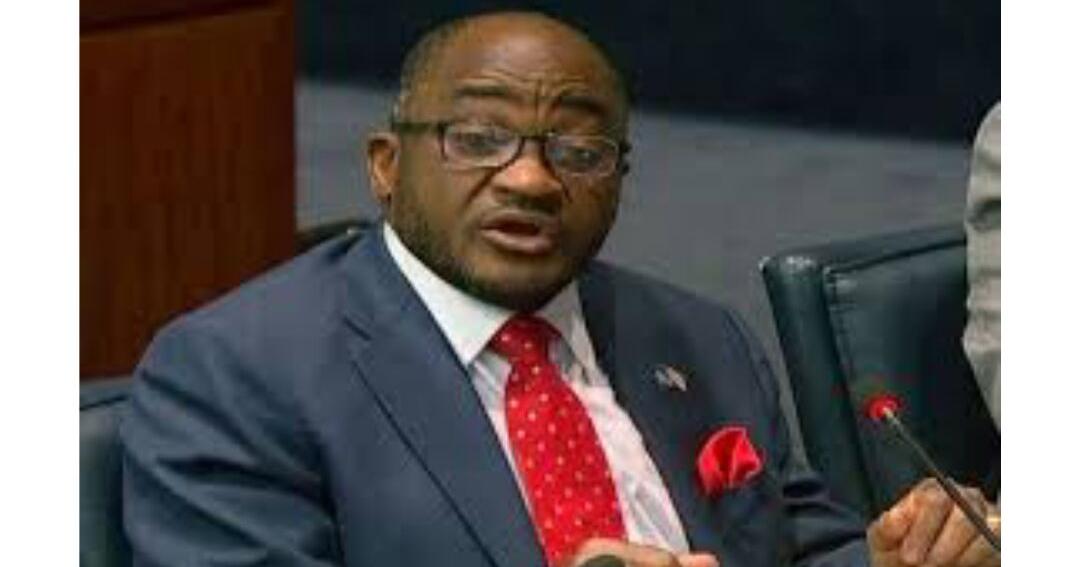
Former Foreign Minister Ambassador Dee-Maxwell Saah Kemayah, Sr. has publicly challenged what he described as growing silence and limited disclosure surrounding the ongoing investigation into a US$19 million cocaine seizure at Roberts International Airport, urging the Government of Liberia and security agencies to fully open the case to public accountability by identifying all individuals allegedly linked to the operation.
Kemayah made the remarks over the weekend while serving as proxy for former President George Manneh Weah during the 20th Anniversary and 25th Circle celebration of the Ambassador George Weah Global Institute of Vocational Education (GIVE) held in Barnersville.
His comments come at a time of heightened public scrutiny over one of Liberia’s most significant drug seizures in recent years, a case that has sparked national debate over transparency, national security, and the limits of confidentiality in criminal investigations involving transnational networks.
The former minister used his address to shift focus from the vocational and educational event to what he described as an urgent national crisis: the proliferation of illicit drugs and its impact on Liberian society. He warned that the fight against narcotics must be collective, consistent, and free from political or institutional bias.
“The fight for drugs in our country is not selective. It should be a holistic fight,” Kemayah said. “We cannot speak and choose in a fight for drugs.” He stressed that Liberia’s response to drug trafficking must not be fragmented or influenced by status, politics, or social standing, but instead should reflect a unified national commitment to addressing a threat he described as widespread and deeply destructive.
He further cautioned that the growing presence of illicit drugs in Liberia poses a serious threat to national stability, social cohesion, and economic development. According to him, the country’s international image is also at risk if urgent action is not taken to confront the problem decisively. “If Liberia is classified or known to be a drug hub, it’s bad for our country. It will affect different aspects of our livelihood,” he warned, noting that the consequences would extend beyond law enforcement into every sector of society, including education, employment, and public health.
Kemayah then turned his attention to the ongoing US$19 million cocaine seizure investigation, calling for what he described as full openness from the government and security institutions. He argued that continued secrecy surrounding the case has fueled speculation and undermined public confidence in the state’s ability to effectively investigate and prosecute high-profile drug trafficking cases.
“We need to know. Let the government try to do away with the speculation in and out of Liberia as to who is involved or who was involved with the US$19 million drug scheme,” he said. His remarks reflect growing public pressure on authorities to provide clearer updates on the case, including the identities of suspects, the origin of the shipment, and the network allegedly responsible for transporting the drugs through Liberia.
Kemayah emphasized that transparency in such a major case is not optional but a fundamental right of citizens. He insisted that Liberians deserve full disclosure on how the cocaine entered the country, who facilitated its movement, and how it was intended to be exported. “It is our right. It is the right of all Liberians to know who was involved. How was the cargo arranged? Where did the cocaine come from? Which country did it come from? How did it land in Liberia?” he asked, raising a series of questions that reflect widespread public curiosity and concern about the scope of the alleged trafficking operation.
He also noted that Liberia does not produce cocaine, underscoring the importance of international cooperation in tracing the origin of the seized drugs and identifying the transnational networks involved. His comments highlight the broader challenge facing West African states, which are increasingly being used as transit routes for narcotics destined for Europe and other global markets.
Describing the drug seizure as “evil,” Kemayah called for a unified national condemnation of trafficking activities, urging Liberians from all walks of life to speak out against the growing drug problem. “To have US$19 million drugs in our country… this is something that every Liberian who means well for the future of this country must condemn,” he said. “It is evil. It is evil. It is evil.” His repeated emphasis underscored the emotional weight of his remarks and his concern over the scale of the trafficking attempt.
He further warned that drug abuse in Liberia has reached alarming levels, affecting nearly every household in the country. According to him, the crisis has become so widespread that no family remains untouched by its impact. “I am of the strongest conviction that no family in the Republic of Liberia is untouched by the abuse of drugs in our society,” he said. “My family is no exception.” His remarks reflect a growing national discourse on the social consequences of drug addiction, particularly among young people who represent a significant portion of the population.
Kemayah stressed that the availability and use of narcotics are undermining the future of Liberia’s youth and weakening the country’s long-term development prospects. He called for greater national awareness and collective action to address the issue, warning that failure to act decisively could have lasting consequences. “The future of the youth of this country is being threatened by the availability of drugs in our society,” he said. “This should be a concern for every well-meaning Liberian.”
In addition to calling for public accountability in the cocaine investigation, Kemayah urged key security institutions, including the Liberia Drug Enforcement Agency (LDEA) and the Liberia National Police (LNP), to ensure full disclosure of all individuals connected to the case. He argued that transparency must extend to all levels of involvement, whether direct or indirect, and should not be influenced by an individual’s social or political status. “I want to call on the Government of Liberia, the LDEA, the LNP, and all related security agencies to make a full disclosure of all those, irrespective of status, who are behind or involved directly or indirectly in the recent US$19 million drug seizure,” he stated.
His comments come amid ongoing investigations into the seizure of approximately 237.6 kilograms of cocaine allegedly destined for export through RIA. Authorities have indicated that the investigation remains active and sensitive, involving multiple leads and possible international connections. However, security officials have been cautious about releasing detailed information, citing the need to protect intelligence sources, ongoing surveillance operations, and cooperation with foreign law enforcement partners.
The Liberia Drug Enforcement Agency (LDEA) has maintained that premature disclosure of certain investigative details could compromise the integrity of the case and hinder efforts to dismantle the broader trafficking network. Officials have also warned that public release of sensitive information could jeopardize ongoing surveillance operations and discourage future international intelligence-sharing cooperation.
Despite these concerns, public debate continues to intensify, with civil society organizations, political actors, and ordinary citizens calling for greater transparency. Many argue that the scale of the cocaine seizure and the high level of public interest in the case require authorities to strike a careful balance between protecting investigative integrity and ensuring public accountability.
Observers note that the case has become a major test of Liberia’s criminal justice system and its ability to handle complex transnational crime investigations while maintaining public trust. The debate has also raised broader questions about governance, institutional transparency, and the country’s preparedness to confront organized criminal networks operating within and across its borders.
As the investigation continues, Kemayah’s intervention adds further momentum to calls for accountability, placing additional pressure on government institutions to clarify their approach to public communication in the case. His remarks have reinforced growing expectations that the government will eventually disclose more information about the suspects and the structure of the alleged trafficking network.
For now, the US$19 million cocaine seizure remains under active investigation, with authorities continuing to pursue multiple leads. While officials insist that due process must be followed and sensitive intelligence protected, public pressure for disclosure continues to mount, underscoring the tension between national security considerations and demands for transparency in one of Liberia’s most closely watched drug-related cases in recent history.
Credit: Source link
Comments are closed.