

Giant kangaroos survived in New Guinea until around 6,500 years ago, and a remarkable fossil discovery is forcing scientists to rethink long-held ideas about megafauna extinction. |
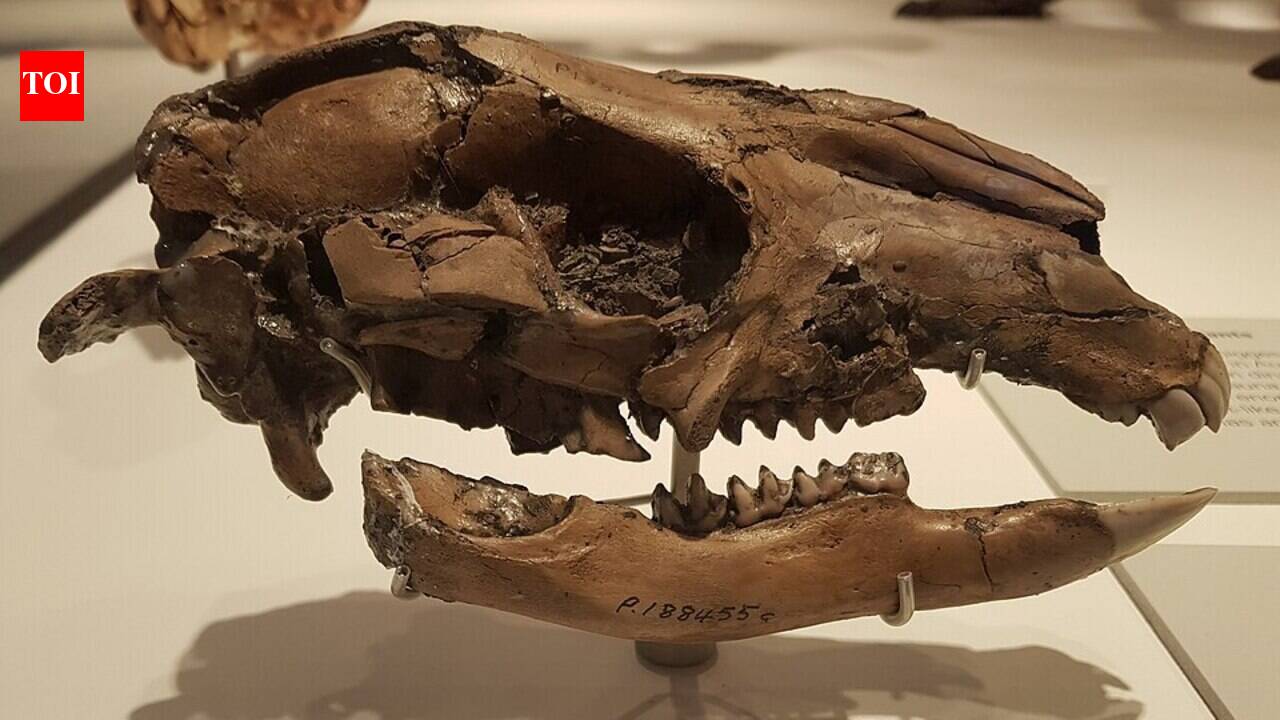
For many years, scientists believed giant kangaroos, which lived in both Australia and New Guinea, became extinct about 40,000 to 50,000 years ago alongside other large mammals during prehistoric times. The giant marsupials, which weighed more than twice as much as the red kangaroo, were thought to have become extinct after humans migrated to the ancient land of Sahul.However, a fossil discovered at Taora Rockshelter on the northern coast of Papua New Guinea is challenging that timeline. According to a study published in npj Biodiversity, researchers identified a giant kangaroo finger bone belonging to Protemnodon tumbuna and dated it to approximately 6,500 years ago. This makes it among the youngest known megafauna fossils from the region and suggests some giant kangaroo populations survived far longer than previously believed.The finding has once again raised questions about the reasons for the extinction of these animals. Instead of pointing to a simple explanation such as human hunting, the finding suggests a combination of factors, including climate, geography, environment, and human activity. Researchers say new fossils are important because they can reshape our understanding of prehistory.A fossil that changes the timeline.The fossil from Taora Rockshelter represents the first clear evidence that giant kangaroos survived into the mid-Holocene in coastal New Guinea. Earlier research showed that Protemnodon species in Australia disappeared around 41,000 years ago. At the same time, previous discoveries in New Guinea suggested that isolated mountain regions may have acted as refuges for some megafaunal species.The discovery at Taora extends the known survival of giant kangaroos in New Guinea beyond previous estimates and provides the first clear evidence that these animals inhabited not only isolated highland regions but also coastal environments. The findings suggest that giant kangaroos coexisted with human communities in New Guinea for thousands of years after the development of agriculture and permanent settlements, indicating that human activity alone was unlikely to have been the sole cause of their extinction.Rethinking the causes of megafauna extinctionThe extinction of Ice Age megafauna is still one of the most controversial questions in palaeontology. Two main theories dominate the debates on the issue. According to the “overkill theory,” the arrival of early humans led to the rapid extinction of megafauna due to excessive hunting. Another explanation lies in the climatic changes of the late stages of the Ice Age.The discovery of the Taora fossil proves that the situation was actually much more complicated. If giant kangaroos existed in New Guinea until about 6,500 years ago, then they coexisted with human settlements for many thousands of years before they became extinct. In that period of time, agriculture developed, and settlements appeared, yet some species of giant marsupials survived.Scientists increasingly believe that extinction patterns varied across the ancient continent of Sahul. Australia’s increasingly dry climate and expanding grasslands may have reduced suitable habitat for large herbivores, while the tropical forests of New Guinea may have provided more stable environments that allowed isolated populations to persist. According to Megataxa, several species in the extinct giant kangaroo genus Protemnodon suggest that these marsupials were more diverse and occupied a wider range of habitats than previously recognised.
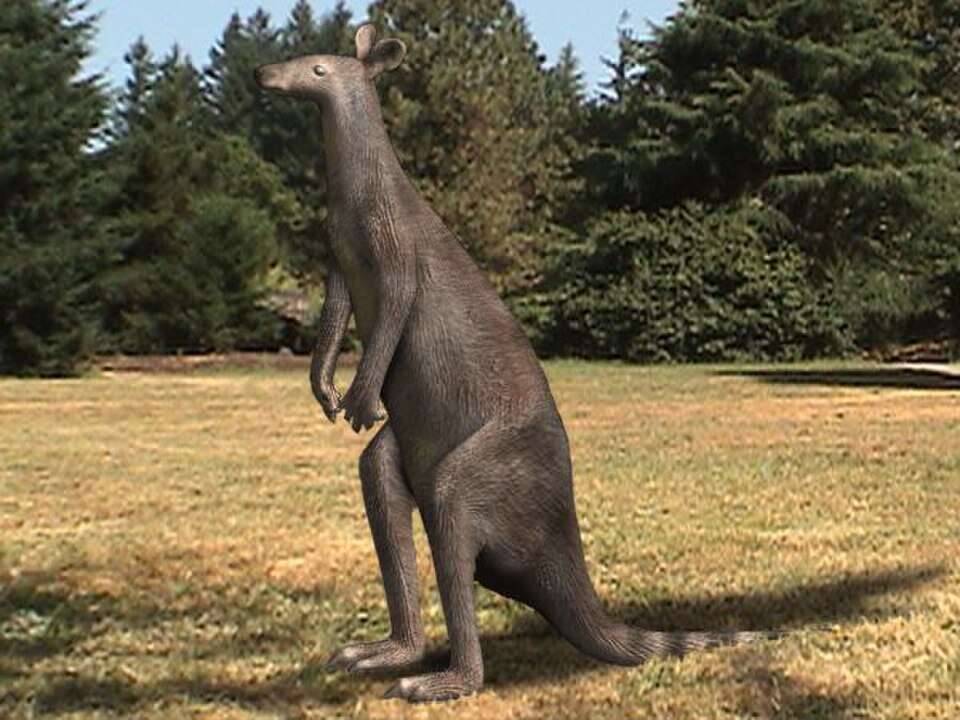
An artist’s reconstruction of Protemnodon, an extinct giant kangaroo. Recent fossil discoveries indicate that these marsupials persisted in parts of New Guinea thousands of years after they disappeared from mainland Australia. Image Credits: Wikimedia Commons
What the discovery means for future researchRecent findings have shown that giant kangaroo species survived much later than previously believed. The Taora discovery shows the need for more palaeontological research in New Guinea. Compared with Australia, relatively few fossil sites in New Guinea have been explored because tropical forests make field research difficult.Many fossils may remain undiscovered for the same reason. As the Taora discovery shows, more excavations could shed light on surviving megafauna populations and help us better understand New Guinea’s ecological history and extinction patterns. In conclusion, extinction is often the product of multiple factors. It usually depends on the combination of different environmental and ecological factors that differ from one region to another and from one time period to another.
Credit: Source link
Comments are closed.