

Extraction under fire: How mining reshapes conflict in the central Sahel
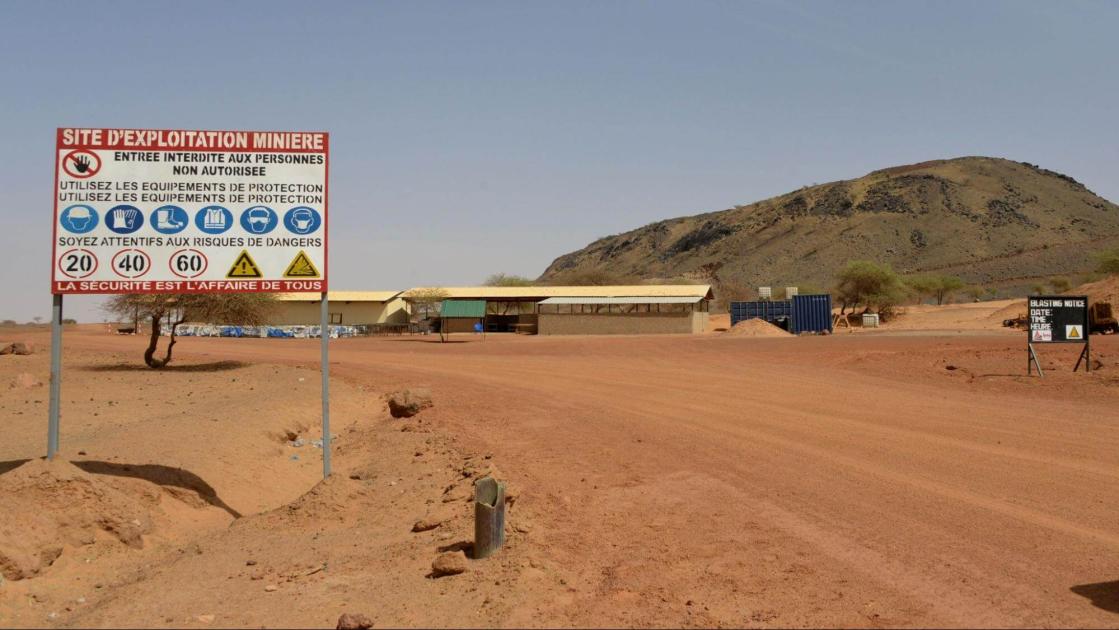
The cases of the Inata and Boungou mines in Burkina Faso show how incidents in areas linked to mining have increasingly shaped military interventions, local security structures, and broader conflict dynamics. Attacks and disruptions along the N3 corridor have affected both the Taparko and Essakane mines, illustrating how violence along key transport routes can disrupt mining activity far beyond individual sites (see map below). Instead of targeting the mines themselves, JNIM repeatedly focused on the N3 road section between Pissila, Tougouri, Taparko, and Yalgo. The villages of Nare, Gorbale, and Ouanobian became key chokepoints where militants destroyed bridges with explosives, planted IEDs, established checkpoints, and attacked civilian transport, military, and logistics convoys. By repeatedly disrupting a small number of key crossing points, JNIM was able to constrain movement along the principal supply route serving northern Burkina Faso’s mining sector while simultaneously hampering military mobility and consolidating its influence over the surrounding area.
The June 2021 massacre in Solhan demonstrated a different aspect of the same pattern: About 160 people were killed as a result of local conflict surrounding the artisanal mining economy, including efforts by JNIM to assert control over the area and the presence of volunteer fighters protecting the mining community. Therefore, it illustrates how violence can affect mining communities rather than the extraction sites themselves.
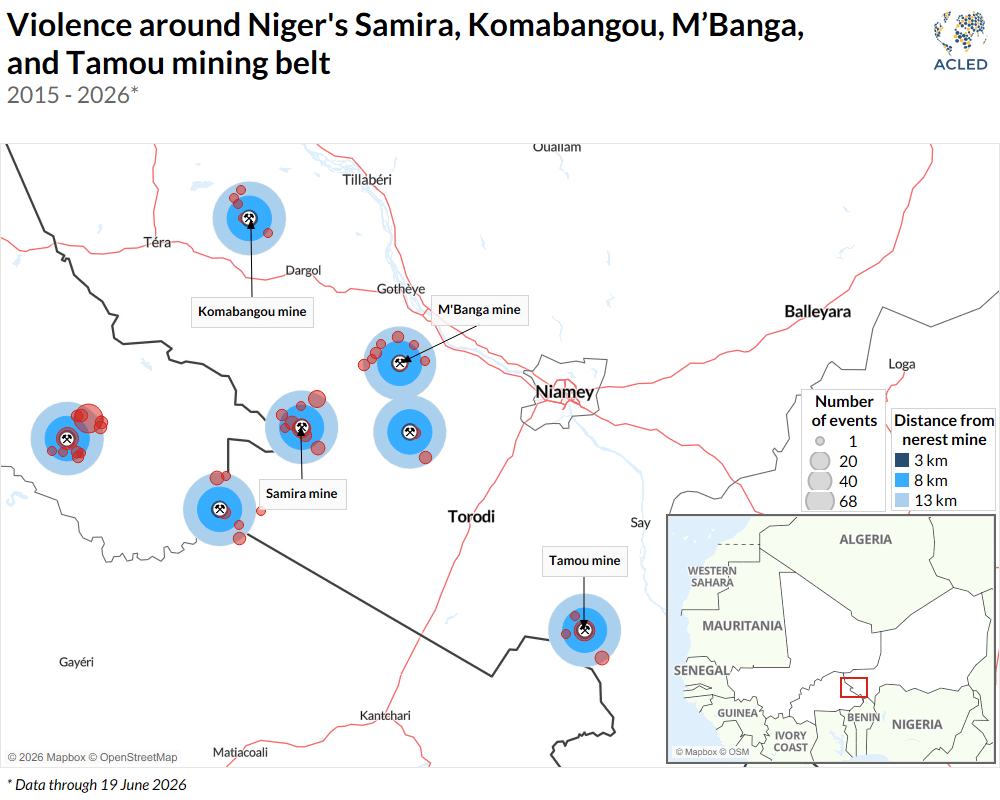
Niger: The Samira, Komabangou, M’Banga, and Tamou mining belt
In western Niger, violence has increasingly affected a larger mining belt encompassing the Samira, Komabangou, M’Banga, and Tamou sites, illustrating how insecurity has spread across established mining areas (see map below). Around late 2017 and early 2018, when militants expanded to western Niger’s mining belt, the first recorded IED attack in the Torodi area took place at the artisanal mining site of Tombole. The attack was significant because its modus operandi pointed to the diffusion of jihadist violence into an area where such tactics had not previously been recorded.
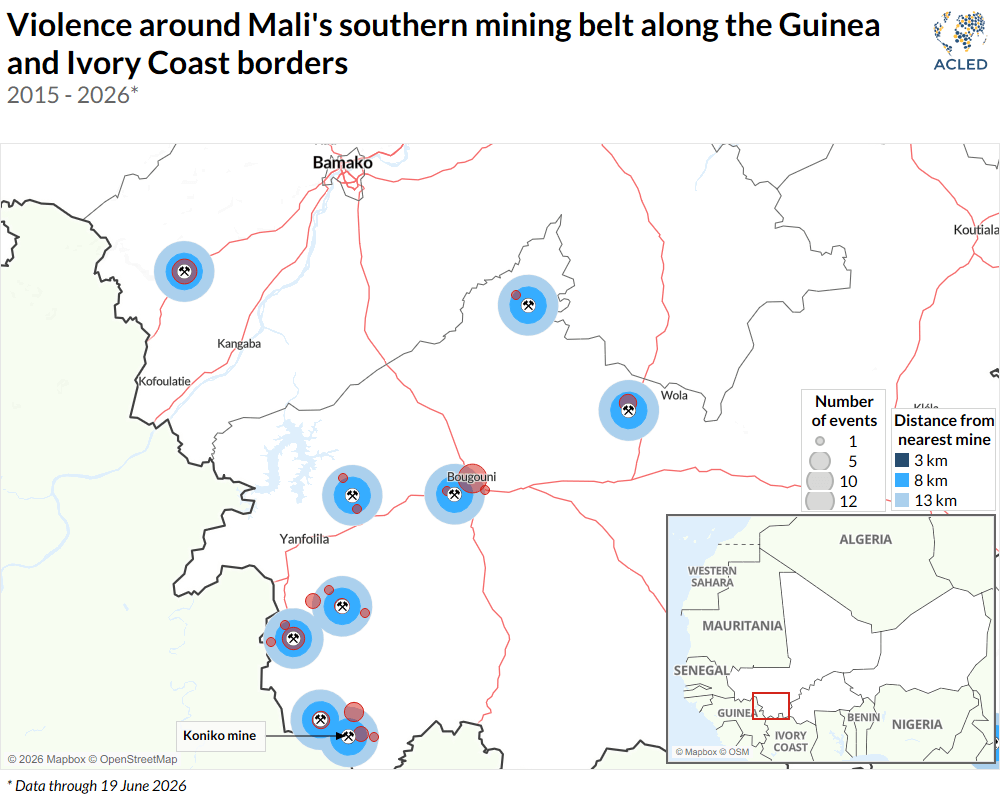
Mali: From the extreme north to the Guinea and Ivory Coast borders
Northern Mali provides the clearest example of the evolution of mining-related violence. In the extreme north, the artisanal mining belt comprising sites in Talhandak, Tinzaouaten, Igouzar, and Tassik is located in areas controlled by JNIM and the Azawad Liberation Front. While these sites have not been subjected to the same levels of sustained violence observed elsewhere in Mali, they have intermittently been subjected to drone strikes and incursions by the Malian military and Russian partner forces. In the Gourma region, around Intahaka, Tinaykaren, and I-n-Abao, competition over mining areas has become intertwined with wider contests over territory, mobility, and local authority involving jihadist groups, rebel factions, pro-government militias, state forces, and Russian partner forces. Further south, JNIM’s expansion into Mali’s mining zones along the borders with Guinea and Ivory Coast has brought growing pressure on mining operations and activities that sustain them (see map below). Fuel and transport blockades and attacks on mining camps, equipment, personnel, and military protection arrangements show how violence increasingly targets not only extraction sites, but also the wider economic activities that support them. These developments suggest that mining has become part of a broader strategy of economic warfare aimed at disrupting transport and trade, paralyzing the economy, and undermining state authority.
These examples represent the main clusters of mining-related conflict identified through spatial analysis. Together, they explain how the region’s major concentrations of violence emerged and evolved, while illustrating different manifestations of the same broader pattern across the central Sahel. What often began as attacks on mining personnel, infrastructure, or transport evolved into broader competition over movement, governance, economic activity, and territorial control.
Gold dominates mining-adjacent violence, and sustained armed contestation shapes its trajectory
While our spatial analysis shows that violence concentrates around mining areas rather than at the extraction sites themselves, these patterns also evolve over time. With this, the scale and severity of violence are driven by two key factors: the overwhelming predominance of gold extraction in the region, and the sustained armed contestation involving militant groups, state forces, militias, and local communities, resulting in increasingly multi-directional and lethal patterns of violence.
Gold dominates mining-adjacent conflict
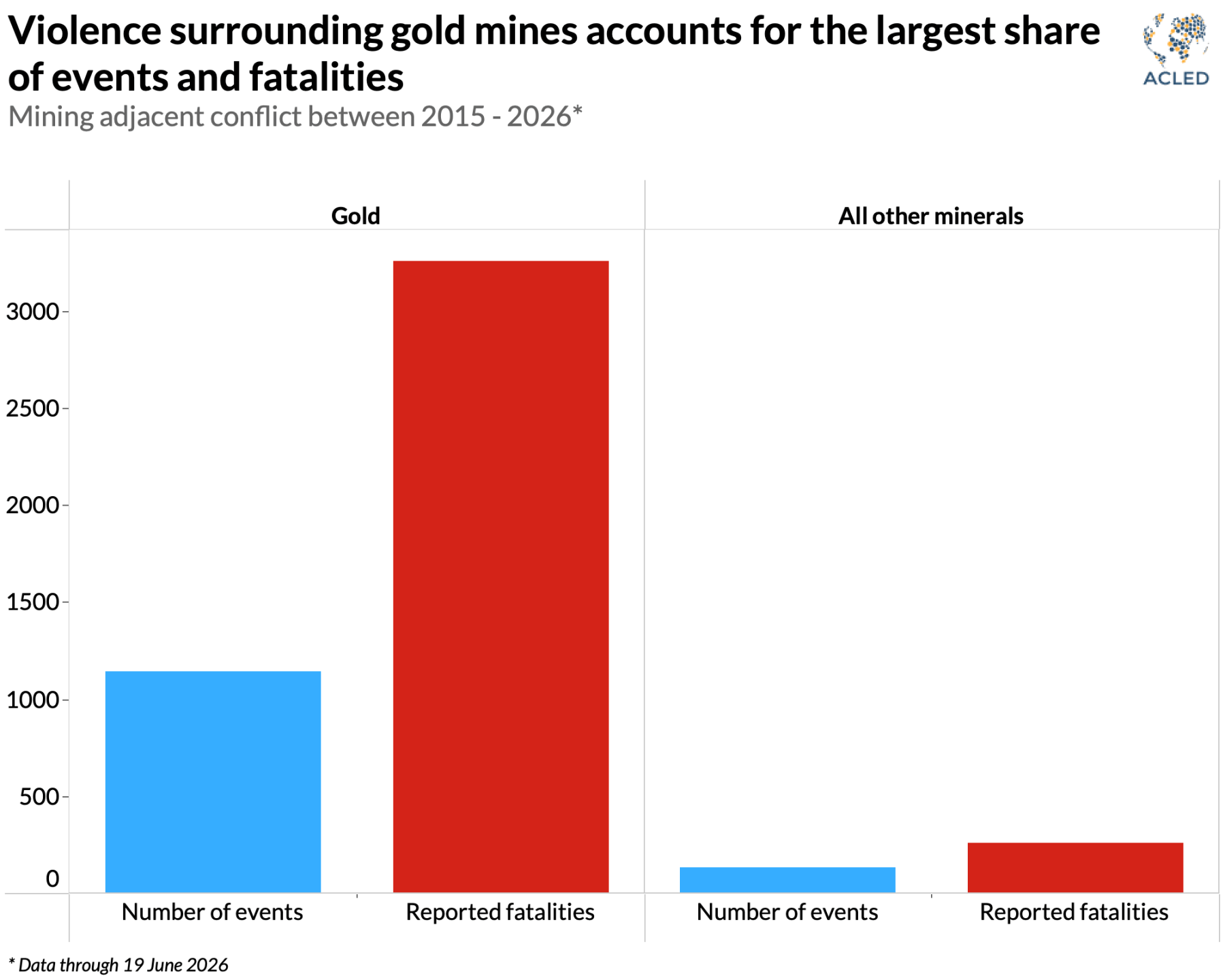
Violent events related to gold dominate the ACLED dataset (see graph below). According to ACLED data, gold sites account for 90% of all recorded events and have the highest lethality, averaging about three people killed per event. The predominance of gold also reflects the composition of the mining sector itself. Out of the 44 identified mining sites included in the analysis, 39 (89%) produce gold, making it by far the most widespread mineral in the central Sahel. The dominance of gold in the conflict data, therefore, reflects both its geographic spread and the concentration of armed actors operating around gold-producing areas. The overlap of industrial, semi-mechanized, and artisanal gold mining produces diverse mining environments with shared networks of transport routes, settlements, traders, and security actors, all of which are exposed to violence.
Several key examples illustrate this pattern. Inata, Boungou, and Solhan are all linked to gold mining and together account for some of the deadliest incidents in Burkina Faso.
Among other minerals, manganese mining has the second-largest number of mining-adjacent conflict events, but it still only accounts for 5%. Manganese mining-adjacent violence is driven by a small number of strategically important locations, most notably Tambao in northeastern Burkina Faso and Tassiga in northern Mali. Both sites are in areas that have experienced persistent militant activity and military operations targeting ISSP. The Tassiga site has been managed by various pro-government militias and ISSP, but reportedly came under Wagner Group control in April 2024, according to a Malian security expert who spoke to ACLED.
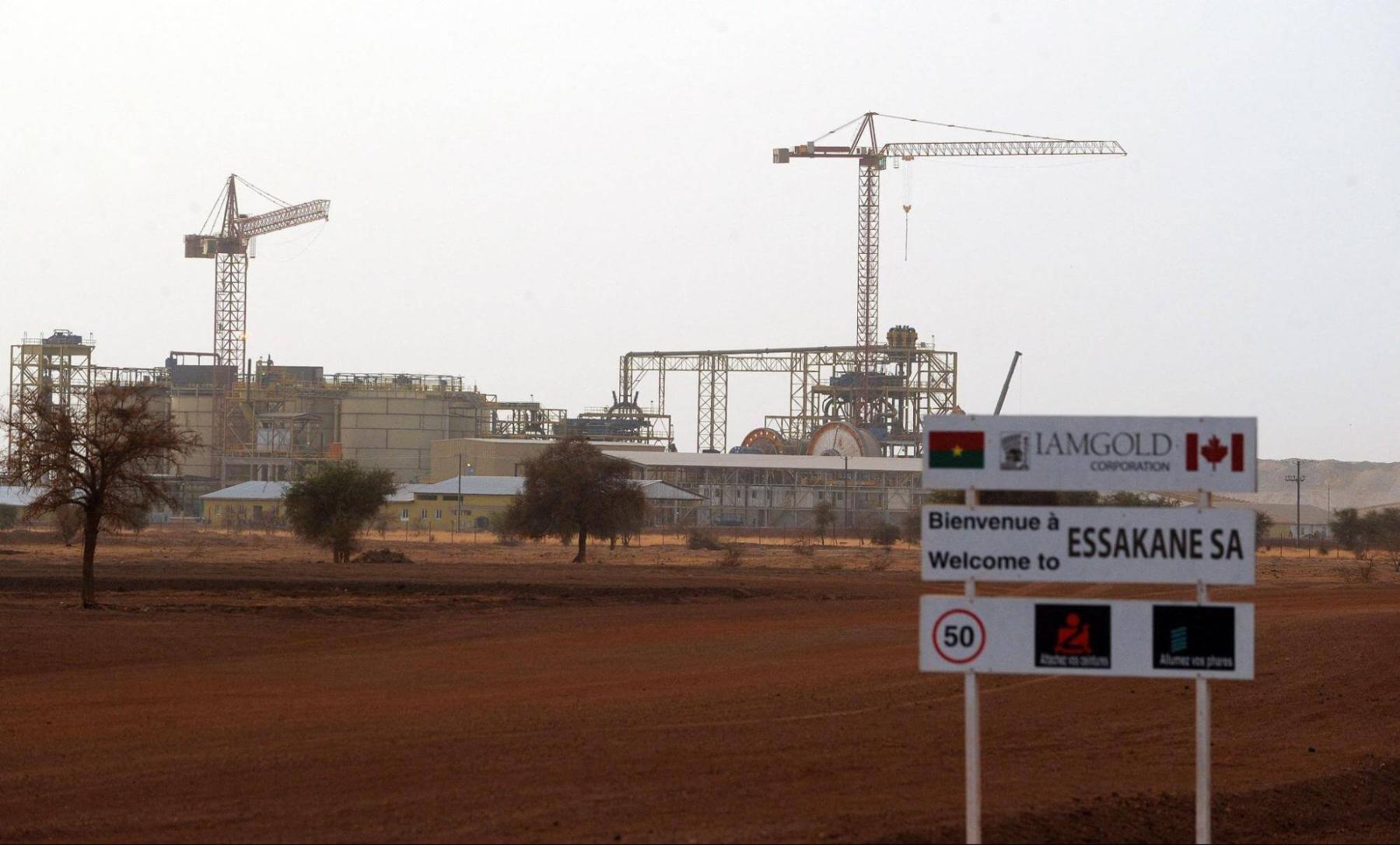
A general view of the construction site of the Essakane gold mine, pictured on 12 May 2010 in Burkina Faso. Photo by Issouf Sanogo/AFP via Getty Images
Unlike gold, whose prominence reflects its overwhelming share of identified mining sites in the region, manganese-related violence remains concentrated around very few sites that have gained importance at the local level. This suggests that, while gold dominates mining-related violence in aggregate, other minerals can generate distinct conflict patterns when located in contested territories.
JNIM is the dominant armed group operating near mine sites
The armed actor landscape further illustrates the complexity of mining-related violence. The persistent presence of JNIM and its predecessor groups in mining areas from 2015 to June 2026 makes it the most consistently active non-state armed group in the ACLED dataset. During this time, JNIM was involved in 42% of all recorded mining-adjacent conflict events. The combined military forces of Burkina Faso, Mali, and Niger were involved in a similar share (42%), while ISSP was involved in 27% of events. These figures show that mining-related violence is primarily shaped by the interactions between jihadist groups and state security forces (see heatmap below). Other actors appear more intermittently but remain important, including the VDP and unidentified armed groups.
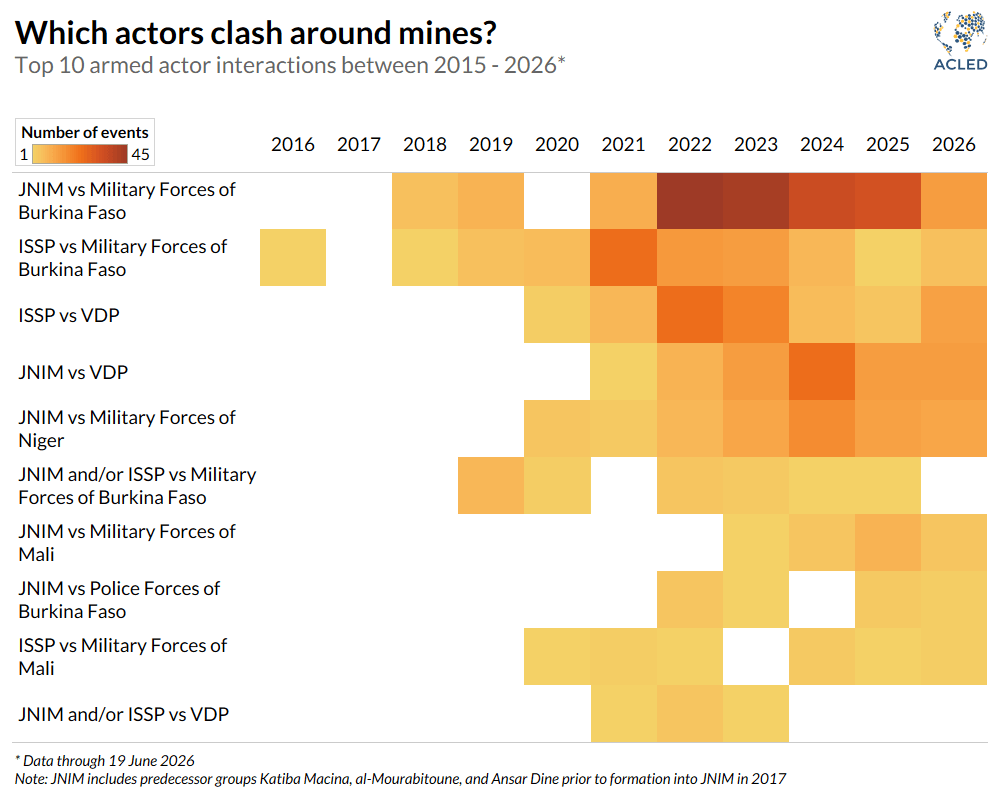
What matters most is not the presence of any single armed group, but the repeated interactions between them. While the predominant conflict dynamics consist of binary contests between militant groups and pro-government forces, some mining areas exhibit more complex multi-actor environments. Around Inata, militant attacks, military operations, and repeated airstrikes have become part of an escalating cycle of violence. In northern Mali, mining areas like Intahaka have been contested by jihadist groups, rebel factions, pro-government militias, state forces, and Russian partner forces. These actors have competed not only for territory but also for access to key mining areas, transport routes, and economic activity. Armed confrontations between JNIM, military forces, and the VDP around Boungou have blurred the distinction between civilians and combatants, which has drawn communities into the conflict and exposed them to violence from multiple sides. These interactions have transformed mining areas into spaces of sustained competition rather than isolated locations affected by violence.
Implications of regional shifts and mining-adjacent conflict clusters
Mining-adjacent conflict has entered a new phase as armed groups adapt their strategies around the mining economy, governments assert greater control over mineral resources, mining companies navigate a more challenging operating environment, and competition now extends beyond mining sites to the communities that sustain mining activities. These factors continue to reshape the relationship between mining and conflict, with implications that extend beyond the central Sahel to neighboring regions in coastal West Africa.
Key factors shaping the future trajectory of mining in the Sahel
Violent Islamist threat: JNIM and ISSP remain the dominant armed groups and represent the main security threats to mining activities, although they interact with the sector in different ways.
JNIM operates across several larger mining belts, where it targets mining operations, taxes local mining economies, and uses its influence over mining areas to support territorial expansion and local governance. In western and southern Mali, its expansion into the Kayes and Sikasso regions has increased pressure on industrial and semi-mechanized operations, including through attacks on mining camps and the kidnapping of Chinese miners and other foreign personnel. These attacks also reflect a broader strategy of economic warfare aimed at disrupting economic activity and depriving the state of important revenue.
ISSP remains concentrated in the Seno and Oudalan provinces of northeastern Burkina Faso, where it exploits mining areas around In Salatene, Falagountou, Essakane, Goulougountou, and Alkoma through direct resource extraction, taxation, and extortion. The growing use of drones by these militant groups represents an emerging threat to industrial mining operations, especially base camps, processing plants, aircraft, fuel storage, and security positions.
States asserting control over mineral resources: Governments in Burkina Faso, Mali, and Niger are deepening state involvement in the mining sector through revised mining legislation, contract reviews, and the nationalization of extractive assets. Burkina Faso’s acquisition of Boungou, Taparko, and Wagnion mines illustrates this shift, while Mali’s revised mining code reflects a broader effort to strengthen state oversight and increase government revenues from mineral resources. These reforms are unfolding amid persistent insecurity, creating an increasingly complex operating environment in which mining companies face pressure from both armed groups and more assertive governments.
Militant expansion beyond the Sahel: Mining-adjacent conflict is unlikely to remain confined to the central Sahel. JNIM’s expansion toward the borders with Senegal, Guinea, Ivory Coast, and Ghana raises the risk that patterns already observed in the central Sahel will spread farther south to coastal West Africa. The entrenched presence of JNIM and ISSP in northwestern and north-central Nigeria will likely push these groups to engage with local mining economies, creating new opportunities to exploit, tax, and extort artisanal mining activities in these regions.
Implications for assessing mining-related risk
Industrial and semi-mechanized mining operations are likely to remain attractive targets as part of the broader economic warfare tactics employed by militants. Attacks on these operations can disrupt a vital sector of national economies and undermine state authority as well as confidence among foreign investors and mining companies.
The spatial findings have direct implications for how mining-related risk is assessed. Because most violence takes place outside extraction sites, assessments limited to concession boundaries will miss much of the surrounding threat environment. Risk assessments, therefore, need to cover the wider geographic areas in which mines operate, including surrounding communities, artisanal sites, access routes, supply chains, and nearby locations exposed to armed violence.
These findings further point to the limitations of securing mining sites alone. Strengthened security may make core facilities harder to attack, but it cannot protect the broader geographic areas that support mining activity. Heavier security deployments can also redirect attacks toward workers, less-protected infrastructure, convoys, and nearby communities. The growing use of drones adds an additional challenge by allowing armed groups to threaten well-protected facilities from a distance, and may require costly investments in surveillance and counter-drone protection.
The main challenge for mining companies is, therefore, not limited to managing security, but to navigating and operating in a rapidly changing environment where armed conflict, state policy, and acceptance among local communities increasingly shape operational risk. These pressures are likely to raise costs due to higher security requirements, convoy protection, insurance, logistical disruption, and investment in counter-drone systems. Companies will depend more on community support through local employment, procurement, and visible investment in surrounding areas. This factor may prove just as important as traditional security measures because communities ultimately influence the extent to which mining operations are tolerated despite their social and environmental impacts.
As mining-related conflict extends beyond competition over mineral resources to competition over the communities that sustain local mining economies, armed groups seek to tax, recruit, influence, and govern local populations, while governments and mining companies likewise depend on community cooperation to maintain security, employment, and access. Communities, therefore, will likely remain central to future conflict dynamics, as competition revolves around the populations, livelihoods, and local economies that sustain mining activities.
Mining areas are now more than just sites of resource extraction. They increasingly serve as indicators of broader conflict dynamics, showing how governments assert control over mineral resources, and how localized violence can spread and disrupt vital economic activities. The evolution of mining-adjacent violence will, therefore, remain important for assessing the future trajectory of conflict across the central Sahel and coastal West Africa.
Credit: Source link
Comments are closed.