

Expert: When assessing war, consider Putin’s pain threshold | UCR News
More than four years after Russia invaded Ukraine, there have been several developments in Ukraine’s favor. President Trump, who has vacilated on his support of Ukraine, said he would sell Patriot missile technology to Ukraine. Ukraine has started an effective strategy of targeting fuel tankers Russia relies on to supply its army, and drones have targeted oil refineries and fuel depots. In the past days, a senatorial delegation traveled to Ukraine to discussion strengthening Ukraine’s air defenses and further sanctions on Russia. We asked for an assessment by Paul D’Anieri, a political scientist and the author of “Ukraine and Russia: From Civilized Divorce to Uncivil War,” now in its second edition and available in paperback. In 2017-18, D’Anieri served as a fellow in the Harvard University Ukrainian Research Institution.
Some perceive Trump’s decision to allow Ukraine to build Patriot missiles as his concession that Ukraine is “winning.” How do you read his decision?
Donald Trump’s decision to license Patriot missile technology to Ukraine is a recognition that Ukraine is in many respects capable not only of defending itself, but of building the weapons needed to do so. The fact that the U.S. and its allies relied on Ukraine for tactics in countering Iranian attacks, along with Ukraine’s success using domestically built weapons to knock out Russian logistics, has dramatically changed perceptions of Ukraine’s abilities. But Ukraine cannot develop a Patriot-type system quickly. It is quickly running out of the missiles, and Russia is taking advantage of the shortage to attack Ukrainian civilian populations.
How do you assess the growth of Ukraine’s war machine, including its technology and strategy, and Russia’s present ability to wage war?
Photo by Stan Lim / UCR
Ukraine’s fortunes on the battlefield have improved in two ways over the past year. In the ground war, Russia’s advances have been slowed to a crawl, and Russia is losing 30,000 soldiers per month for these incremental gains — more soldiers than it can easily replace. In the air war, Ukraine is now able to strike targets far inside Russia.
With the U.S. having limited what it will sell to Ukraine, the Ukrainians have had to develop their own systems. They now have what is probably the most sophisticated drone army in the world, which is why states in Europe and the Persian Gulf are eager to buy their systems and learn their tactics. In four years of war, Ukraine has gone from being dependent on others to supplying them.
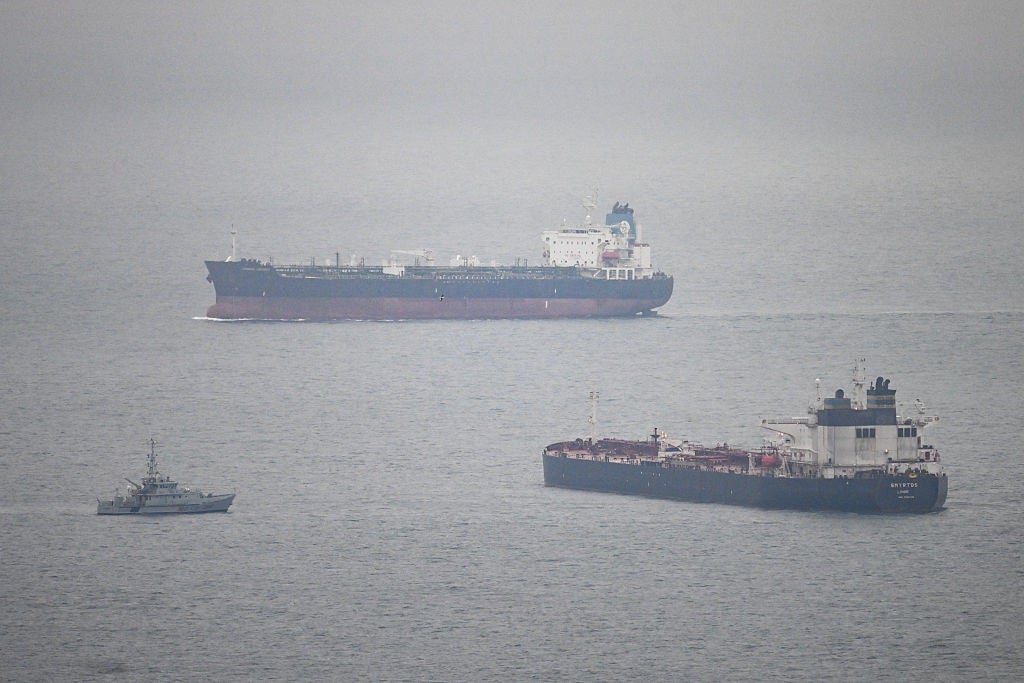
Ukraine has been attacking Russia’s fuel-power supply. Why didn’t they do this sooner?
… Attacking Russian oil refineries… handicaps the military and irritates Russian citizens who, until now, have been largely insulated from the war. Ukraine has adopted these tactics in recent months because only in recent months has it developed the weapons and tactics that do this.
Is Ukraine winning the war? Are we at “the” turning point?
Despite… important improvements, we cannot say that Ukraine is winning. Rather, Ukraine has made clear that Russia cannot easily win, and it is dramatically raising the cost of Russia continuing the war. With the lines of control on the ground very difficult to change, both sides are raising the other side’s cost through air attacks. And yet it is the war on the ground that will likely determine the outcome. Ukraine’s “theory of victory” is that if it can kill more Russian soldiers than Russia can recruit, Russia will eventually have to negotiate peace. The air attacks are meant to hasten this. Russia’s “theory of victory” is that even if gradually, it is gaining ground and will eventually wear down Ukrainian defenses. Russia has built up an enormous military industrial base, and it has far more people to bring into the fight, although doing so is increasingly fraught politically. Putin continues to believe that these advantages will eventually bear fruit.
How do you assess the prospects of Russia using nuclear weapons? What is Putin’s motivation in threatening to use them?
The prospect of an increasingly costly war, with decreasing chances of a clear victory, has Putin again raising the threat to use nuclear weapons, as he did early in the war. In my estimation, this is still extremely unlikely for three reasons. First, it is extremely difficult to use nuclear weapons in a militarily effective way on the battlefield when troops are so close to one another. Second, the repercussions would be hard to predict. It seems unlikely that China, on whom Russia is increasingly dependent, would approve. And using nuclear weapons might actually galvanize Europe or the U.S. to do much more, as the U.S. threatened in 2022. Finally, the threat to use nuclear weapons might be the one thing that would convince Russian leaders, who are otherwise largely supportive of the war, to consider ridding themselves of Putin.
But the threat to use nuclear weapons stresses a key point: Vladimir Putin is willing to endure a very high cost to avoid anything perceived as defeat. We should not think that recent setbacks will lead quickly to peace.
Comments are closed.