

EU Migration Deal Deepens Operational Ties With Eastern Libya
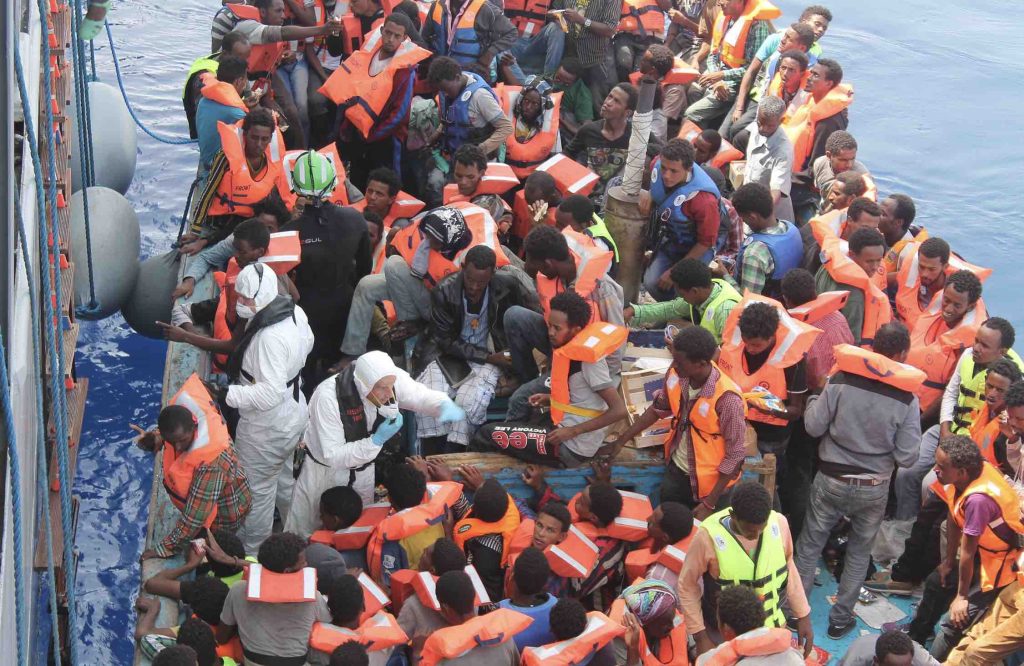
A planned rescue coordination centre in Haftar-controlled Benghazi exposes the gap between the EU’s formal recognition policy and its practical migration partnerships.
The European Union has agreed to establish a Maritime Rescue Coordination Centre in Benghazi as migrant departures rise from eastern Libya, deepening practical co-operation with authorities linked to Khalifa Haftar.
The project will be supported through Operation IRINI and funded by Italy and Malta, according to Reuters.
The arrangement responds to an operational reality. More boats are leaving territory controlled by eastern authorities, while rescue co-ordination cannot function effectively if calls, vessels and coastal services are divided by Libya’s political split.
It also creates an accountability problem. The EU formally recognises the UN-backed government in Tripoli, yet is building a maritime institution in a rival power centre. Migrants intercepted through that system may be returned to a country where UN bodies and human-rights organisations have documented detention, extortion and abuse.
The centre should therefore be judged not only by whether it reduces departures or accelerates interception, but by who commands it, what law governs its decisions and where rescued people are taken.
A project already in preparation
Operation IRINI has described technical work on the Benghazi project before the latest agreement. During a visit by diplomats to its Rome headquarters, the mission presented progress towards a centre intended to meet international standards and human-rights requirements.
The official IRINI account referred to preparations, capacity building and maritime situational awareness.
The 30 July development appears to move that work into a clearer political and funding commitment. Details remain necessary: ownership of equipment, staffing, communications access and the legal status of directions issued by the centre.
A rescue coordination centre is not itself a coastguard fleet. It receives distress information, identifies suitable vessels, co-ordinates action and records incidents. Its instructions can nevertheless determine which authority takes control and where survivors disembark.
Libya’s divided authority enters EU operations
Libya has competing institutions in the west and east. Haftar’s forces and allied political bodies control Benghazi and much of the east, while the internationally recognised government is based in Tripoli.
European governments have maintained contacts with both sides because migration, energy and security cannot be managed through formal recognition alone. The Benghazi centre makes that dual approach more institutional.
Pragmatism can improve safety if eastern authorities receive distress calls quickly and prevent boats disappearing. It can also confer legitimacy and resources on a security structure outside the recognised national chain.
The EU should state whether the project forms part of an agreed Libyan national search-and-rescue architecture or creates a separate eastern zone. Overlapping claims would be dangerous: two centres could issue conflicting instructions to merchant ships or humanitarian vessels.
Technical co-ordination must not become an implied European position on Libya’s political division.
Rescue and interception are not the same
European migration policy often uses the language of saving lives while measuring success through fewer arrivals. The two objectives can overlap when authorities prevent an unseaworthy departure. They can diverge when “rescue” becomes the return of people to dangerous detention.
Maritime law requires assistance to people in distress and disembarkation at a place of safety. The fact that a Libyan authority co-ordinates an operation does not automatically establish that every Libyan port is safe for every survivor.
Individual circumstances matter. Refugees may fear persecution, while trafficking victims may be returned to the same networks that exploited them.
The EU needs an explicit policy for assessing safety, monitoring disembarkation and recording what happens after transfer. Without it, a sophisticated coordination centre could make interception more efficient while leaving protection unchanged.
Italy and Malta, as funders and nearby coastal states, will have particular influence. They should publish the conditions attached to equipment and training.
Command responsibility must be visible
The centre’s operators may receive European technology, vessel data and training. Access to those systems creates responsibility for how they are used.
EU personnel should not transmit co-ordinates if there is a foreseeable risk that survivors will be subjected to serious abuse. Conversely, withholding information during a genuine distress case can cost lives.
Clear procedures are required for:
- verifying the authority of the receiving Libyan unit;
- recording every distress call and instruction;
- identifying the vessels that conduct interception or rescue;
- monitoring disembarkation and onward transfer;
- and suspending co-operation after abuse or loss of contact.
Independent audit is more credible than self-reporting by the centre. The European Parliament and national legislatures should have access to operational statistics and incident reviews.
The migration route has moved
Increased departures from eastern Libya explain the pressure for a Benghazi facility. Smuggling routes respond to enforcement, conflict, weather and political control. Restricting one coast can shift activity to another rather than end it.
The eastern route may involve longer and more dangerous voyages. That strengthens the case for better distress coverage, but also for legal pathways and action against trafficking networks.
EU Today has examined the Union’s interest in return hubs outside its territory and the conditional legal opening for Italy’s Albania asylum model. The Benghazi project belongs to the same wider movement: European control is being pushed further from the point at which a person reaches EU territory.
Moving the operation does not move the legal and moral risk out of sight.
What a defensible agreement would include
The centre can improve safety if it operates transparently, communicates reliably and sends capable vessels to distress cases. It will fail if its principal function is to provide a formal label for returns without protection.
The agreement should require compliance with maritime and human-rights law, prohibit participation by units credibly implicated in abuse, and allow independent monitoring of disembarkation sites and detention facilities.
It should also include a route for people needing protection to reach a functioning asylum process. Rescue co-ordination without protection procedures merely changes the location at which danger is managed.
Finally, the EU must explain how co-operation with Benghazi fits its diplomatic recognition of Tripoli and the UN political process. Silence will allow both Libyan camps to interpret the project for their own purposes.
The operational case for a centre in eastern Libya is real. So is the danger that Europe equips a divided security system to stop departures while remaining unable to guarantee the treatment of those returned. The centre’s legitimacy will depend on whether “rescue” describes the condition of the people involved—not only the name on the building.
Post Views: 1,004
Credit: Source link
Comments are closed.