
DR Congo to receive 70,000 Ebola vaccines for outbreak
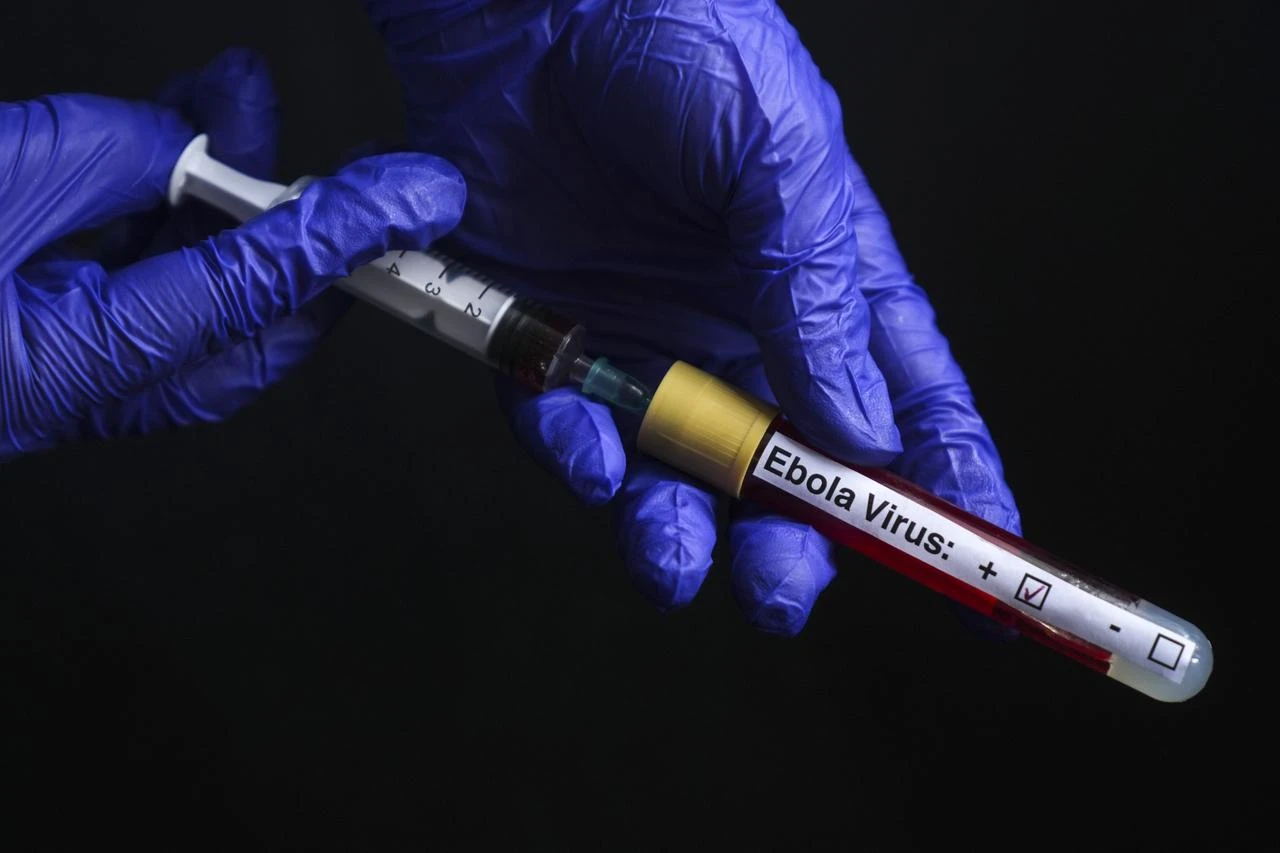
The Democratic Republic of Congo has been allocated 70,000 Ervebo vaccines from the global Ebola virus disease vaccine stockpile to help contain a fast-spreading outbreak caused by the Bundibugyo virus, the World Health Organization said Thursday.
The government requested the release of the vaccines last week from the International Coordinating Group on Vaccine Provision.
Of the total, 20,000 doses are earmarked for a Phase 3 clinical trial to assess the vaccine’s effectiveness against the Bundibugyo strain. In comparison, 50,000 doses will go to frontline and health workers, following recommendations from the Strategic Advisory Group of Experts on Immunization.
No vaccine or specific treatment has yet been approved for use against the Bundibugyo virus. Ervebo is licensed for outbreaks of the more commonly detected Zaire ebolavirus, and it remains unknown whether it protects humans against the Bundibugyo strain.
Early laboratory and animal data suggest it may provide some protection, according to the WHO.

Health workers receive travelers at an Ebola screening point at the Mpondwe Border Crossing in Uganda, May 23, 2026.(AA Photo)
WHO cites global solidarity
WHO Director-General Tedros Adhanom Ghebreyesus described the vaccine allocation as “an important example of global solidarity in action.”
The organization said it remains committed, alongside partners and national authorities, to strengthening surveillance, rapid detection, community engagement and vaccination efforts to bring the outbreak under control.
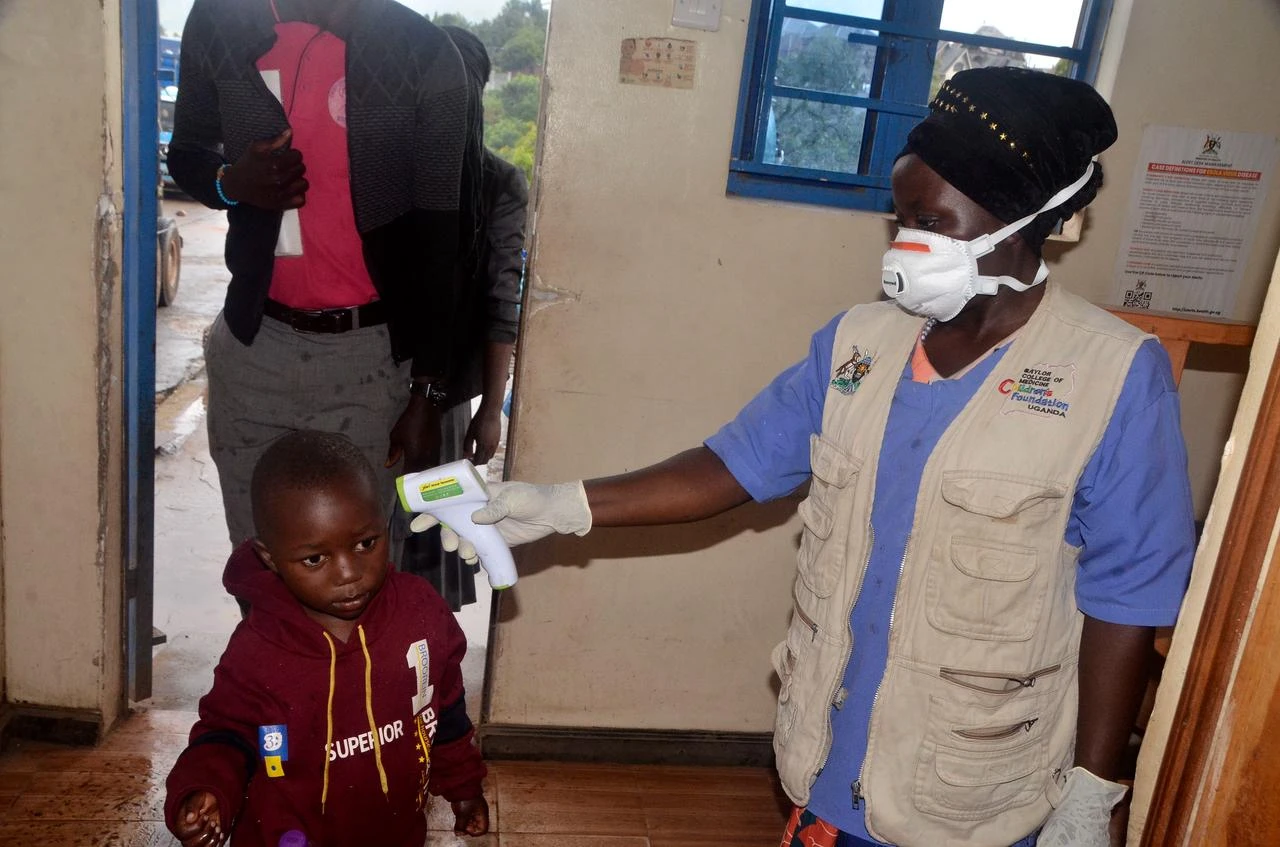
A health worker checks a child’s temperature during Ebola screening at the Mpondwe Border Crossing in Uganda, May 23, 2026. (AA Photo)
Outbreak declared global health emergency
The outbreak was first detected in May, after cases of a high-mortality illness emerged in Ituri province. Laboratory analysis by the Institut National de Recherche Biomedicale in Kinshasa confirmed the Bundibugyo strain in mid-May.
On May 17, the WHO declared the outbreak a public health emergency of international concern, citing its rapid spread and the absence of licensed countermeasures.
It is the 17th Ebola outbreak recorded in DR Congo and, by early August, had become the fastest-growing and second-largest on record in the country.
The Bundibugyo virus has caused only two previous outbreaks: one in Uganda’s Bundibugyo district in 2007-2008, from which it takes its name, and another in Isiro, DR Congo, in 2012. Case fatality rates in those outbreaks ranged from 30% to 50%, according to the WHO.
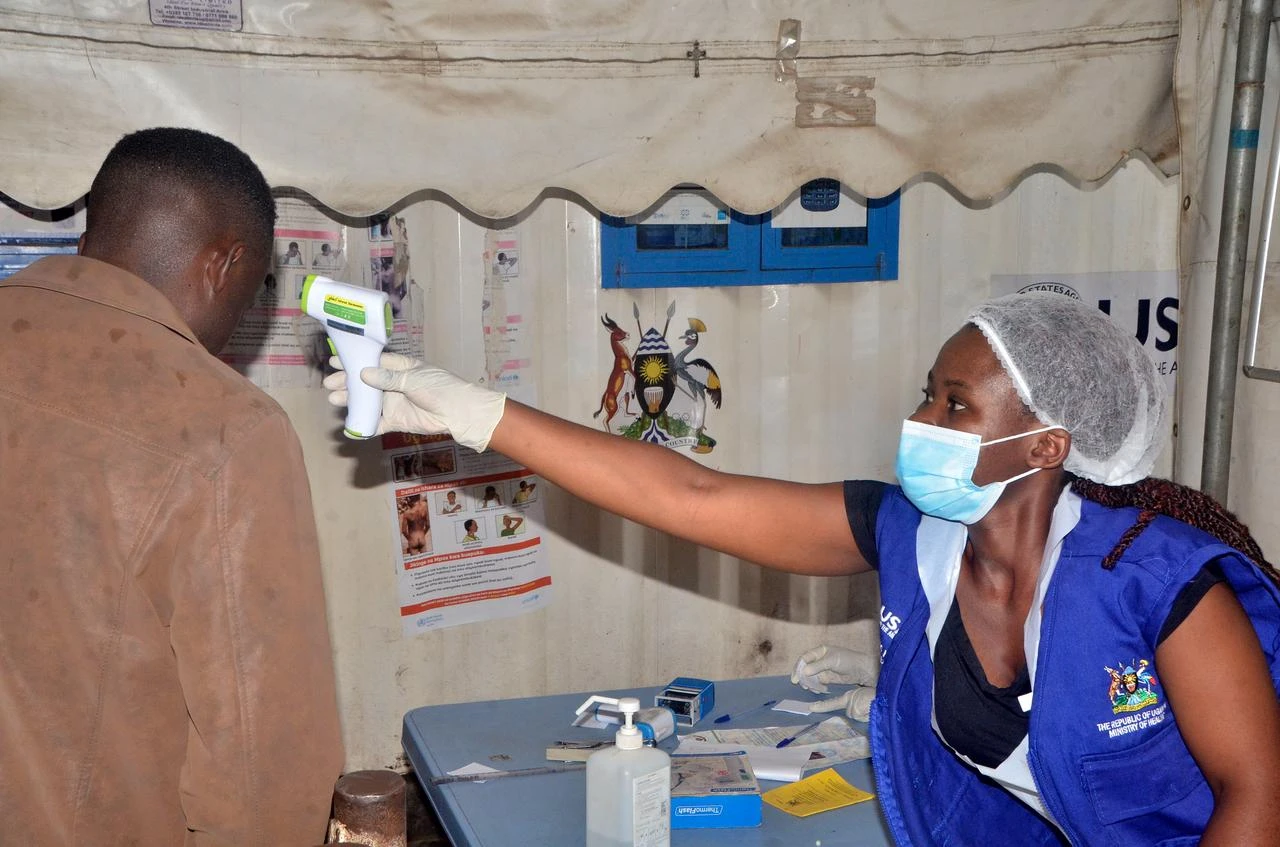
A health worker checks a traveler’s temperature as Uganda steps up Ebola screening at the Mpondwe Border Crossing with the Democratic Republic of the Congo, May 23, 2026. (AA Photo)
Deadliest outbreak in country’s history
Deaths from the current outbreak have surpassed the toll from the 2018-2020 epidemic, making it the deadliest in the country’s history. Confirmed infections have reached 5,208, including 2,476 deaths, according to the latest Health Ministry update, putting the case fatality rate at 47.5%.
The epidemic has affected 56 health zones across six provinces: Haut-Uele, Ituri, North Kivu, South Kivu, Bas-Uele and Tshopo. About 730 patients remain in isolation or hospital, while 1,115 people have recovered.
International partners pledge support
International partners have pledged support for the response. The United States announced $112 million in bilateral assistance for personal protective equipment, screening, contact tracing and diagnostics, while the United Kingdom pledged up to £20 million ($27 million) and the European Union committed €15 million ($16.2 million) toward the response and preparedness efforts.
Earlier this week, the WHO reaffirmed that the outbreak remains a public health emergency of international concern.

August 21, 2026 10:19 AM GMT+03:00
Credit: Source link