

DR Congo Ebola cases top 3,000 as vaccine research advances
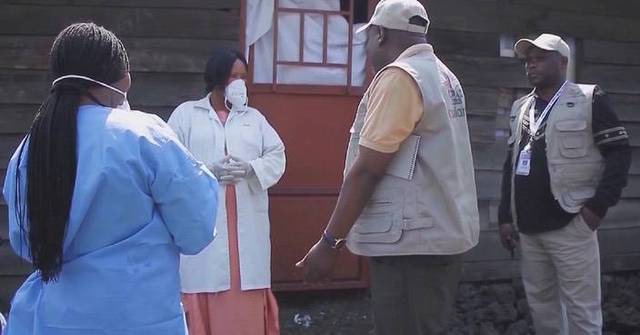
The number of confirmed Ebola cases in the Democratic Republic of Congo (DRC) has surpassed 3,000, according to official figures released on Saturday.
Health authorities reported 3,075 confirmed cases since the latest outbreak began in May, including 1,354 deaths and 556 recoveries. Another 755 patients are currently hospitalised or in isolation.
The epidemic has spread across five provinces, namely Ituri, North Kivu, South Kivu, Haut-Uele and Tshopo.
Speaking on Friday in Bunia, the capital of Ituri Province and the outbreak’s epicenter, Prime Minister Judith Suminwa Tuluka said the government has allocated 50 million U.S. dollars for the response, in addition to funds mobilized by international partners.
However, she acknowledged that the main challenge now lies in ensuring more efficient delivery of logistical resources, including laboratory equipment, water and oxygen supplies, ambulances, hygiene materials, and equipment for safe and dignified burials.
Tuluka said researchers were working to develop a treatment and a vaccine against the Bundibugyo ebolavirus, the virus strain responsible for the current outbreak in the DRC.
Expressing hope that a vaccine and treatment could become available “within two to four months,” she said the government has provided funding for the research but did not give further details on the development stage or expected approval process.
No vaccine or specific treatment is currently approved for the Bundibugyo strain, though several experimental candidates are undergoing clinical evaluation.
The University of Oxford announced on Friday that the first volunteer has been vaccinated in the world’s first human trial of a vaccine, known as ChAdOx1 BDBV, designed to protect against the Bundibugyo ebolavirus.
DR Congo Ebola cases top 3,000 as vaccine research advances
Chinese meteorologists have deployed a swarm of drones for the first time to conduct three-dimensional observations throughout the entire passage of Typhoon Noul, providing new data to improve forecasting and disaster response.
The experiment began on Friday at the China Meteorological Administration’s field research base for low-altitude weather observation in Shenzhen, south China’s Guangdong Province, as meteorological researchers tracked Noul, the year’s 12th typhoon.
Unlike a single drone, the drone swarm consists of multiple unmanned aircraft operating in coordination to simultaneously collect meteorological data at different locations and altitudes.
The drones continuously measured key low-altitude atmospheric conditions before, during and after the typhoon, including temperature, humidity, wind fields and turbulence. Researchers also monitored flight performance data to assess the operational limits of drones under extreme weather conditions.
The administration said the technology enables high-density, three-dimensional sampling of the lower atmosphere, helping fill gaps in offshore low-altitude observations. The data are expected to improve typhoon monitoring and forecasting while supporting the safe operation of drones in severe weather.
Noul landed near the coastal town of Pinghai in Huidong County, Huizhou City, at around 03:50 on Sunday, packing maximum sustained winds of 162 kilometers per hour.
It waned to a severe tropical storm and is tracking northward toward neighboring Hunan Province in central China.
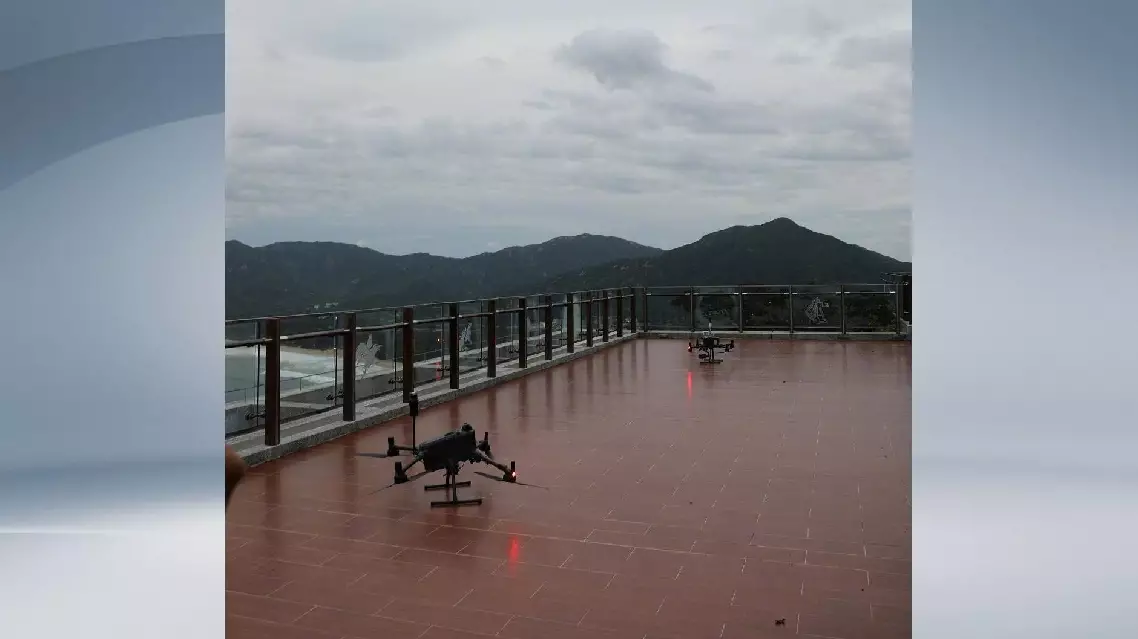
Drone swarm deployed for full typhoon observation
Credit: Source link