

Cambridge University transfers ownership of 116 Benin bronzes to Nigeria
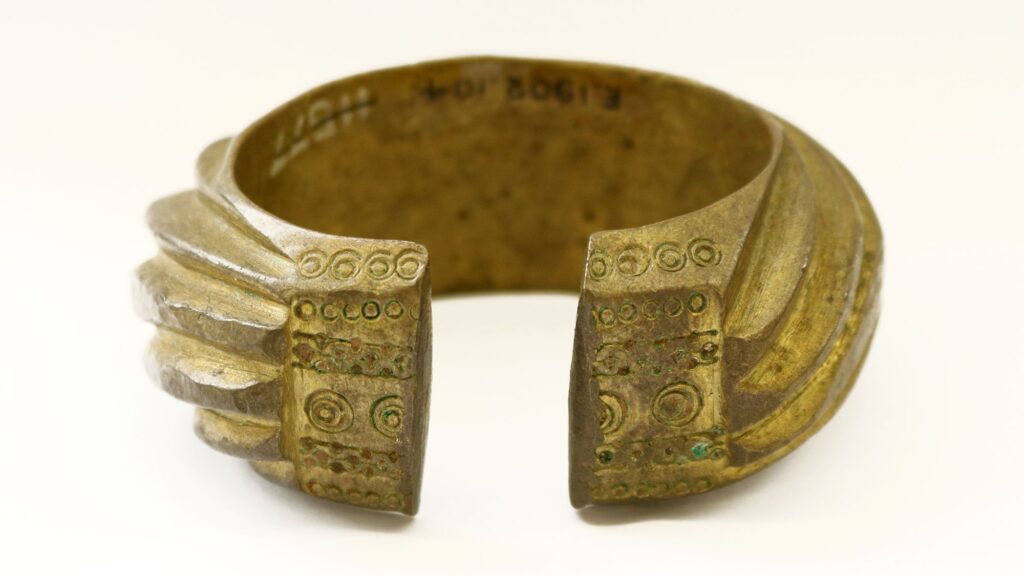
The University of Cambridge has handed over the legal title of 116 Benin bronzes in its collections to the Nigerian authorities.
The university’s Museum of Archaeology and Anthropology (MAA) announced on 8 February that ownership of the artefacts had been transferred to Nigeria’s National Commission for Museums and Monuments (NCMM), the federal government body responsible for managing the country’s national cultural properties.
The transfer follows a formal request made to the university by the NCMM in 2022 for the return of artefacts taken by British armed forces during the sacking of Benin City in 1897.
The NCMM is operating under a management agreement with the Benin Royal Palace, whose monarch, Oba Ewuare II, was recognised by the Nigerian government in 2023 as the owner and custodian of all items looted from Benin City.
The NCMM’s claim was supported by the university’s council and subsequently authorised by the Charity Commission.
A statement from the university said the physical transfer of the majority of the artefacts to Nigeria would be arranged in due course.
“Seventeen pieces will remain on loan and on display at the MAA, for three years in the first instance, to be accessible to museum visitors, students and researchers,” said the statement.
The 116 objects are primarily made of brass but also include ivory and wooden sculptures.
The transfer comes after a lengthy process of research and dialogue between the university, and government and academic stakeholders in Nigeria.
“As one of several UK museums with significant holdings of material taken from Benin in 1897, the MAA has been involved in long-term research and engagement projects in partnership with Nigerian stakeholders and representatives from the Royal Court of the Benin kingdom, as well as artists, academics and students from Nigeria,” said the university’s statement.
“MAA curators have participated in study and liaison visits to Benin City since 2018, meeting the Oba, members of the court, state and federal government leaders, and cultural representatives.”
The university hosted the Benin Dialogue Group in 2017, and was visited by NCMM and Royal Court representatives in 2021.
“It has been immensely rewarding to engage in dialogue with colleagues from the National Commission of Museums and Monuments, members of the Royal Court, and Nigerian scholars, students and artists over the last ten years,” said MAA director Nicholas Thomas.
“Over the period, support has mounted, nationally and internationally, for the repatriation of artefacts that were appropriated in the context of colonial violence. This return has been keenly supported across the university community.”
Olugbile Holloway, the director-general of the NCMM, said: “This development marks a pivotal point in our dialogue with the Museum of Archaeology and Anthropology at the University of Cambridge and it is our hope that this will spur other museums to head in a similar direction.
“The return of cultural items for us is not just the return of the physical object, but also the restoration of the pride and dignity that was lost when these objects were taken in the first place.”
Holloway thanked Nigeria’s culture minister Hannatu Musawa for her support during the process.
He added: “We applaud Cambridge for taking this step in the right direction. We look forward to welcoming the artefacts back home soon.”
Holloway believes the decision will pile pressure on other institutions with Benin bronze holdings, including the British Museum, to follow suit.
“The issue has come to the British Museum’s doorstep. We now expect a domino effect,” he said in an interview with the Observer over the weekend.
The British Museum’s director Nicholas Cullinan has previously ruled out pursuing restitution, which would require legislative change in parliament, during his tenure, saying he favours a policy of mutually beneficial partnerships and long-term loan arrangements.
Back to Benin
A number of institutions in Europe and America have already transferred ownership of their Benin bronzes to Nigeria.
In March 2021, Cambridge University’s Jesus College became the first institution in the UK to return a Benin bronze, the bronze statue of a cockerel. A day later, the University of Aberdeen handed back one of its bronzes, the Head of an Oba.
In 2022, Germany handed over ownership of more than 1,000 Benin bronzes, while the Smithsonian Institution in the US repatriated 29 and the Museum of Fine Arts, Boston returned two.
Also that year, the Horniman Museum & Gardens in London transferred legal title of 72 bronzes. Six artefacts have been physically repatriated so far.
The Netherlands returned 119 artefacts in 2025 in a handover ceremony at the National Museum in Lagos, Nigeria.
Thousands of the artefacts remain in museum and private collections around the world. The Digital Benin database lists over 5,000 artefacts held across 131 institutions in 20 countries.
Update
10.02.2026
The article originally stated that the University of Aberdeen was the first institution in the UK to repatriate a Benin bronze. In fact this was Jesus College, University of Cambridge, which returned its bronze a day before Aberdeen.
Enjoy this article?
Most Museums Journal content is only available to members. Join the MA to get full access to the latest thinking and trends from across the sector, case studies and best practice advice.
Credit: Source link
Comments are closed.