
Burkina Faso Talks to Mali and Niger to Combat Insurgents
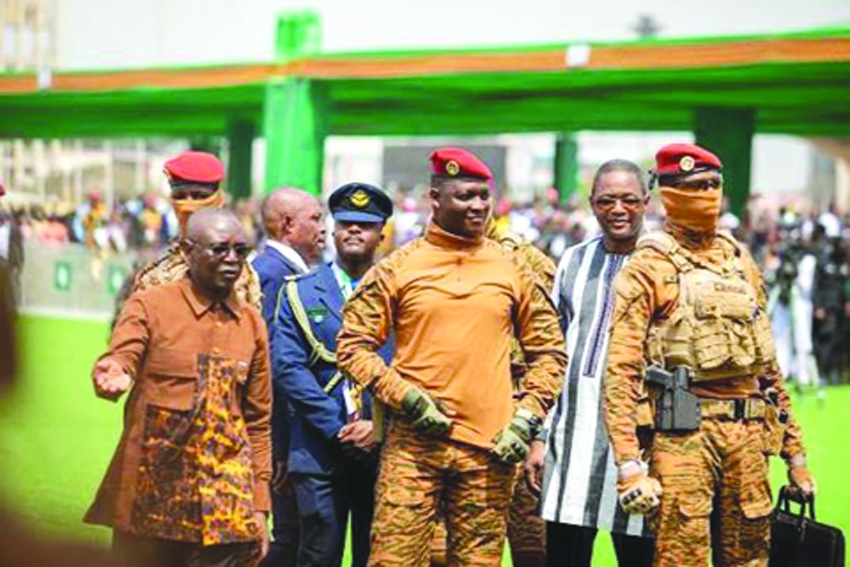
Burkina Faso is intensifying its efforts to combat Islamist insurgents by strengthening security cooperation with neighbouring countries as militant violence continues to threaten communities across the Sahel. The government is increasingly relying on regional military coordination, intelligence sharing and joint operations to confront armed groups whose activities frequently cross national borders.
Burkina Faso has been battling an insurgency for more than a decade. Groups linked to Al-Qaeda and Islamic State have expanded their activities across parts of the Sahel, exploiting porous borders, weak state presence and difficult terrain. The violence has caused large-scale displacement, disrupted agriculture and trade, and placed enormous pressure on national security forces.
The security situation is not limited to Burkina Faso. Mali and Niger, which share borders with the country, are also confronting powerful armed groups.
In response, the three countries have developed a new regional security arrangement through the Alliance of Sahel States, known by its French initials AES. The alliance was established in September 2023 with the objective of creating a collective defence and mutual-assistance framework for the three countries.
Recent developments indicate that this cooperation is moving beyond political declarations. In July 2026, defence ministers from Burkina Faso, Mali and Niger met in Ouagadougou to strengthen the legal and operational foundations of their unified military force.
The ministers approved a legal framework intended to facilitate cross-border military operations and clarify the responsibilities of troops serving in the joint force.
The proposed force is expected to improve the ability of the three countries to respond rapidly to militant movements across their common borders.
According to the Institute for Security Studies, the AES Unified Force was launched in December 2025 and was designed to consolidate the military capabilities of Burkina Faso, Mali and Niger. The initiative represents another attempt to create a coordinated security mechanism in the region after the collapse of the former G5 Sahel security arrangement.
For Burkina Faso, regional assistance is particularly important because insurgent groups do not respect international boundaries. Militants can move between remote areas of Burkina Faso, Mali and Niger, making it difficult for any single government to defeat them through domestic operations alone. Joint patrols, intelligence exchanges and coordinated offensives could therefore make it harder for armed groups to exploit gaps between national security forces.
The security crisis has also begun affecting countries farther south. Militants operating in the Sahel have increasingly threatened coastal West African states, including Benin and Togo. Analysts warn that continued instability in Burkina Faso, Mali and Niger could encourage further expansion of extremist networks toward the Gulf of Guinea.
This regional spillover has increased the importance of cooperation among neighbouring states. Countries that previously viewed the conflict as largely a Sahelian problem are now being encouraged to improve border security, intelligence sharing and counterterrorism coordination.
International partners have also expressed concern about the expansion of militant organizations across West Africa.
The scale of the challenge remains enormous. The al-Qaeda-linked Jama’at Nusrat al-Islam wal-Muslimin, or JNIM, has become one of the most powerful militant organizations in the Sahel. A recent United Nations report said the group had expanded operations across Mali, Burkina Faso and Niger and into Benin and Togo. The report estimated that JNIM had between 7,000 and 8,000 fighters.
Financial networks have also strengthened insurgent organizations. The UN report highlighted the role of ransom payments in financing militant activities, warning that large payments can provide armed groups with resources to purchase equipment, recruit fighters and expand their operations. Such developments demonstrate that military action alone may not be sufficient to defeat the insurgency.
Burkina Faso is therefore seeking a broader response involving military, economic and social measures. Strengthening border communities, restoring government services and improving economic opportunities are considered important components of a long-term strategy. Poverty, unemployment and the absence of effective public institutions in remote areas can create conditions in which militant groups find it easier to recruit and establish influence.
At the same time, the security forces face criticism over alleged abuses against civilians during counterinsurgency operations. Human Rights Watch has documented serious allegations of violations by various armed actors in Burkina Faso and the wider Sahel. Such allegations highlight the importance of protecting civilians while conducting military operations.
The regional force could provide Burkina Faso with greater military capacity, but its effectiveness will depend on coordination, adequate resources and clear command structures. Previous regional initiatives faced difficulties because of political disagreements, insufficient funding and competing national priorities.
For Burkina Faso’s leadership, cooperation with Mali and Niger represents both a security necessity and a political choice. The three countries have increasingly sought greater strategic independence after reducing their traditional military and diplomatic ties with Western partners.
The coming months will reveal whether the AES Unified Force can translate its new legal and institutional framework into effective action on the battlefield. For ordinary people living in vulnerable areas, the most important measure of success will be whether attacks decline, communities become safer and displaced families can return home.
Burkina Faso cannot easily defeat the insurgency alone. With militant networks becoming increasingly regional in character, neighbouring countries must also work together to protect their borders and populations. A coordinated regional strategy may therefore offer the best opportunity to prevent the crisis from spreading further across West Africa.

Latest News
Credit: Source link