

As Elections Approach, Akhannouch Defends Sheep Imports, Citing Years of Drought
Rabat – Former National Rally of Independents (RNI) leader Aziz Akhannouch on Friday defended his government’s decision to subsidize sheep imports, arguing that years of drought left Morocco with little choice but to intervene to protect the national herd.
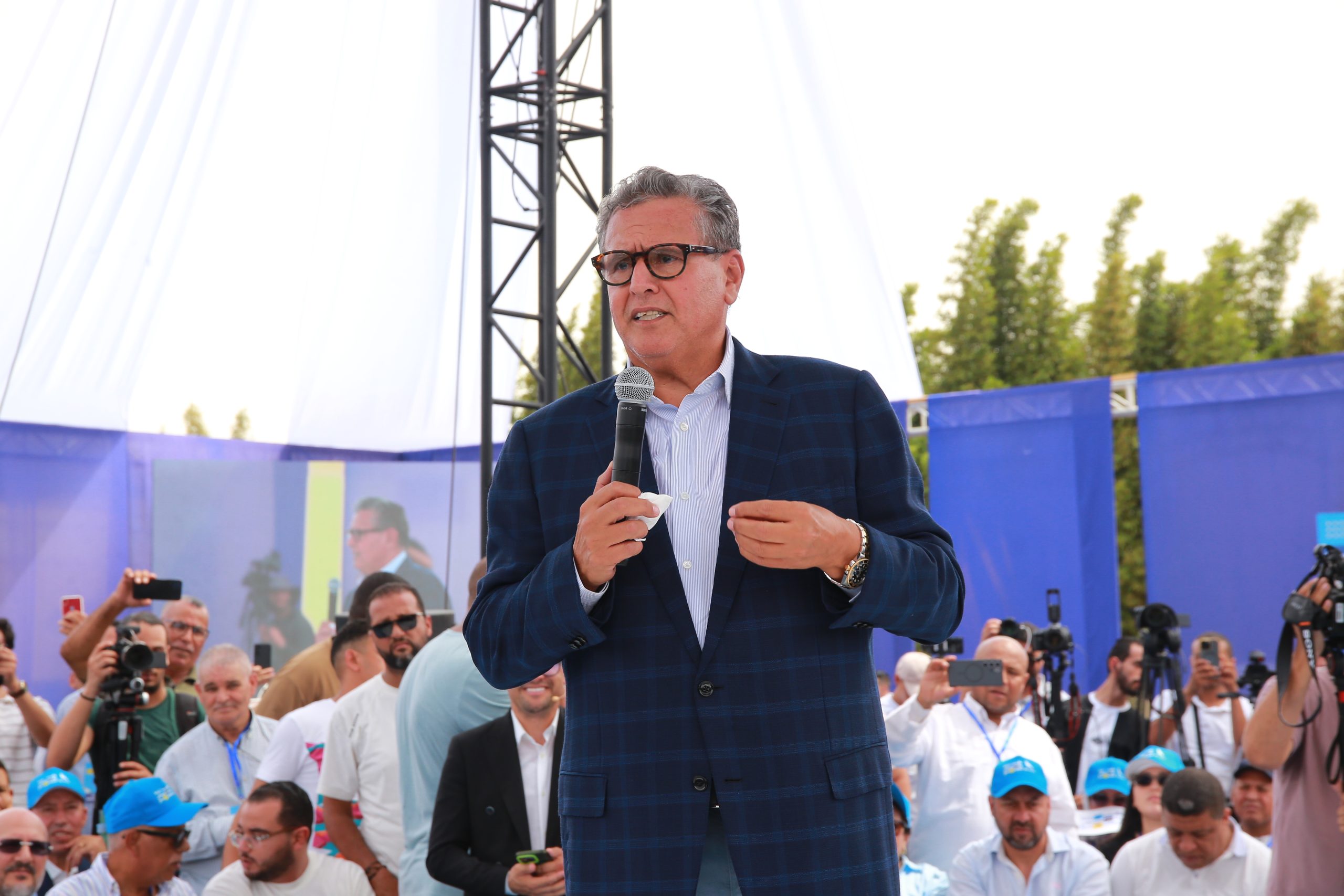
Speaking at an RNI communication meeting in Ain Johra, Khemisset, Akhannouch said the government acted under exceptional conditions after five consecutive years of drought reduced water supplies and grazing areas and placed heavy pressure on livestock breeders.
He said the government opened the door to sheep imports after data showed that the number of animals available ahead of Eid Al Adha had fallen. The state then provided MAD 500 ($50) for each imported sheep, with customs procedures used to verify the animals entering Morocco. According to Akhannouch, the measure contributed to the import of around 800,000 sheep.
Akhannouch also defended the government’s wider livestock support program. He said it reached around 1.2 million sheep breeders after authorities from the Interior, Agriculture, and Finance ministries carried out a field operation to count and identify livestock and determine breeders’ needs.
The former RNI leader said the government’s priority was to preserve what he called the “capital of the herd,” arguing that losing large numbers of livestock would make rebuilding the national herd a process lasting several years.
He also linked the decision to suspend Eid Al Adha sacrifice in 2025 to efforts to allow the herd to recover. King Mohammed VI had called on Moroccans that year to refrain from the sacrifice because drought had severely weakened the livestock sector.
A controversial policy
Akhannouch’s defense comes after years of criticism over the government’s livestock policy. The state spent billions of dirhams on import subsidies, customs exemptions, and other measures intended to increase supply and bring down meat prices.
Yet the measures did not prevent sheep prices from rising sharply. In May, households reported paying around MAD 4,000 to MAD 5,000 ($400-$500) for medium-sized sheep, while even smaller animals often cost more than MAD 3,000 ($300).
The controversy became particularly damaging because the government had repeatedly presented imports and subsidies as tools to protect consumers. Opposition parties also called for a parliamentary inquiry into the policy and questioned who benefited from the subsidies and whether they actually reduced prices.
The debate later took on another name: the “Fraqchia” crisis. The term, used in Morocco to describe livestock traders and intermediaries accused of inflating prices, became part of a broader public debate about the structure of the meat market.
Critics linked the crisis to a wider chain involving feed suppliers, livestock traders, slaughterhouses, wholesalers and retailers. The investigation also questioned why large public interventions had failed to produce more affordable prices for consumers.
An election-season defense
The timing of Akhannouch’s remarks is politically significant. Morocco will hold legislative elections on September 23, with the RNI seeking another term in government. Akhannouch, however, stepped aside as RNI leader earlier this year, with Mohamed Chaouki taking over the party leadership.
His five years in office have been marked by both major government programs and strong public criticism over purchasing power, fuel prices, inflation, and the cost of basic goods. The frustration reached a high point during the Gen Z 212 protests in 2025, when demonstrators demanded better health and education services and called for Akhannouch to resign. Protesters also called for boycotts of businesses linked to him.
The livestock controversy has added another difficult issue for the RNI. Despite government support, many consumers continued to see sheep and red meat as unaffordable. Akhannouch himself has faced repeated demands from political opponents to leave office, including recent calls from former head of government Abdelilah Benkirane.
At Friday’s meeting, however, Akhannouch sought to shift the focus from the identities of livestock importers to the government’s stated objective.
“What matters to us is that the support reached citizens, that the support reached the breeder,” he said, according to the RNI. He also said the government was prepared to provide information about the import program and insisted that it had no reason to avoid scrutiny.
With less than three weeks before voters go to the polls, Akhannouch’s defense reflects the broader challenge facing the RNI: convincing Moroccans that its interventions delivered meaningful results despite the economic and climate pressures that defined its term.
Credit: Source link