

Anti-migrant violence triggers emergency at the South Africa-Zimbabwe border
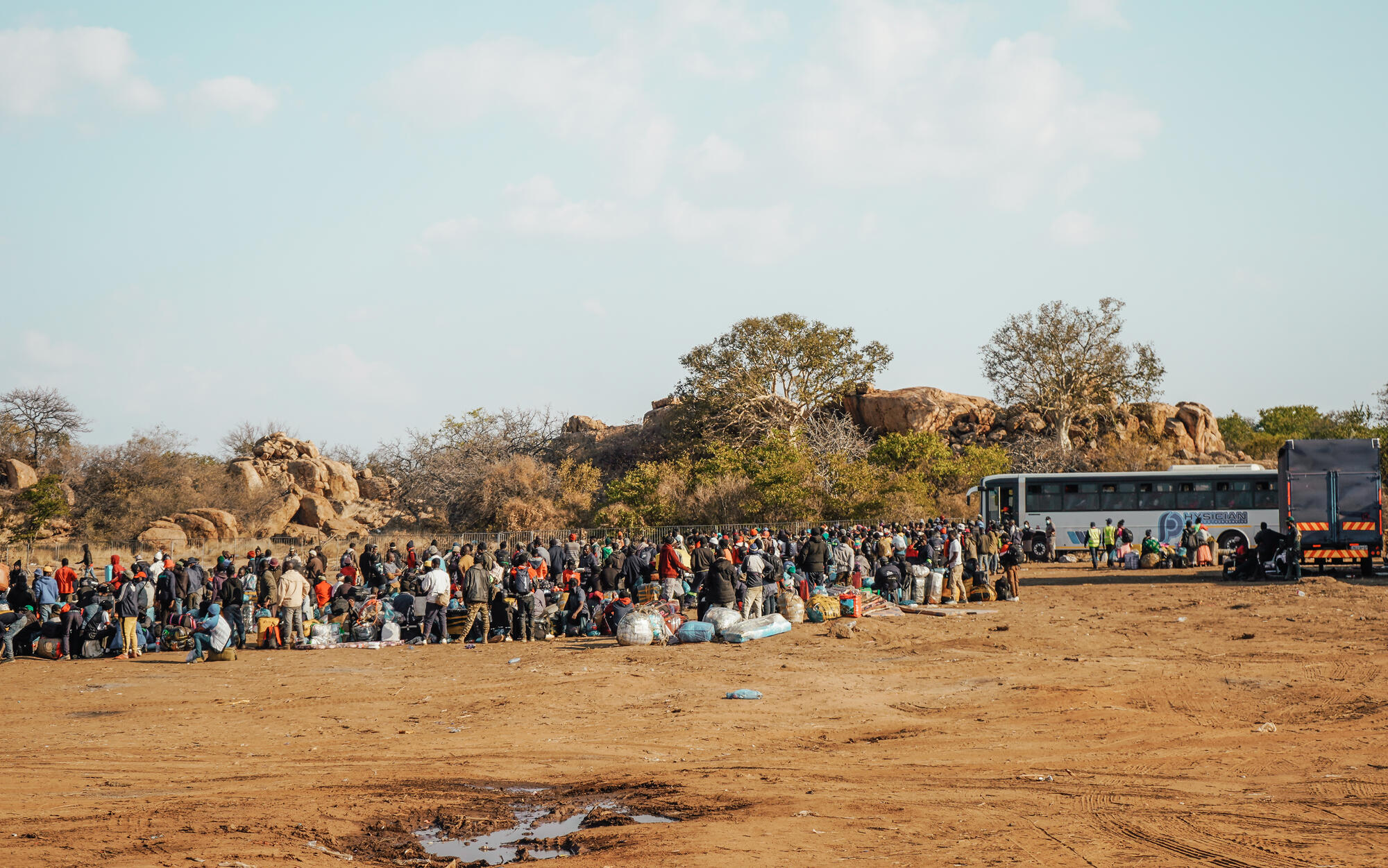
Across the border in Beitbridge, MSF counsellors are concerned about the trauma their patients are experiencing. Nobuhle*, who has been living in Soweto, Johannesburg, and working as a chef at a local restaurant, was devastated to return home from work on 17 July to find her house had been burnt down. Luckily, her three children were away at the time.
“I found my house burnt. I lost my passport and permit, all my clothes and furniture, my children’s birth records and birth certificates,” says Nobuhle. “I have nothing with me. All I have is this small handbag. I do not even have a change of clothes.”
“I thought having a passport and permit would save me, but no, I was wrong. I wanted to kill myself. I have lost hope, and I do not know what I will do”.
The narrative that the so-called ’self-repatriation’ process is always voluntary is questionable, as many fearful Malawians, Mozambicans, and Zimbabweans insist that they are documented but have little choice other than to flee for their safety.
Passing through Musina, Joseph*, a Malawian from Pietermaritzburg who has been working as a tailor in South Africa since 1995, started ARVs in 2008.
“They come to my house and say, ‘you are a foreigner, hamba (go)’. So, I run away and go to hide with my friends,” says Joseph. “Then I go to Durban. I am staying there at the bus station; it was raining, but we are outside.”
“I leave my [HIV] medication there in the house. I don’t worry about that or the clothes; if I am still alive, I can get it,” he says. “I haven’t taken the medication in a few weeks. It is relief; I got my medication today [from MSF].”
Freedom, a Zimbabwean, moved to South Africa in 2009, where he has been working as an electrician and plumber. Treated in Beitbridge, he was forced to leave South Africa after his health deteriorated because he had been unable to access his antiretroviral (ARV) medication.
Despite having a valid passport and a work permit, Freedom tells us the documents could not protect him when anti-migrant groups went door-to-door threatening non-South Africans in their homes.
Credit: Source link
Comments are closed.