

Angola: Drop case and restrictions against activist
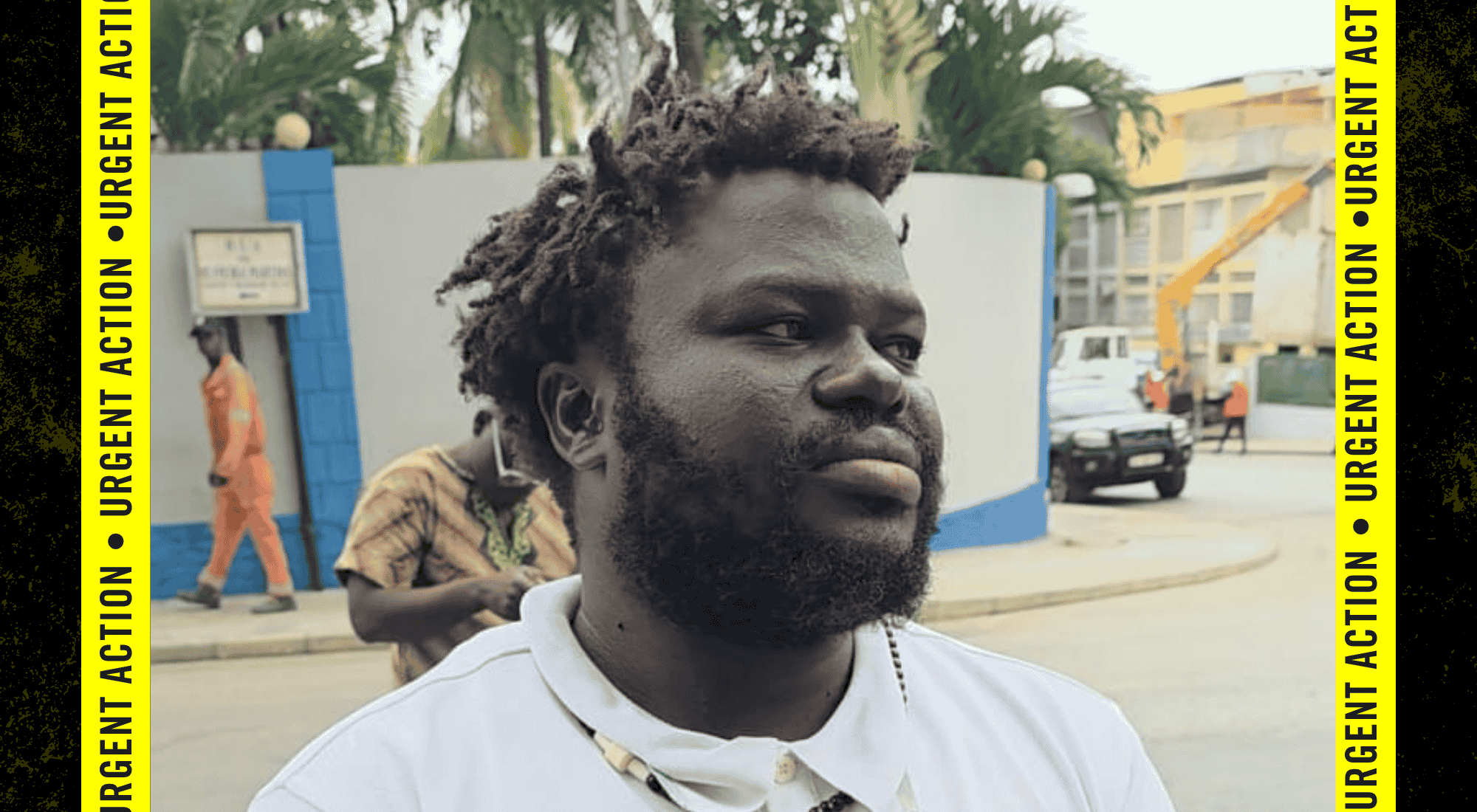
Serrote José de Oliveira, also known as General Nila, was released on July 23, 2026, after almost one year in pretrial detention. However, criminal proceedings and restrictions against him remain in place.
Authorities arrested him on July 28, 2025, while he livestreamed on TikTok during a taxi drivers’ strike. A plain-clothes officer then fired several shots at him. Two bullets struck his leg, and one remains lodged in his body. Despite a court order, he has not received adequate medical care.
The authorities have not identified any unlawful act committed by General Nila. They have also failed to justify the shooting. They must immediately drop the case and lift all restrictions against him. They must also ensure he receives the medical treatment he needs and has access to justice and effective remedies.
Finally, the authorities must conduct a prompt, thorough, and effective investigation into the shooting. Anyone suspected of responsibility must be brought to justice.
Here’s what you can do:
Write to the Minister of Justice and Human Rights urging his office to:
- Immediately discontinue the criminal proceedings against General Nila and lift all restrictions imposed on him.
- End the misuse of the criminal justice system to target or harass General Nila for his activism.
- Ensure that General Nila receives appropriate medical care and has access to justice and effective remedies.
- Conduct a prompt, independent, impartial, transparent, and effective investigation into his shooting and bring anyone suspected of responsibility to justice.
Write to:
Minister of Justice and Human Rights
Marcy Cláudio Lopes
Casarão da Justiça, Rua 17 de Setembro
Gombota, Luanda, LU, Angola
E-mail: [email protected]
Salutation: Dear Minister of Justice and Human Rights,
And copy:
His Excellency Agostinho de Carvalho dos Santos Van-Dunem
Ambassador
Embassy of the Republic of Angola
2100-2108 16th Street, NW
Washington, D.C., DC 20009
United States of America
Tel: (202) 785-1156/7/8 Fax: (202) 822-9049
Email: [email protected]
Released but still facing restrictions
General Nila’s release on July 23, 2026, did not end the criminal proceedings against him. Instead, authorities released him from pretrial detention but imposed procedural restrictions.
He is now at home, but his health remains a serious concern. A bullet remains lodged in his leg and continues to cause pain. At times, it also makes it difficult for him to move. He currently uses crutches while waiting for the authorities to lift the restrictions. He needs appropriate medical care in Angola or abroad to determine whether doctors can safely remove the bullet.
Protests over rising fuel prices
On July 12, 2025, civil society groups called for nationwide protests after the government raised diesel prices by more than 30%. The protests reflected widespread frustration over rising living costs and economic pressures.
Police responded with unnecessary and excessive force. They arrested at least 12 people in Luanda on the first day of the protests.
The Angola National Taxi Association (ANATA) later called for a three-day strike starting July 28. The strike also opposed the diesel price increase, which had pushed minibus taxi fares up by 50%. Violent clashes, vandalism and looting followed in parts of Luanda.
On July 31, the Interior Minister reported 1,214 arrests, 22 deaths and 197 injuries during two days of the strike.
Legal concerns over protest-related offences
Fuel price increases have triggered deadly protests in Angola before. Amnesty International documented the so-called ‘Huambo protests’ on June 5, 2023, during which five people died. The victims included a 12-year-old boy who was returning home from school.
Article 4 of Angola’s Law 13/24 on Crimes of Vandalism Against Public Property and Services imposed prison sentences of five to 10 years for destroying public property or disrupting public services.
However, Angola’s Constitutional Court struck down Article 4 and several other provisions on December 4, 2025. The ruling meant that courts and public authorities could no longer apply those provisions. The Court found that Article 4 imposed the same harsh sentencing range on conduct of very different levels of seriousness. It also failed to clearly distinguish unlawful disruption from conduct protected by the rights to strike and peaceful assembly.
The Court concluded that the provision violated constitutional principles, including proportionality, human dignity and the rule of law.
On March 25, 2026, the Council of Ministers considered a revised bill intended to bring the law into line with the Constitutional Court’s ruling. The government submitted the bill to the National Assembly. Parliament approved it in general terms on May 21, 2026.
Please take action as soon as possible until February 7, 2027. The UA will be duly updated should there be the need for further action.
Credit: Source link
Comments are closed.