

From Entrepreneurship to Digital Inclusion: Hermann Aguessy, a Key Player in Digital Technology in Benin and UEMOA
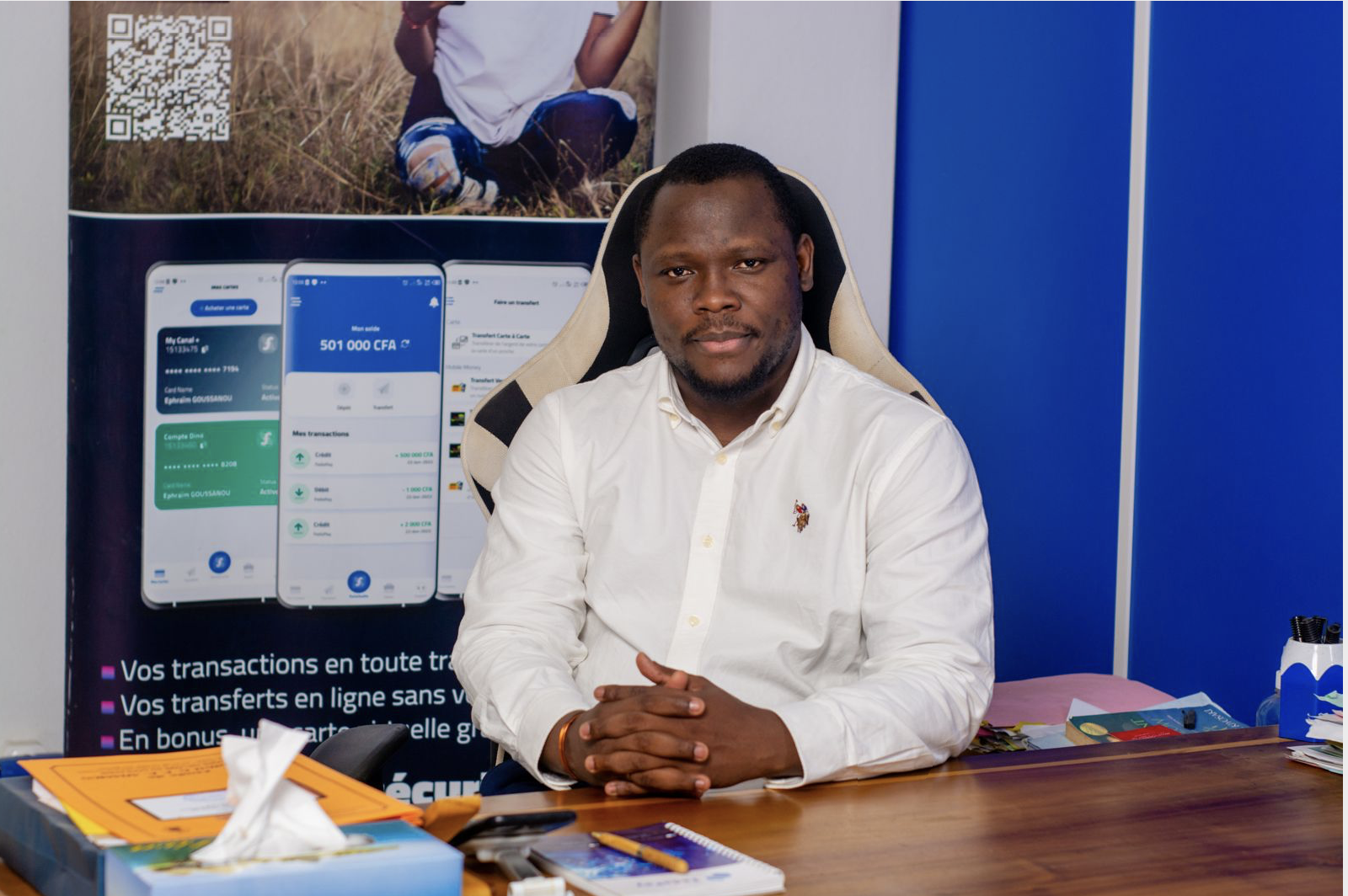
Present in the Beninese fintech ecosystem, Hermann Aguessy is part of the generation of entrepreneurs who are contributing to the progressive structuring of digital markets in West Africa. His activities cover several complementary segments: digital payments, software engineering, digitalization of services, as well as digital inclusion, digital education, and connectivity.
As the founder of Nautilus Technology and co-founder of FedaPay, he develops solutions for companies, financial institutions, and public entities. This trajectory is part of a regional context marked by the rise of mobile money, the increase in digital transactions, and the states’ desire to accelerate the digitalization of services.
Beyond individual initiatives, his journey illustrates a broader trend: the emergence of local players capable of offering solutions adapted to the realities of West African markets, in a competitive environment where African fintechs and international platforms coexist.
From software engineering to payment solutions
Trained in computer science, with additional training in digital transformation and fintech, Hermann Aguessy started with projects related to digital cooperation through the VIF program of the International Organization of La Francophonie (OIF), where he worked on technological development initiatives.
In 2015, he founded Nautilus Technology, a software engineering company focused on digitalization projects for public institutions and businesses. The company operates in several sectors, including education with the implementation of an e-learning platform used by public universities in Benin, which attracts several hundred thousand users annually. It also develops solutions in the insurance and micro-insurance sectors, particularly for players like Sanlam-Allianz in Côte d’Ivoire or NSIA Vie in Benin.
In the agricultural sector, his solutions contribute to the digitalization of agricultural advice, with tools that have reached several hundred thousand producers. These projects reflect a focus on concrete needs: modernization of systems, improved access to information, and optimization of services.
“We cannot wait for large international platforms to come and solve our problems. Africa must invent its own solutions,” he explains.
In 2017, he co-founded FedaPay, a payment platform that aggregates different transaction methods, including bank cards and mobile money. Positioned in a rapidly growing market, the solution targets companies, merchants, and administrations in a context of increasing digital transactions.
Deployed in Benin, Togo, Côte d’Ivoire, and Niger, FedaPay is part of a regional dynamic of integrating digital payments, with prospects for expansion into other markets in West and Central Africa.
During the Covid-19 pandemic, FedaPay was used for collecting test fees in Benin, demonstrating the ability of local solutions to be integrated into large-scale public initiatives. “We have proven that local technology can support the state in a critical moment,” says Hermann Aguessy.
Diversification: microfinance, inclusion, and connectivity
In 2020, he launched Finplex, a platform for decentralized financial systems (SFD). The goal is to digitize operations, pool digital channels, and reduce costs for microfinance institutions.
In a region where microfinance plays a central role in access to financial services, this type of solution aims to improve operational efficiency, strengthen transparency, and facilitate access to services for underbanked populations.
At the same time, Hermann Aguessy is expanding his activities to digital inclusion and digital education. Several initiatives aim to support the adoption of digital and financial tools by populations, including young people, women entrepreneurs, and actors in the informal sector.
“An infrastructure without trained users is a bridge without a road,” he emphasizes, highlighting the importance of skills development to support the adoption of digital services.
In addition to services, his work also focuses on connectivity, especially in rural and semi-urban areas where internet access remains limited. Ongoing projects involve economic models to expand network coverage, reduce access costs, and promote large-scale digital inclusion.
Between public markets, expansion, and challenges
The solutions developed by his companies have been used in several public projects, particularly in the digitalization of administrative services and payment collection. This collaboration illustrates the evolving relationship between states and technological actors in a context of modernizing administrations. “Public digital services are the promise that the state makes to each citizen to be served efficiently,” says Hermann Aguessy.
At the same time, regional expansion remains a strategic objective. West African markets offer opportunities but are marked by increased competition, particularly from pan-African fintechs and well-established international players. Several structuring challenges persist: access to infrastructure, user trust, data protection, availability of adapted digital content, especially in local languages, and the ability to tailor solutions to socio-economic realities. “Trust is the key,” he reminds.
In this context, initiatives led by local actors contribute to a regional dynamic of digital transformation, characterized by the rise of digital payments, the digitalization of public and private services, and the progressive extension of internet access.
Credit: Source link