

The future of Burkina Faso’s democracy is in question
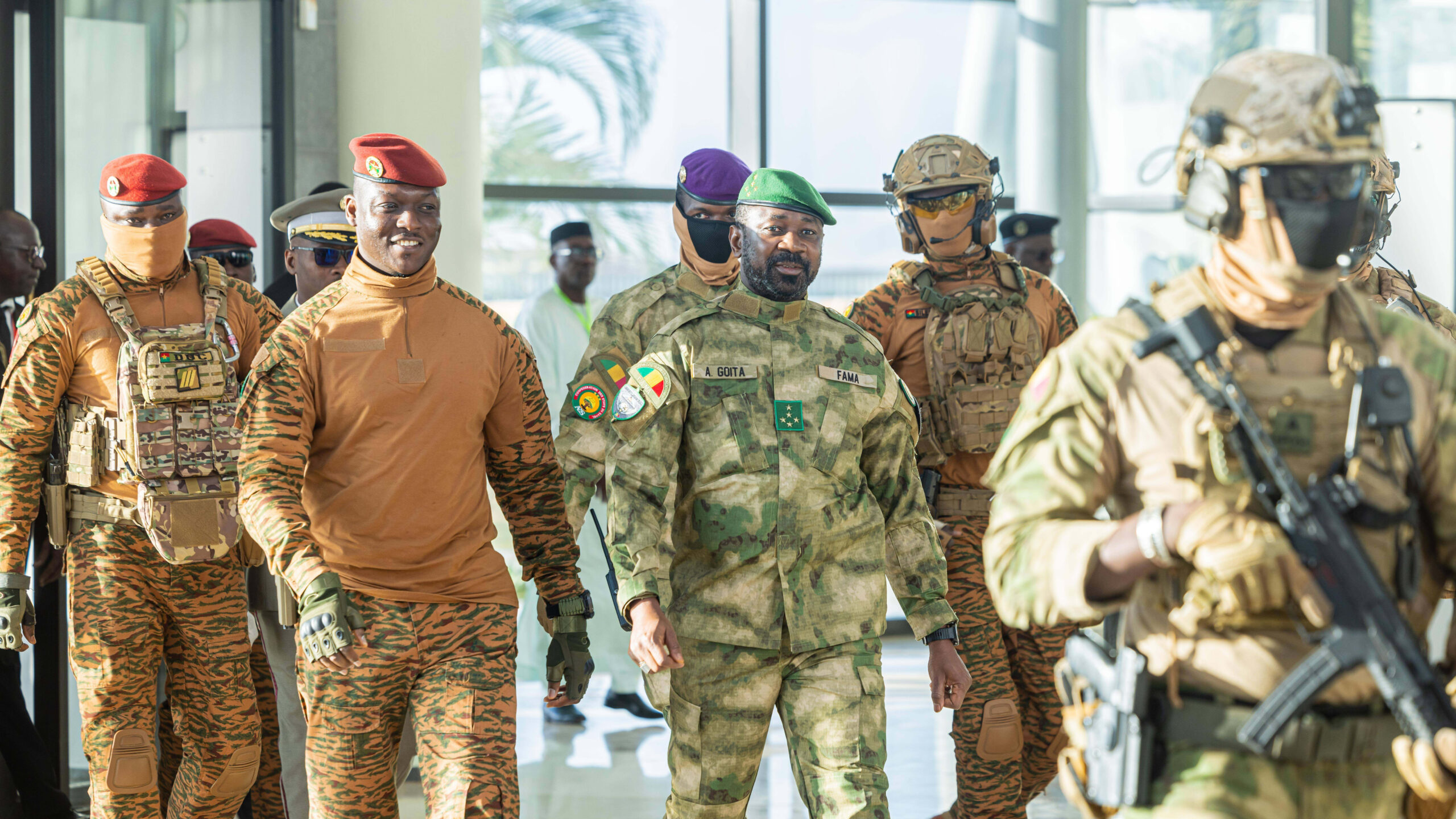
In West Africa, Ibrahim Traoré, the president of Burkina Faso, is consolidating power and planning dramatic changes to the government. In an interview earlier this month on national television, he walked back plans for elections that would’ve happened in 2029. Instead, he said, people need to forget about the issue of democracy. “Democracy is not for us.”
Traoré took power in a coup about three years ago, and this month, the government passed a new charter making his leadership indefinite.
When pressed by a journalist what his comments meant for human rights, Traoré responded by saying, “Who’s talking about human rights? Look who bombed Libya and killed children there,” referring to the NATO attack in 2011.
“Who is bombing far and wide and killing children without distinction? Is that human rights?” he asked. “That’s not what we do.”
But Traoré has also developed a cult-like following outside of his country. Leonardo Villalón, who runs a Sahel research group at the University of Florida, said Traoré has been taking steps toward this for years. Leonardo argues that Traoré’s ability to create a group of international followers while still being a repressive leader is impressive, and it “has given him a lot of leeway to be able to sort of break with past practice.”
Marco Werman: Tell us more about that repression you’re referring to in Burkina Faso that he’s been in charge of.
Leonardo Villalón: Since coming to office, he’s gradually shut down the political process, suppressed civil society, banned political parties, and then people have been arrested and disappearing. He had a practice for a while of conscripting people who had no particular military training and were well past military age and sending them to the front as a means of intimidating people. And so, he’s managed very much to shut down a political space that I think it’s important to emphasize. It was very open despite a lot of military involvement in Burkinabé history. Burkina Faso had a very vibrant civil society and a very vibrant press. And Traoré has managed in both the domestic and then the international climate to get away with shutting that down.
So as you said, he took power in a coup, postponed elections, banned political parties. Were these statements throwing shade on democracy all that surprising?
No, I don’t think they’re very surprising. I think it’s very clear the talk of democracy used to be sort of necessary for military regimes to justify themselves for as long as they could hold on. But I think in the current context, he feels he can abandon that pretense. He’s got the sort of strength at home, but also he’s got some cover internationally, I have to say. Among others, the United States government recently has signaled that promoting democracy is no longer a priority in the region. The US government is starting to reengage with the countries in the Sahel that had previously backed away precisely for violations of human rights and democracy. And so, I think he’s got cover to make those kinds of statements and to get away with them.

That report, I think, was quite interesting. It referred to both Burkina Faso and to Mali, and it referred to the fact that those two countries in particular, along with Niger, have become sort of the epicenter of global terrorism. And what this report pointed out is that the violence that is being perpetrated there is more, not only as much as, but even more on the side of the military and associated groups. And so, we’re seeing somewhere between a very strong insurgency that is being suppressed violently and extraordinary numbers of millions of displaced people right now. Large parts of the country are no longer under the government’s control. And prioritizing the fight against this, I think, sort of what has given Traoré some — he sort of feels that he can prioritize that and he can get away with a lot of things by saying that this is what he’s working on. That’s his priority. That’s what he’s doing.
Now, Leonardo, despite all this chaos, President Traoré is actually very popular outside of Burkina Faso. Why is that?

If we return to his remarks on democracy on national TV in Burkina Faso, it sounded like a political debate over systems, political systems. But you seemed to suggest earlier that this anti-democratic rhetoric is simply about justifying a single-party state and, to be blunt, Traoré giving himself cover to stay in power as long as he wants. Is that right?
Well, I mean, you know, we have to guess at the intentions, but it’s not hard to guess that the intention may be to prolong his stay in power. But he does have something to stand on in the sense that there is a popular dissatisfaction with democracy in West Africa particularly, but in large parts of the world. There’s always been this rhetoric of, “No, we’re on the road to democracy. Sometimes, you know, we fall off track, but we get back on track.” This is the first time since the early ’90s where in this region somebody just says, “No, never mind, we’re not trying to get democracy at all.” Domestically, it has its opponents, of course. They’re mostly silenced at the moment in Burkina Faso, but he has his supporters, as well, too.

Of course, neighboring Mali and Niger, we’ve mentioned them, they’ve also seen coups that brought anti-Western military leaders to power. And these three countries are in clear opposition to the old guard countries still represented economically and tied to the West in this economic bloc known as ECOWAS, the Economic Community of West African States. So Leonardo, what does this moment tell you about the future of, not just Burkina Faso, but the wider West Africa region?
Yeah, the region is clearly at a crossroads, and they’re a pretty significant crossroads. The three countries you just mentioned have actually formally left ECOWAS, and they’re very, very clearly breaking with the model and attempting to suggest an alternative. West Africa is extremely divided as a result at the moment. Some governments, like in Senegal, have attempted to remain within ECOWAS and balance support for it while adopting a little bit of the rhetoric of anti-colonialism and sovereignty that I think appeals to youth. Of course, the big regional hegemonies, Nigeria in particular, but Côte d’Ivoire and Ghana and others, remain within ECOWAS. And there’s a sort of a fork in the road right now [that] we’re seeing in West Africa.
Parts of this interview have been lightly edited for length and clarity.
Credit: Source link
Comments are closed.