

Slavery reparations discussion takes major step forward
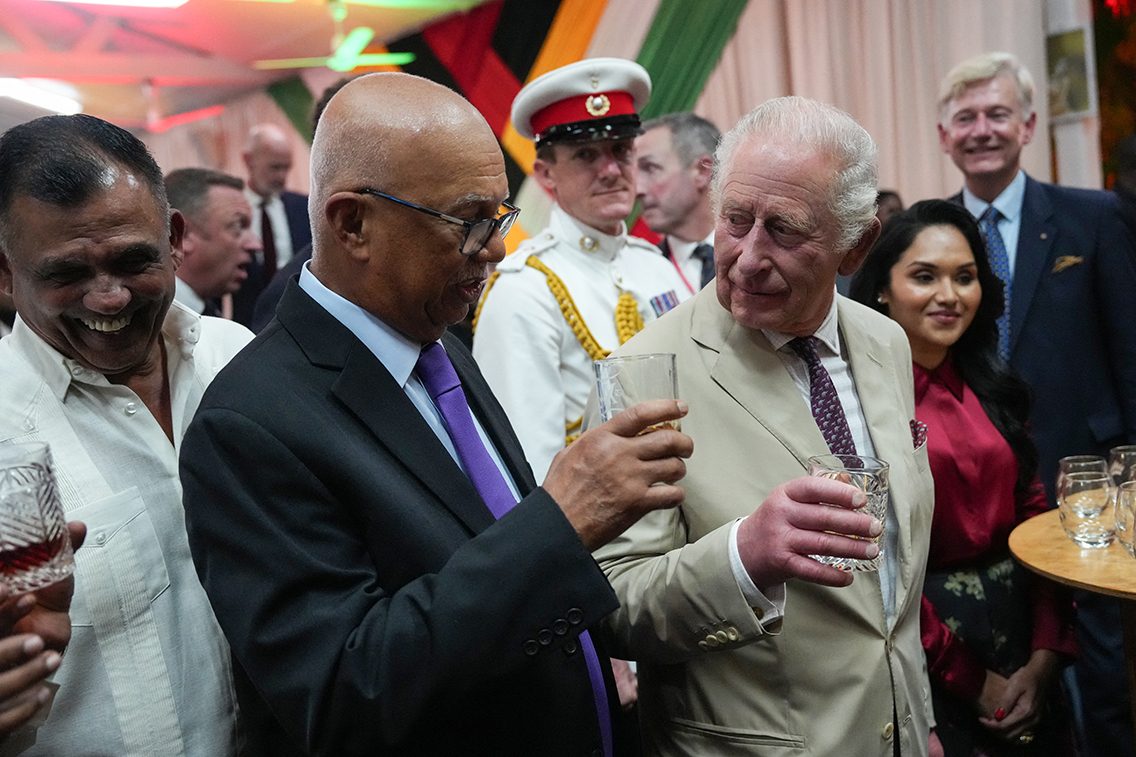
There are signs that the ground for reparations within Britain is rapidly shifting. Following a high-powered UK Reparations Conference meeting in London, the pressure on King Charles, in the Caribbean ahead of this year’s Commonwealth Heads of Government Meeting (CHOGM) in St John’s, Antigua, next week, to apologise for Britain’s role in the slave trade is growing. Onyekachi Wambu attended the conference.
While the focus is on the Caribbean and King Charles travels there, in the UK, universities, churches, cultural institutions, businesses and families are confronting their historical connections to slavery and colonialism in the wake of an important conference in London.
Restitution and the return of ancestral remains are moving from campaigning demands towards institutional and governmental action.
Lawyers are examining routes to remedy, parliamentarians are challenging government policy, and an increasingly organised African and Caribbean diaspora, alongside longstanding grassroots movements, is ensuring that reparatory justice can no longer be dismissed as somebody else’s debate.
It was against this rapidly changing backdrop that more than 900 people registered to attend the 4th UK Reparations Conference in London on 17 October, with a further 350 registering online.
Opening the conference, Barbados Prime Minister Mia Mottley captured its central challenge: “Our task now is to translate it into action.”
Ghana’s Foreign Minister Samuel Okudzeto Ablakwa, whose country has played a pivotal role in advancing reparatory justice internationally, was equally clear. Despite predictions that European resistance would stall the movement, he told delegates: “We are making a lot of gains.”
Conference host Bell Ribeiro-Addy MP was joined in the opening plenary by former St Vincent and the Grenadines Prime Minister Dr Ralph Gonsalves, Diane Abbott MP, Lord Marvin Rees and Esther Xosei.
The international dimension continued through to the closing session, with Jamaica’s Professor Verene Shepherd, Dr Ron Daniels of the Global Healing Circle and Ghanaian Traditional Chief Nana Kobina Nketsia V offering solidarity and guidance on the UK struggle.
Unique Meeting
Beyond these leading figures, the conference brought together ambassadors and diplomats, MPs and councillors, lawyers and academics, faith leaders, funders, trade unionists, community organisers and grassroots activists in a unique forum.
Its composition reflected a central message: reparatory justice requires dialogue between governments and movements, Africa and its diaspora, institutions and the communities whose persistent organising created today’s political possibilities. The excitement in the room was palpable — a microcosm of the growing global movement.
Organised by the All-Party Parliamentary Group for Afrikan Reparations (APPG-AR), chaired by Bell Ribeiro-Addy MP, with its two secretariats — my own organisation, AFFORD, and Stop The Maangamizi: We Charge Genocide/Ecocide Campaign (SMWeCGEC) — the conference deliberately shifted the emphasis from making the case for reparations to building mechanisms to deliver them.
That is why this conference mattered. The 25 March UN General Assembly vote helped establish an international mandate. The 18 June Accra Next Steps conference advanced an international framework while consolidating CARICOM’s Revised Ten-Point Plan for Reparatory Justice: A Manifesto for the Coming Enlightenment. October brought that momentum into Britain and asked: what does implementation look like here?
That gave the gathering particular historical significance. As delegates observed, advancing reparatory justice in Britain means taking the implementation agenda to what some called “the heart of the beast” — the principal centre from which empire was financed, administered and ideologically justified.
The conference title captured that transition: “From Resolution to Repair.” Sessions examined law, restitution and ancestral remains, climate debt and economic justice, grassroots organising, healing and Africa-diaspora solidarity, faith institutions, contemporary racism, arts and media, education, history and memory.
Together they underlined a fundamental reality: reparations cannot be reduced to a cheque, and centuries of extraction and continuing structural inequality cannot be repaired through symbolic gestures alone. Repair has legal, economic, cultural, educational, environmental, psychological and institutional dimensions.
Nor were these intended as disconnected conversations. The sectoral sessions generated recommendations and evidence for one of the conference’s most important outcomes: the launch of an All-Party Parliamentary Commission of Enquiry process on reparations. A follow-up meeting on 18 October considered its Terms of Reference and modalities, moving the initiative from declaration towards institutional design.
Our ancestors are not museum objects
One of the clearest examples of campaigning producing institutional movement concerns ancestral remains held by British museums.
The conference followed the UK Government’s September announcement of a review of the Guidance for the Care of Human Remains in Museums, first published in 2005. Following sustained campaigning led by the APPG-AR, AFFORD, AFRIMUHERE, DTA, The Guardian and Professor Dan Hicks, the review acknowledges that the ethical, legal and moral environment surrounding ancestral remains has changed.
This is far more than a museum’s issue. The possession, study and display of African ancestral remains cannot be separated from colonial conquest, racial science and the treatment of African peoples as objects rather than human beings with dignity, families, cultures and spiritual traditions.
Returning ancestors and changing the rules governing their care therefore provide a concrete test of what confronting Britain’s colonial past actually means.
And the question goes further: if institutions can reconsider their right to possess ancestors acquired through colonial power, what other inherited assumptions about ownership, wealth, knowledge and authority must be reconsidered?
Reparations is becoming a programme
Perhaps the conference’s most important conclusion is that the reparations movement is entering a new phase. For decades, activists were repeatedly required to establish that a crime occurred, that its consequences survived abolition and independence, and that repair demands were legitimate. Those arguments remain important, but the terrain has changed.
The question is increasingly not simply “Why reparations?” but “What mechanisms will deliver repair?”
That means defining legal pathways; confronting debt and climate injustice; transforming education and public memory; healing breaches among Africans globally; addressing institutional racism and economic inequality; returning ancestral remains and cultural heritage; and confronting the historic responsibilities of churches, universities, corporations and other institutions.
Above all, it means ensuring that grassroots communities — whose organising made today’s breakthroughs possible — are architects of the process, not spectators to it.
The St John’s Challenge
Less than three weeks after the UK Reparations Conference, its central challenge — moving from resolution to repair — is being carried into the Commonwealth arena.
On 2 November, alongside the Commonwealth Heads of Government Meeting (CHOGM) in St John’s, Antigua, political leaders, reparations advocates, parliamentarians, lawyers and civil society will gather for “From Samoa to St John’s: Britain, the Commonwealth and the Road to Reparatory Justice.”
With King Charles, the Prime Minister and Foreign Secretary attending the main CHOGM, the side meeting will pose an increasingly unavoidable question: what role will Britain play as the Commonwealth moves from talking about reparatory justice towards creating a process capable of delivering it?
The policy architecture is no longer hypothetical. At CHOGM in Samoa in 2024, Commonwealth leaders agreed that the time had come for a meaningful conversation about reparatory justice. Since then, the UN General Assembly vote and the Accra Next Steps Agenda have moved the process forward. The journey from Samoa to St John’s must therefore be about more than another conversation.
For many Commonwealth states, what happens next will depend significantly on Britain’s response. Can Britain help lead an honest process of reckoning and repair — rather than remain an obstacle to one? After abstaining on the 25 March vote and resisting calls for an apology, some are anticipating a shift in British response.
We will find out next week the extent!
Crédito: Link de origem