

Inside Safika Holdings after the R11.7bn manganese exit
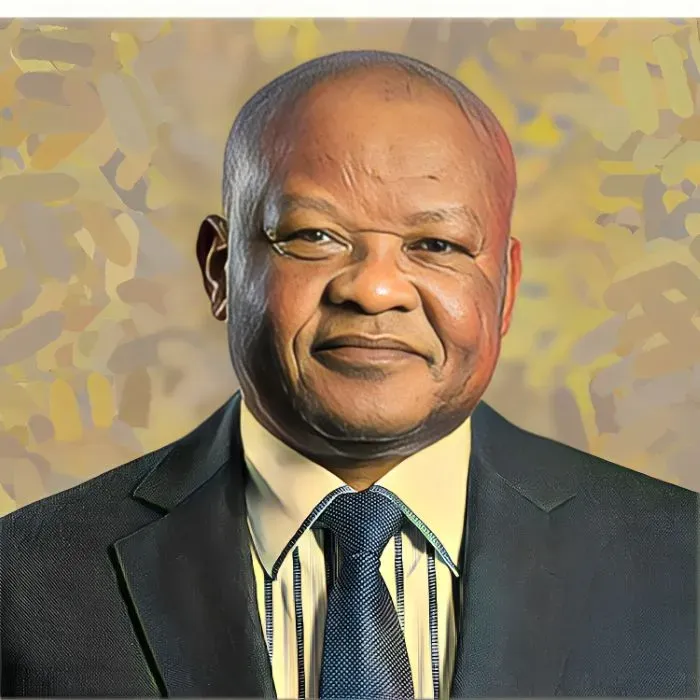
Exxaro Resources completed its purchase of the manganese portfolio held by Ntsimbintle Holdings and Singapore’s OM Holdings in early 2026, paying 11.674 billion rand, about $718 million. Safika Resources held 39.66% of Ntsimbintle and is collecting roughly 4.4 billion rand of it, around $271 million.
Saki Macozoma sold manganese, and only manganese.
The package covered 74% of Ntsimbintle Mining, 51% of Mokala Manganese, 9% of Hotazel Manganese Mines, 19.99% of the Australian-listed Jupiter Mines and all of the trading arm, Ntsimbintle Marketing and Trading. It included Tshipi Borwa, a 2 billion rand open-pit mine near Hotazel in the Northern Cape with a life beyond 60 years, producing more than three million tonnes a year and Africa’s largest manganese exporter.
The consideration could still reach 14.64 billion rand if Blue Falcon, which holds 49% of Mokala, exercises its tag-along rights.
Ntsimbintle chose to distribute the money rather than reinvest it. Empowerment is about creating value, Macozoma said, and that value must be in the hands of owners, who then decide what they want to do with it.
The prisoner who became Mbeki’s economist
Macozoma did not found Safika and did not join it for six years.
Moss Ngoasheng started the company in 1995 with Vuli Cuba, and Ngoasheng’s route there ran through Robben Island. He was arrested at four in the morning on May 5, 1978, crossing the Botswana border on his way to an ANC meeting, five days before his twenty-first birthday. He was charged under the Terrorism Act and sentenced to seven years.
He completed a degree in economics and international politics from his cell, alongside Nelson Mandela.
Released in 1985, Ngoasheng became a founder member of the United Democratic Front in what was then the Northern Transvaal, took a first-class honours degree in industrial sociology at the University of Natal in 1987, then a master’s in development studies at the Institute of Development Studies at Sussex, also first class. He lectured, worked as a research fellow, and consulted for the World Bank and South Africa’s National Housing Forum.
He wrote economic policy for the ANC before 1994, and served as chief economic adviser to Thabo Mbeki from 1995 to 2000, first while Mbeki was deputy president and then as president. He was instrumental in the party’s industrial policy.
Cuba came from the other direction. He had been a senior manager at Accenture and brought the operational side.
The two of them put early capital into telecommunications, media, information technology and property, which were the sectors post-apartheid deregulation was opening.
The inquiry nobody mentions
Safika’s first decade included a court case that has largely disappeared from the record.
Judge Ezra Goldstein ordered an investigation into the affairs of Safika Holdings around 2001, ruling that there was well-founded suspicion of grave impropriety and limiting the inquiry to three issues. The case was brought by Soto Ndukwana, then chief executive of the Makana Trust, against Safika, Ngoasheng and Cuba.
Safika at that point controlled New Africa Investments Limited, the first black-controlled company listed in Johannesburg and then the most valuable empowerment company in South Africa. Macozoma was running Nail as its chief executive.
He bought 10% of Safika the same year, and doubled it in 2003 to become an equal partner with Ngoasheng and Cuba, the three of them holding a controlling 60%.
Ndukwana appears on Safika’s share register by 2005, holding 5%.
The outcome of the inquiry is not in the public record.
The bank that made everything possible
Standard Bank named Safika its preferred empowerment partner on the basis of its management capability.
What followed was Tutuwa, launched in July 2004 and concluded that October. Safika and Cyril Ramaphosa’s Millennium Consolidated Investments, later Shanduka, led a consortium that acquired an effective 10% of Standard Bank’s South African operations and 10% of Liberty Life. The rest of it comprised trusts for more than 6,100 current and former Standard Bank managers, 261 small and medium enterprises and a community foundation.
Safika held 20% of Tutuwa.
The consortium paid 40.50 rand a share. The scheme was worth 4.2 billion rand at implementation against funding of just over 4 billion, and by 2007 Safika’s own holding amounted to 24 million Standard Bank shares.
Standard Bank then bought 20% of Safika in 2005, and what it paid has never been disclosed. The value of the deal between Standard Bank and Safika is subject to a confidentiality agreement between the two groups, Macozoma said at the time, and we are bound by it.
The Competition Tribunal examined that transaction and found the bank had acquired joint control, because it won the right to appoint a director and to veto the strategic plan and the annual budget. Macozoma disputed the reading, saying those were ordinary minority protections of the kind all institutional investors hold in empowerment companies. The tribunal heard that Safika conducted the majority of its client business through Standard Bank.
The register settled afterwards: Standard Bank 20%, Ngoasheng 20%, Cuba 20%, Macozoma 20%, Marc Ber 10%, Ndukwana 5% and Richard Chauke 5%. Cuba resigned in 2008.
The ten-year lock-in expired on Dec. 31, 2014. Tutuwa had created 10.7 billion rand of value by then, comprising 8.2 billion in post-debt equity at a share price of 143.44 rand and more than 2.5 billion already paid in cash. Safika and Shanduka between them accounted for 4.3 billion rand of it, and Standard Bank said in 2015 that both strategic partners continued to invest in the bank.
What Safika still owns in the ground
Safika Resources acquired 44.72% of Prieska Resources from Orion Minerals in 2019.
Prieska is a copper and zinc project in the Northern Cape, the same province as the manganese, and it is a development asset rather than a producer. Orion Minerals, listed in both Australia and Johannesburg, has been working it toward production.
Safika Resources also holds substantial exploration rights in the province.
The sale took the assets that produced cash and left the ones that might.
The rest of the portfolio
Safika bought into Oosthuizens Transport in October 2005, a Mpumalanga hauler moving coal to power stations, took an effective 75% and renamed it Safika Oosthuizens Transport. It holds a significant stake in Spartan Truck Hire, a national truck and crane hire business.
Safika Investments took 36% of Molapo Technology in November 2006, in a deal that allocated a further 25.1% to the company’s black employees and left the telecoms repair firm 61.1% black owned. Safika Investments is a joint venture with RMB Corvest, FirstRand’s private equity arm.
In financial services it holds 29% of Andisa Consortium, covering corporate finance, treasury, project finance and private equity, controls Tandem Capital jointly with RMB Corvest and a black empowerment trust, and runs Safika Asset Finance.
It owns Hot Slots Gaming Enterprises, and it launched Winsaf in Australia in 2011 as a private equity joint venture with the Wingate Group, where Ngoasheng also sits on the board of the parent company. Its most recent investment was GiftBasket.com in 2019.
Macozoma personally holds 0.00010% of the packaging group Mondi, where he is a non-executive director.
What Safika sold before this
Safika led the consortium that bought 25.2% of the asset manager Stanlib from Standard Bank and Liberty in June 2003. Liberty bought the stake back in December 2006 through Quantum Leap, a vehicle 51% owned by Safika and 49% by two trusts representing eleven community organisations, and those beneficiaries took more than 629 million rand in shares and cash.
It sold the advertising business Habari Media in 2005 to three buyers, the technology firm Britehouse Mobility in 2015, and Akacia Medical and Healthcare Group in 2016. It exited the Kelly Group, the staffing and recruitment company, in a corporate sale to five buyers.
How the money was made
Safika’s method was rarely just buying shares. It lent other people the money to buy them.
The company used vendor financing throughout, funding empowerment partners into stakes they could not otherwise afford, which is what made it useful to corporate South Africa. A company needing black shareholders could not conjure them, and Safika could assemble the buyers, the funding and the governance together.
The policy they helped write
Both men were in the room when the policy was designed.
Ngoasheng wrote economic policy for the ANC and advised Mbeki for five years. Macozoma sat in parliament from 1994 and served on the party’s national executive committee, and was involved in shaping the empowerment framework that followed.
They then became two of its largest individual beneficiaries.
Neither hides it. Macozoma’s argument has always been that empowerment should be measured in value actually realised rather than in paper ownership, and he points to the Quantum Leap distribution, along with the Ntsimbintle payout now reaching thirteen community, women’s and entrepreneurial entities in the Northern Cape, with the John Taolo Gaetsewe Development Trust holding 14.47%.
The criticism has followed them for twenty years. Six names recurred across South African empowerment deals: Macozoma, Ramaphosa, Tokyo Sexwale, Patrice Motsepe, Ngoasheng and Mzi Khumalo. All had standing in or access to the governing party, and the law that required companies to find black shareholders never specified which ones.
Macozoma served five years on Robben Island himself, was released in 1982, helped found the United Democratic Front and became Transnet’s first black managing director in 1996.
He is 69, chairs Vodacom until 2027, and has said only that the manganese sale will let Safika shareholders pursue other significant opportunities.
Ngoasheng, 68, remains chief executive. He chairs the parent company of South African Breweries and the listed Burstone Group, and sits on the boards of Sephaku Holdings, Business Leadership South Africa and the Nelson Mandela Children’s Hospital.
Crédito: Link de origem