

Vincent Bolloré pledges Nigeria investment after subscriber losses
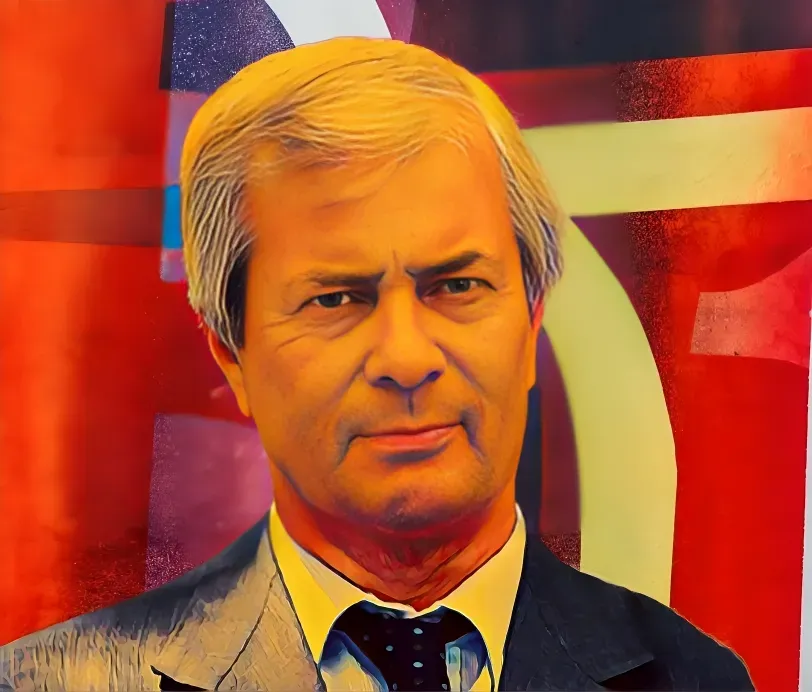
Vincent Bolloré met Bola Tinubu in Paris on Friday, Sept. 18, and confirmed that his group will deepen its operations in Nigeria across film, entertainment and fibre-optic infrastructure.
He owns most of what Nigerians watch on television, and he has been losing them.
MultiChoice shed 1.4 million subscribers in Nigeria over two years, and Nigeria accounted for more than half of the group’s entire 7% decline in the financial year to March 2025. The company blamed inflation running above 30%, energy costs and fuel scarcity.
It had also raised prices four times in three years. Nigerian subscribers absorbed increases in April 2023, November 2023, May 2024 and March 2025, the last of which took DStv Compact from 15,700 naira to 19,000 and Premium to 44,500, about $34 a month in a country where the minimum wage is a fraction of that.
Nigeria’s consumer regulator went to court over it. The Federal Competition and Consumer Protection Commission challenged the increases, and the dispute ran through the period in which Canal+ was completing its takeover.
Bolloré’s group holds 30.4% of Canal+, which bought MultiChoice outright in September 2025 for about 35 billion rand, the largest acquisition in its history. That brought DStv, GOtv, Showmax and SuperSport under his control and created Canal+ Africa, a business with roughly 40 million subscribers across nearly 70 countries and close to 17,000 employees.
The first thing the new owners did in Nigeria was stop charging more.
MultiChoice has frozen prices across 2026, breaking a pattern of annual April increases that had held for years. Chief executive David Mignot said the company is building subscribers and it is not the right time to raise prices, and Canal+ has committed €100 million to overhauling how DStv is priced and sold. Showmax is being wound down and its content folded into DStv Stream.
That is the context for what Bolloré told Tinubu.
Localisation is not a concession he is making. It is the strategy he was already running, because the way back to Nigerian subscribers is Nigerian content, and the company has said local production and sports rights remain central to holding the customers it has left.
Tinubu wants it in writing anyway. He said after the meeting that he wants more of the value created by Nigerian talent to remain in Nigeria, with more production at home, greater investment in local industries and infrastructure, and more jobs for young people, and that his responsibility is ensuring the investments become real opportunities.
Bolloré and his executives outlined new investments centred on Nigeria, according to presidential spokesman Bayo Onanuga, and described the country as the spearhead of Africa’s cultural renaissance, driven by Nollywood, Afrobeats and growing international demand for Nigerian culture.
In South Africa he was not asked. He was told.
That country’s Electronic Communications Act bars foreign entities from holding more than 20% of a broadcasting licence, so Canal+ had to spin MultiChoice South Africa’s licence, including DStv, into a separate company. The former Telkom chief executive Sipho Maseko’s Afrifund Investment and the businesswoman Sonja De Bruyn’s Identity Partners took 51% of the economic interest in it. Canal+ kept 49%.
Nigeria has no equivalent cap on his pay-television business, which is why Tinubu has to ask.
Bolloré is 74 and did not start in media. He inherited a modest paper manufacturing business in Brittany, built it into a conglomerate spanning transport, logistics and African ports, and spent the past decade converting it into a media group. Alongside Canal+ he holds about 18% of Universal Music Group directly, 30.4% of the advertising company Havas, 27.6% of Vivendi and 30.4% of Louis Hachette. Bloomberg has valued him around $9.6 billion.
He is a contested figure at home, where critics accuse him of using his outlets to push right-wing politics and note that he bought France’s largest private radio station before the 2022 presidential election.
Canal+ is still buying. It took 34% of the cinema chain UGC last autumn, is reported to be pursuing full control by 2028, and says it expects to pass 100 million subscribers. Its Chinese-owned rival StarTimes has about thirteen million.
His son Yannick is vice chairman of the group.
Crédito: Link de origem