

Iraq Seizes Records for 95 Properties in Salahaddin Corruption Probe
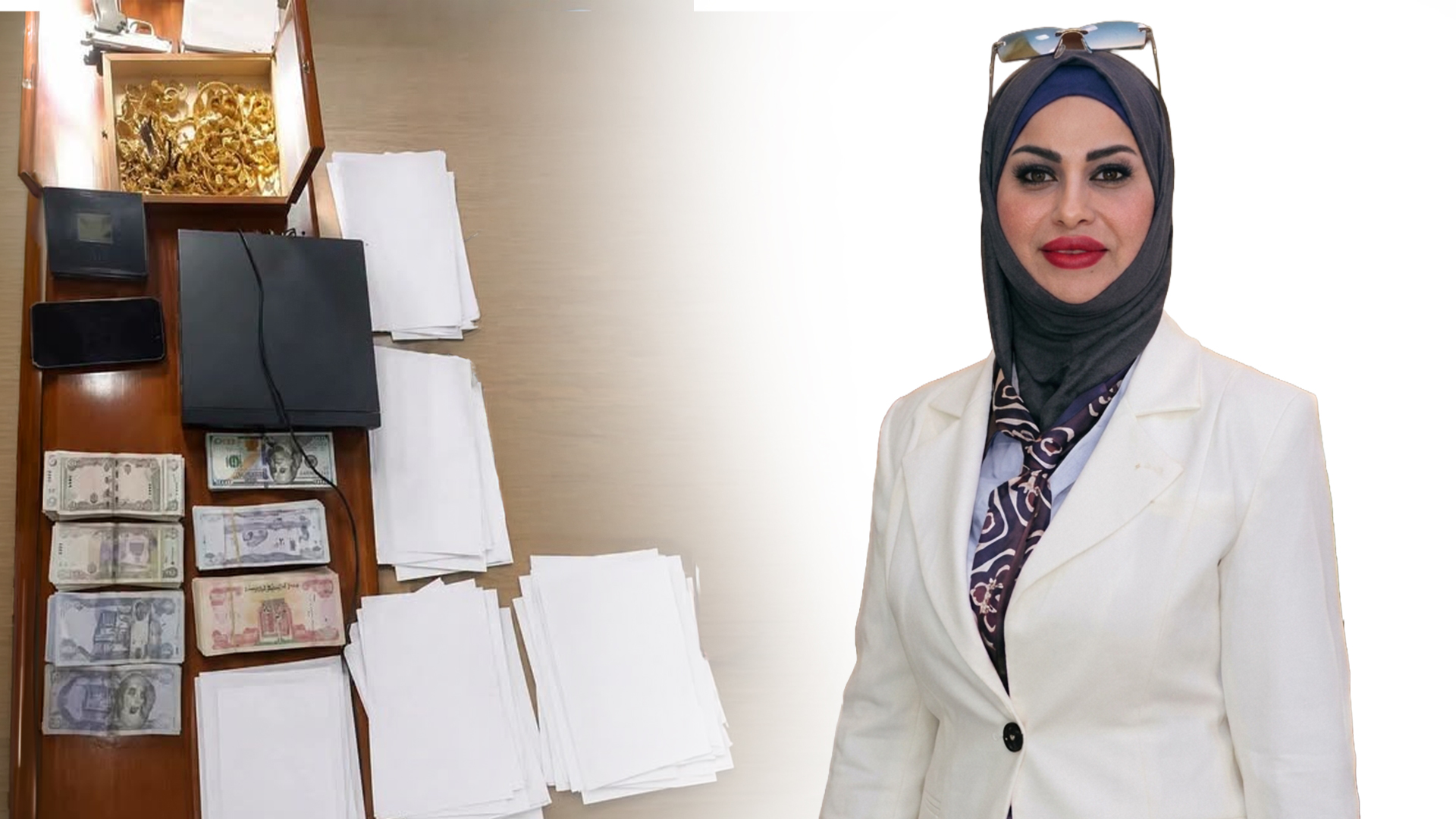
Iraq’s Integrity Commission seized records for 95 properties, cash and gold in a Salahaddin corruption probe, with 27 properties allegedly concealed through fictitious registration.
ERBIL (Kurdistan24) – Iraq’s Federal Integrity Commission said Saturday that investigators seized deeds and documents relating to 95 properties during a search of the home of Afrah al-Shammari, deputy director of the Real Estate Registration Department in Salahaddin province, in the latest significant development in the country’s expanding anti-corruption campaign.
The commission said investigators also discovered that 27 of those properties had allegedly been registered fictitiously in the name of al-Shammari’s spouse in order to conceal their actual ownership.
“During the search of the suspect’s home, it was discovered that 27 of the properties had been fictitiously registered in the spouse’s name solely to conceal their true ownership,” the Integrity Commission said.
Authorities additionally seized 31 blank forms carrying fingerprints, several computers, a large quantity of cash and amounts of gold hidden inside the residence, according to the commission.
The relevant judicial authorities have ordered the detention of al-Shammari’s spouse while the investigation continues.
The commission said legal proceedings were continuing over suspected corruption and the alleged misappropriation of public funds. The allegations have not yet been adjudicated, and responsibility will ultimately be determined through the judicial process.
Property records emerge as central evidence
The scale of the property documentation makes the Salahaddin case notable even within Iraq’s wider anti-graft effort.
Real estate has repeatedly figured in corruption investigations because property can be used both as a destination for illicitly obtained wealth and as a mechanism for disguising beneficial ownership.
In the Salahaddin investigation, authorities are now examining not only the 95 property records but also the alleged use of a spouse’s name in connection with 27 properties.
The seizure of blank forms containing fingerprints could also become an important evidentiary element, depending on what investigators determine about their intended use and connection to registration procedures.
The Federal Integrity Commission did not immediately disclose the total estimated value of the properties, cash or gold seized from the residence.
Nor did it provide further details on whether additional officials or employees of the Real Estate Registration Department are under investigation.
Latest case in Operation Dawn
The Salahaddin investigation comes amid Iraq’s broader anti-corruption campaign, formally known as the Dawn Campaign, or Operation Dawn (Sawlat al-Fajr), launched on June 28 under Prime Minister Ali Faleh al-Zaidi.
Read More: Iraqi CTS Raids Green Zone: Officials Arrested in Corruption Probe
The operation has developed into one of Iraq’s most extensive anti-graft campaigns since 2003, targeting serving and former government officials, lawmakers, political figures, business executives and investors over allegations ranging from illicit enrichment and money laundering to embezzlement and misuse of state property.
Its opening phase was marked by an unusually visible security operation inside Baghdad’s heavily fortified Green Zone.
Kurdistan24 previously reported that elite Counter-Terrorism Service units sealed entrances to parts of the area and executed court-issued arrest warrants at residences linked to senior political and government figures.
Authorities also strengthened monitoring at airports and border crossings while imposing travel restrictions on some suspects.
The campaign sent an early message that access to political office or protected government areas would not necessarily prevent investigators from executing judicial warrants.
Investigation grew from oil-sector case
A major strand of the campaign developed out of the investigation into Adnan al-Jumaili, a former Oil Ministry undersecretary for refining affairs who was arrested in late May.
Kurdistan24 previously reported that testimony attributed to al-Jumaili led investigators toward a wider network of officials, lawmakers and business figures.
Read More: Exclusive – Iraq Anti-Corruption Sweep Expands: Key Arrests Revealed
Those subsequently detained or implicated in related investigations included former Oil Ministry undersecretary Ali Ma’arij al-Bahadli, former parliamentarian Alia Nassif, Harakat Hoquq parliamentary-bloc leader Hossein Moanes and gold trader Hassan al-Khafaji.
Arrest warrants also spread beyond Baghdad into several southern and central Iraqi provinces.
As with the Salahaddin case, accusations against individuals involved in those investigations remain subject to court proceedings and should not be treated as findings of guilt.
Early figures on the number of people arrested under Operation Dawn also varied considerably.
Read More: Massive Anti-Corruption Drive in Iraq Nets 67 Officials in 24 Hours
Security sources initially reported dozens of detentions, while subsequent government statements used lower figures specifically attributed to the campaign.
Those numbers cannot automatically be treated as contradictory because they may refer to different categories, including formal arrests, temporary detention and suspects connected to separate but overlapping investigations.
Recovering assets becomes key measure
Asset recovery has increasingly become one of the most important measures of the campaign’s effectiveness.
Previous disclosures have involved large quantities of Iraqi dinars and U.S. dollars, luxury vehicles, real estate and gold.
In July, cooperation between authorities in Baghdad and the Kurdistan Region helped recover 375 kilograms of gold connected to the Jumaili investigation.
Read More: Kurdistan Region Helps Iraq Recover 375kg of Gold in Corruption Probe
Courts have also ordered the seizure of properties and commercial assets in Mosul, while other investigations have produced recoveries involving cash, gold and vehicles.
Because several official announcements relate to different or potentially overlapping cases, however, those amounts should not simply be combined into a single national recovery figure without further official accounting.
The federal government has ordered that recovered assets be deposited into a dedicated Finance Ministry account, creating a mechanism intended to ensure that money and property returned through corruption investigations are formally brought back under state control.
The judiciary has simultaneously pursued prosecutions while allowing legally supervised mechanisms in some cases to encourage suspects to return misappropriated funds.
Read More: Iraq’s Anti-Corruption Drive Reaches France as $500 Million Probe Widens
Test now shifts to courts
The investigation in Salahaddin illustrates how Operation Dawn has expanded beyond its initial high-profile arrests into cases involving provincial institutions and the administration of public property.
The discovery of documents linked to 95 properties, together with cash, gold and allegedly fictitious registrations, gives investigators a potentially substantial financial trail to examine.
But the wider credibility of Iraq’s anti-corruption campaign will ultimately depend on what follows such seizures.
Arrests and confiscations can demonstrate investigative reach, but lasting results require evidence to withstand judicial scrutiny, defendants to receive fair proceedings and recovered assets to be transparently accounted for.
For now, the Salahaddin case remains under investigation.
The Federal Integrity Commission says judicial proceedings are continuing, with investigators seeking to determine the ownership and origins of the seized property records and assets and whether they are connected to corruption or the unlawful diversion of public resources.