

Libya Requires Systemic Institutional Reform, Not Just Personnel Chang
Libya has had a summer of chaos and discontent that at times threatened to bring down the current government.
-
Increasing and persistent powercuts since June.
-
Four regional power blackouts, including three in two days.
-
Armed drone attacks on fuel depots, power stations, and water desalination plants.
-
The government unable or unwilling to identify or name the perpetrators of the drone attacks.
-
The power cuts have resulted in several shutdowns of all the Man-Made River water wells – temporarily cutting off water pumping to all the country.
-
The diversion by the government of electricity from industries and businesses to domestic users, to avoid social unrest.
-
Long queues at petrol stations because petrol stations that don’t have generators or diesel to operate them are unable to pump fuel.
-
A spike in diesel black-market prices and the disappearance of diesel off the market as the whole country turns to using their generators .
-
The billions spent on the electricity generation sector in recent years, confirmed by Prime Minister Abdel Hamid Aldabaiba in his recent angry outburst at a Cabinet Meeting – at the failure of GECOL to resolve the issue of power cuts.
-
The decades of wasted state subsidies to the electricity sector.
-
The removal yesterday of the GECOL chairman as a result of the power cuts and blackouts.
-
The attempted resignation of the CBL Governor last week.
-
The spike in the black-market foreign exchange rate of the LD to over LD 9 / dollar.
All these, and more, have led to loud public cries for a change in leadership in GECOL, the CBL, the government and its security services.
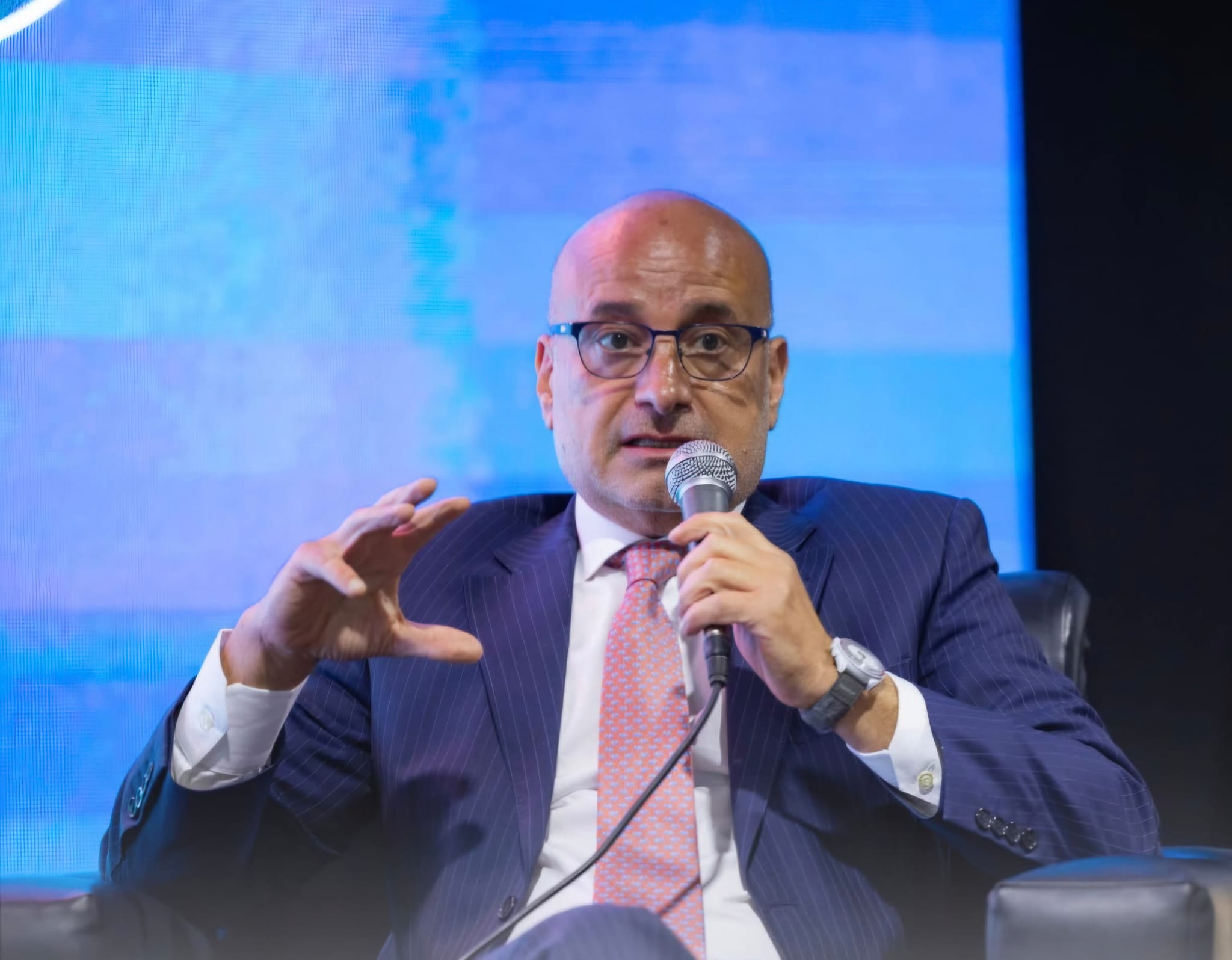
However, in his latest op-ed, Naaman Elbouri, former banker and current fintech CEO, asks: Is the problem really the people, or is it the system in which they operate?
“I believe one of the biggest mistakes we continue to make in Libya is believing that changing people will automatically change the reality.
We remove one official and appoint another. We change a board of directors, appoint a new government, or replace one governor with another—and then expect different results.
But we forget to ask the most important question:
Is the problem really the people, or is it the system in which they operate?
The reality is that a significant part of Libya’s crisis today is not simply a crisis of individuals. It is a crisis of an institutional and operational system that has been designed—or has evolved over the years—in a way that makes it incapable of consistently producing sound results.
Within such a system, even a good, honest and capable person will find it extremely difficult to achieve much.
Not because they do not want to reform, but because the rules of the game themselves do not allow them to do so.
The System Is Stronger Than the Individual
When an institution operates with complicated procedures, unclear responsibilities, overlapping authorities, weak accountability, inadequate oversight and conflicts of interest, it becomes extremely difficult for anyone to operate effectively.
Eventually, one of two things happens:
Either the individual gives in to the system and adapts to it, or they try to resist it and find themselves isolated and unable to implement what they believe is right.
And this is where the real danger lies.
A dysfunctional system does not necessarily corrupt people because they are corrupt. It can push even good people to adapt to its rules simply in order to survive and function within it.
That is why replacing one individual within a broken system can give society the impression that something has changed, while in reality nothing fundamental has changed.
The Problem Is Not Simply Who Sits in the Chair
We need to stop reducing Libya’s crisis to the question:
“Who is the right person?”
And start asking:
“Is the system in which this person will operate actually designed to allow them to succeed?”
If the answer is no, then even the best person in the world will struggle to achieve meaningful change.
We need to fundamentally reconsider how our state institutions operate:
– How are decisions made?
– Who has the authority to make them?
– Who is held accountable when things go wrong?
– How are results measured?
– How are leaders selected?
– How are appointments made?
– How is public money managed?
– How are conflicts of interest prevented?
– How are laws enforced?
– And how do we guarantee institutional independence and transparency?
These are the questions that must be at the heart of any serious reform project.
You Cannot Reform a Broken System Using the Same Tools
We cannot expect the same system that produced failure to reform itself without changing the rules by which it operates.
Real reform does not simply mean replacing people. It means redesigning the institutions themselves.
We need a system that enables good people to succeed, makes corruption more difficult, makes the right decision easier to take, and ensures that officials understand that their decisions have consequences and that they will be held accountable for their performance.
We need to move away from a system based on individuals, relationships and influence toward one based on law, institutions, competence, transparency and accountability.
We Do Not Need a “Good Man” Inside a Bad System
Even the best leaders will face serious limitations if the institution they lead does not function properly.
That is why relying on a “saviour” can be dangerous; it simply reproduces the same problem.
We do not need a superhero.
We need a system that enables an ordinary, competent professional to do their job properly.
That is the strength of successful states and institutions.
A successful state does not depend on the brilliance of a particular minister, governor or director.
It depends on the fact that the institution itself works, regardless of who occupies the chair.
Libya Needs Redesign, Not Just Replacement
If we genuinely want to overcome the crisis, we must move from a policy of “changing people” to something much bigger:
Redesigning the Libyan state and the way its institutions operate.
We need institutions with clear responsibilities, decisions based on data, leaders selected on merit, clear performance indicators, real accountability, effective oversight, transparent financial management, and an independent judiciary that is respected and enforced.
Only then will changing people truly make a difference.
Replacing people while keeping the same rules, procedures, centres of influence and decision-making mechanisms is, at best, a change of faces—not a change of reality.
The Bottom Line
Libya does not simply suffer from a shortage of good people; Libya suffers from a system that does not allow good people to work effectively.
Therefore, the real battle is not against one individual, one official or one government.
The real battle is against an entire system that needs to be rebuilt.
If we fix the system, good people will be able to succeed.
If we leave the system unchanged, it will eventually consume one person after another.
We do not just need to change who governs Libya—we need to change the way Libya is governed.
That is where real reform begins.”
Naaman Elbouri is a leading Libyan banker having been chairman of the privately-owned Al-Saray Bank for Trade and Investment (ATIB). He is currently the Chairman of Tadawul, the leading private sector fintech company in Libya.
Credit: Source link