

Turkish foreign minister warns Russia-Ukraine war could push Moscow toward ‘last option’
Alperen Aktas
09 August 2026•Update: 09 August 2026
Turkish Foreign Minister Hakan Fidan warned that the Russia-Ukraine war could eventually reach a point where Russia resorts to its “last option” as the conflict expands geographically and in terms of its targets and methods.
Asked whether the conflict could eventually lead Russia to use its “last option,” Fidan said that if what he described as a war of destruction grows further, Moscow could use the last option available to it.
Speaking at Anadolu’s Editor’s Desk program, he said the issue had also emerged during discussions with Russian counterparts and that Western countries were aware of the danger.
Fidan said that during a visit to Russia, the issue had come close to being raised in talks with his counterparts because “the public is now demanding such a thing.”
“We also told the Westerners this, and the Westerners know it,” he added.
Fidan stressed that this poses a danger and that the international community must step in to stop the war.
He warned that “everything that was said could not happen is happening,” saying the conflict is expanding geographically and in terms of its targets and methods.
Fidan also addressed the expansion of the war into civilian areas, saying mediators, particularly the US, said that as long as the warring parties believe they still have military capabilities they could use against each other, they are unlikely to take steps involving concessions.
He said a situation in which both sides make concessions and meet in the middle would make the work of mediators easier.
“But where no one makes concessions, the war continues with growing violence until it creates its own area for concessions. Unfortunately, this is what we are witnessing,” he said.
Fidan said the sides seem to be waiting until they have completely exhausted each other before embracing the mentality of “now let’s sit around a table and make peace.”
He said that when negotiations were at their peak, the conflict reached what he described as a “front-line war of attrition.”
During that period, soldiers on the front lines were killing each other with drones and artillery without making significant advances, while money and troops were being constantly sent to the battlefield, he said.
“When we stepped in as a mediator at the optimum point of this war of attrition, a basis for compromise had emerged. But then the sides couldn’t reach an agreement because the territory in the Donetsk region that Russia could take, which they said was 24% to 25% last year and 15% this year, had not been taken,” Fidan said.
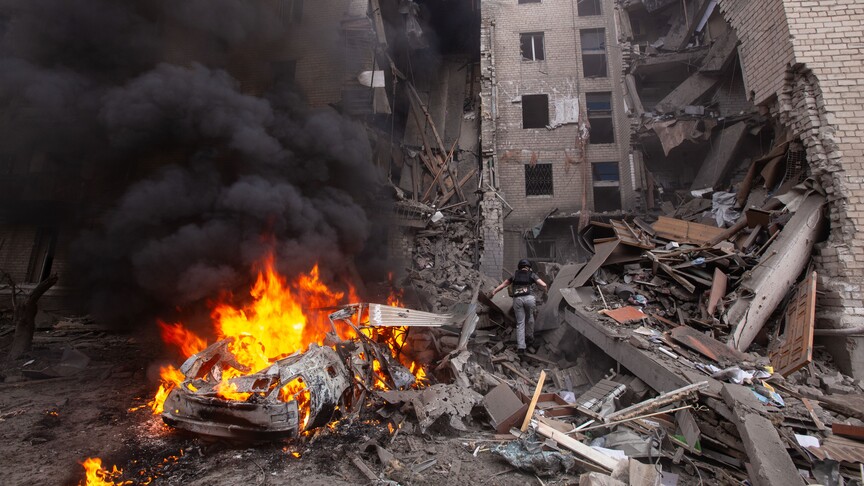
Fidan said that after negotiations failed, the war of attrition expanded into what he called a “war of destruction” that also targeted civilian areas.
“When this destruction, this attrition on the front, turns into attrition behind the front, the issue is no longer about whether you win or lose a war or a battle on a front; it becomes an issue of whether you exist as a nation. Then you use whatever ultimate means you have at your disposal,” he said.
He said European, Russian, American, and Ukrainian perceptions and assessments of the conflict differ and that the principle that “ending the war is above all other interests” has not taken hold.
Fidan added that some parties believe ending the war under current conditions would cost them more than allowing it to continue, saying this is among the reasons they remain unwilling to bring the conflict to an end.