

Missile Barrages Against Ukraine, Switching Off Crimea, Russia’s Military Reshuffle and Preparing for War in Taiwan. The Big Five, 9 August edition
We have been living in a constant search for protection against ballistic missiles since the first days of the war, when Ukraine had nothing to intercept them with. This is extremely difficult work. How can this problem be solved? Who has anti-ballistic missiles and systems? The manufacturer does. That is the United States, first and foremost. Can they help? We are working on it. Every month. Will they provide us with missiles? Yes. We have arrangements under PURL. Are these missiles enough? No. In 2026, there are fewer of these missiles. Monthly deliveries were higher in 2025. President Zelenskyy, 8 August 2026.
In Washington this week, the on-again, off-again negotiation with Iran remains stuck in a familiar doom loop of contradictory signals, demands, strikes and pullbacks from a wider war. President Trump has called the current window Tehran’s “last chance” to reach a deal. He has warned (again) of more air strikes if the Strait of Hormuz is not reopened. At the same time, Iranian officials deny that direct talks are taking place.
The stakes of this negotiation reach beyond the Gulf. Every Patriot interceptor consumed in the Middle East is one that cannot be provided to Ukraine, which is now under a sustained Russian missile barrage with few missiles being shot down. This is a crucial issue examined in the Ukraine section below.
The way that America manages its protracted crisis with Iran, including its strategic decision-making, munitions stockpiles and alliance relations, is being studied closely in Beijing. There, planners are drawing insights about American endurance ahead of any confrontation over Taiwan. At the same time, China is continuing its campaign of constant pressure against Taiwan and other nations in the region.
Welcome to this week’s edition of The Big Five.
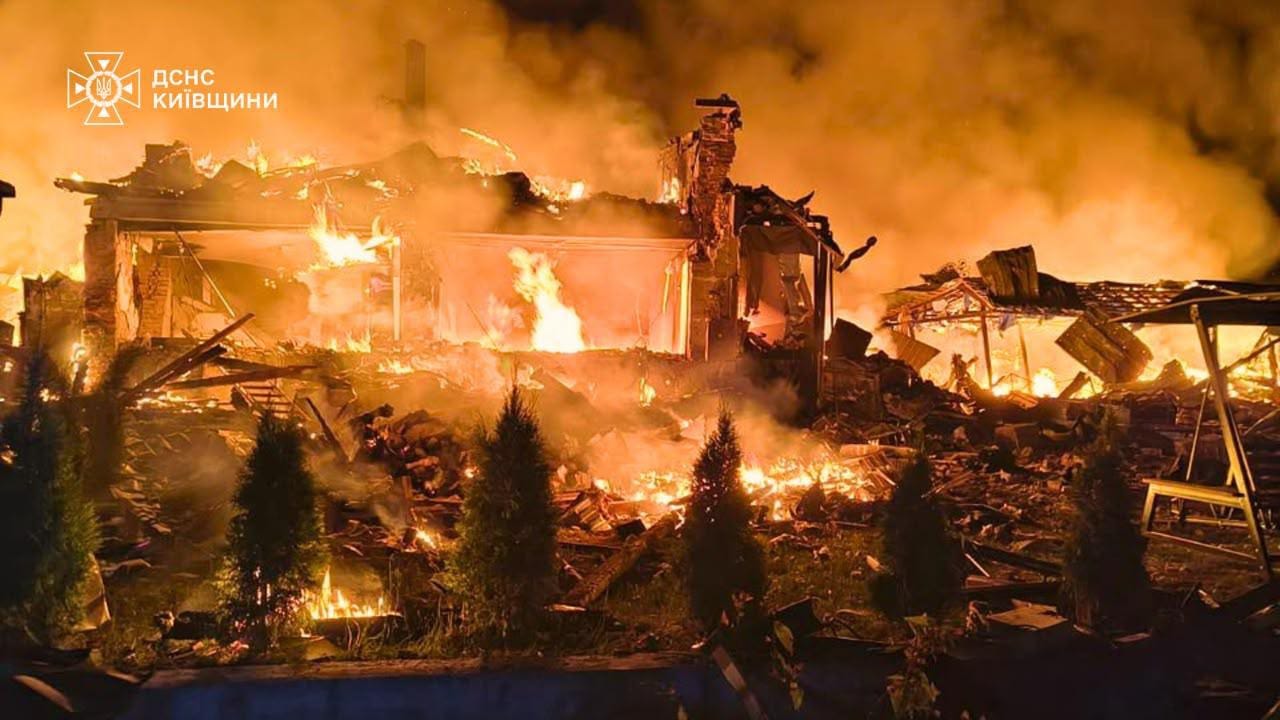
Air Defence Under Strain. This week saw ongoing barrages of ballistic missiles fired at Ukraine. Very few of these missiles have been intercepted due to Patriot interceptor shortfalls. Before this week, only 29 of the 195 ballistic missiles Russia fired at Ukraine in July were intercepted. This week, on 5 August, Ukraine’s air force failed to bring down a single ballistic missile launched at Ukraine.
President Zelenskyy told reporters in Belgrade on 8 August that Ukraine received only a third as many interceptors this year as it did in the same period last year. He has also stated that he had received a US commitment for monthly Patriot interceptor deliveries, though he added that the volume “will not be enough” to close the gap.
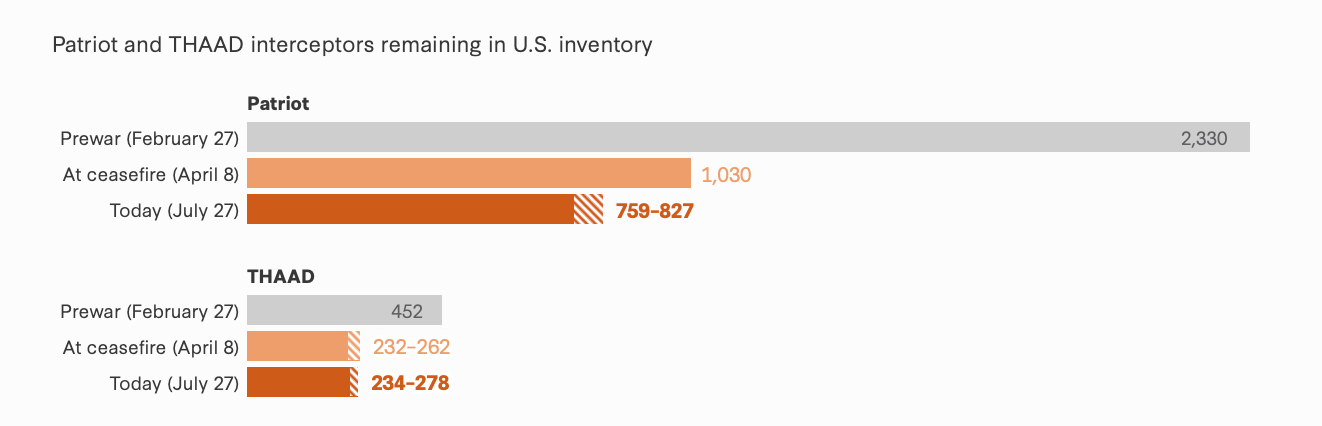
The situation with interceptors is unlikely to improve any time soon. CSIS analyst Mark Cancian has estimated the United States has burned through more than half its PAC-3 MSE stock and nearly half its THAAD inventory defending Israel and the Gulf. Patriot holdings have fallen from 2,300 rounds in February to around 800 or 900 today. Production is rising, from 300 interceptors a year before the war to about 600 now, with a target of 2,000 a year. But the expanded production will not be complete until at least 2030.
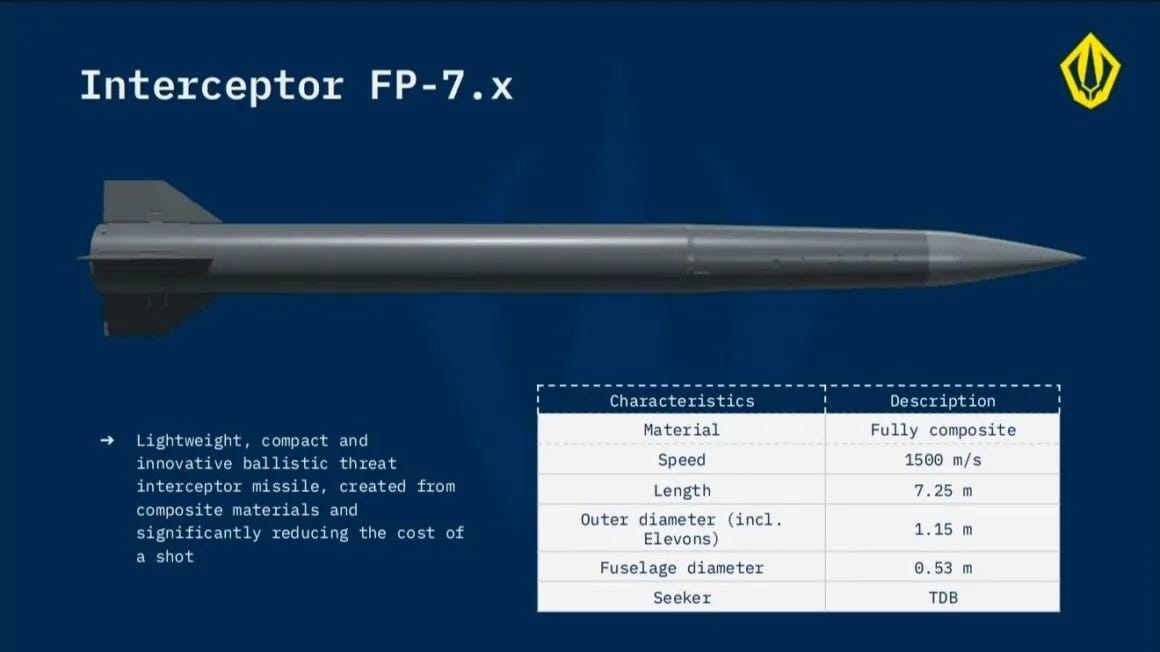
Washington is still toying with letting Ukraine build Patriots domestically. This was an idea touted by President Trump at the Ankara NATO summit in July – and subsequently walked back by him. Ukraine is now shopping around for other interceptors. Concurrently, the Ukrainian company Fire Point is working to rapidly develop a cheaper domestic interceptor, the FP-7.X, with European backing under the “Freyja” missile defence initiative. It is aiming for a first live intercept by mid-2027.
That is a long way away for the Ukrainians who find themselves under the nightly blitz of Russian missiles.
Until then, Ukraine is likely to try and step up attacks on launcher infrastructure for these missiles (although that is a difficult task) as well as manufacturing capacity. This will be complicated by the fact that Elon Musk has apparently refused to allow the use of Starlink in targeting Russian missile production and launch facilities.
The Forty-Day Campaign. In late June, Ukraine commenced a forty-day campaign to coerce Russia toward ending the war through sustained pressure on its military-industrial base, energy exports and shadow fleet. That campaign ended around 4 August. The SBU’s description of the campaign notes that it was an effort aimed at the “systematic destruction of military aviation and air defence,” economic pressure on the fuel sector, and the defeat of the fleet of tankers that Russia is using to evade sanctions.
Zelenskyy’s assessment of the campaign, reported on 8 August, was as follows:
I am satisfied, of course. Our logistical responses – we understand how much they have lost; they have serious problems…They have long allowed themselves to strike non-military targets and must understand that Ukraine strikes military targets. But if they continue, we understand all their weak points.
President Zelenskyy also signalled that the pressure on Russian logistics would continue beyond the end of the campaign, noting that “we understand all their weak points”. This is indicative of the past 40 days just being the initial phase of an expanded strike campaign, where targetable vulnerabilities are discovered and assessed, with this information being employed for a subsequent phase of the campaign.
Among the campaign’s achievements was the destruction of 13 of 15 targeted Wildberries warehouses. But it is not clear that the campaign has yet changed Moscow’s calculus.
Deep Strikes. Ukraine’s Unmanned Systems Forces have built a more formal targeting structure during 2026. It has recently formed the new Long Range Strike Command. It has also better unified the planning and conduct of tactical strikes out to 150 kilometres, middle strikes conducted out to 300 kilometres, and deep strikes reaching out to 2,000 kilometres inside Russia. Robert “Magyar” Brovdi has said deep strike missions grew more than tenfold across 2026, with June producing over two thousand missions against fuel, energy and military-industrial targets.
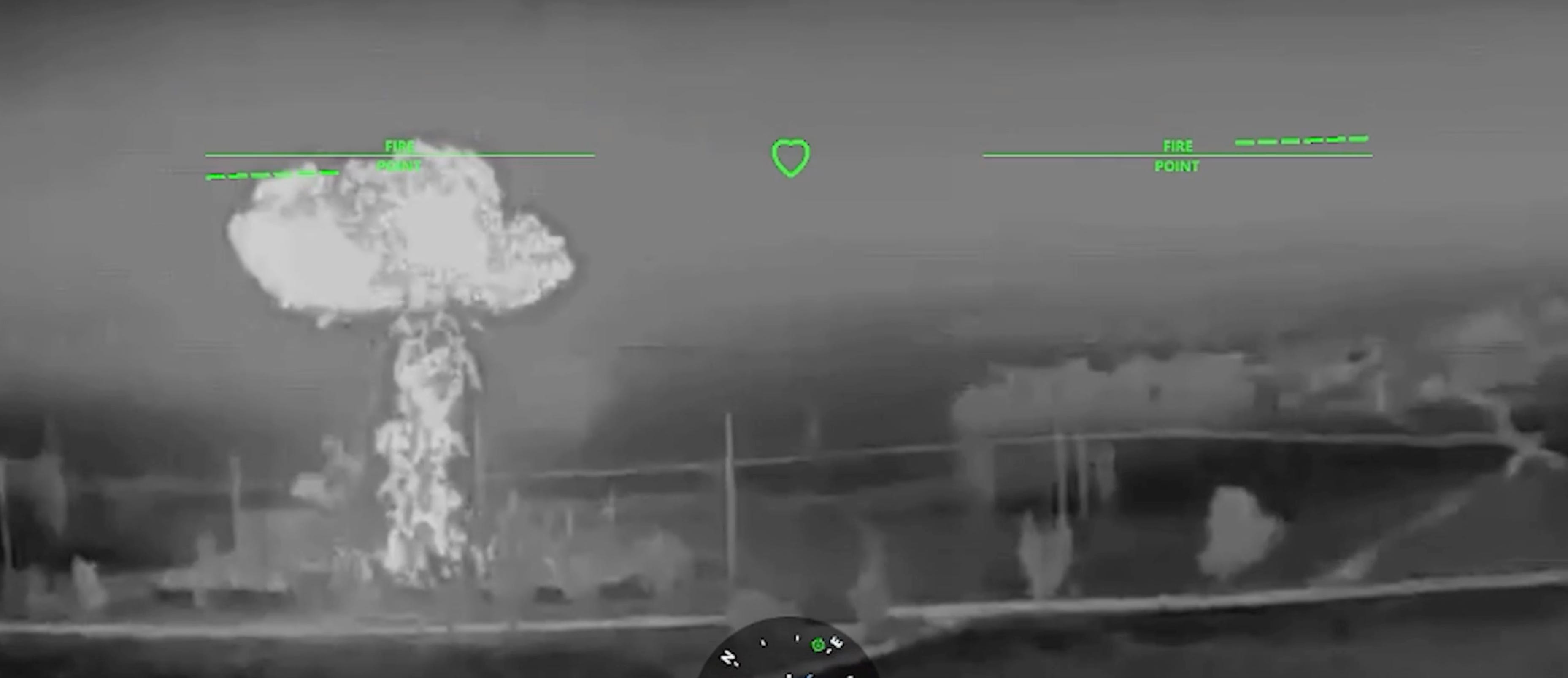
This week’s strikes included the Ilsky refinery in Krasnodar Krai and the Syzran refinery in Samara Oblast, struck overnight on 7 and 8 August. Ukraine has now hit 21 of Russia’s 38 large refineries since the start of 2025, a campaign the Russia Matters War Report Card links directly to a fall in Russian refining capacity from around 5.2 million barrels a day before the war to roughly 3.8 million now.
Unfortunately, this deep strike campaign is not one-sided. Ukraine’s Deputy Prime Minister and Energy Minister Denys Shmyhal stated this week that more than eighty percent of Ukraine’s power generation capacity has been destroyed or damaged by Russian strikes.
The Middle Strike Campaign. Taking place between the tactical drone fight along the frontline and the deep strike on Russian refineries is an increasingly important middle strike (or interdiction) campaign. This continues to target Russian logistics and troop movements at ranges of 150 to 300 kilometres behind the line. Ukrainian units flying Hornet and Morrigan fixed wing drones have spent recent months hunting resupply trucks along key routes feeding Russian formations, and the effort appears to be paying a battlefield dividend. In its 7 August assessment, the Institute for the Study of War included an assessment that:
Ukraine’s intermediate range strike campaign against the Russian rear, along with Ukrainian tactical drone overmatch on the frontline, are slowing down Russian operational tempo across the frontline.
The ongoing destruction of trucks, fuel and ammunition behind the front line provides a contribution to Ukraine slowing (or halting) Russian offensive tempo on the ground. These strikes also reinforce the strategic impacts of strikes on refineries deep inside Russia.
At the same time, Ukraine’s Unmanned Systems Forces have spent the past six weeks running the “Crimean Power Switch Off”. This is a campaign against electricity substations, energy infrastructure and the Kerch bridge’s power connections serving the occupied peninsula. Combined with strikes on rail bridges and naval drone infrastructure on the peninsula in early August, the campaign is part of a strategy to physically and psychologically isolate occupied Crimea from Russia.
By the end of July, 164 energy targets have been struck in a month, including ten substations hit in a single night across Feodosia, Yevpatoria, Kerch and nearby occupied Kherson and Luhansk. The effect has been an energy crisis. Ukrainian sources believe Russia is preparing to remove Crimea’s occupation head Sergei Aksyonov in the coming months, using him as a scapegoat for a crisis of Putin’s own making.
The War on the Ground. The ground war remains a grinding but dynamic contest that continues to favour Ukraine’s defence. Russia’s territorial gains over the four weeks to 4 August added up to between 13 and 24 square miles, depending on whether figures from DeepState or ISW mapping are used.
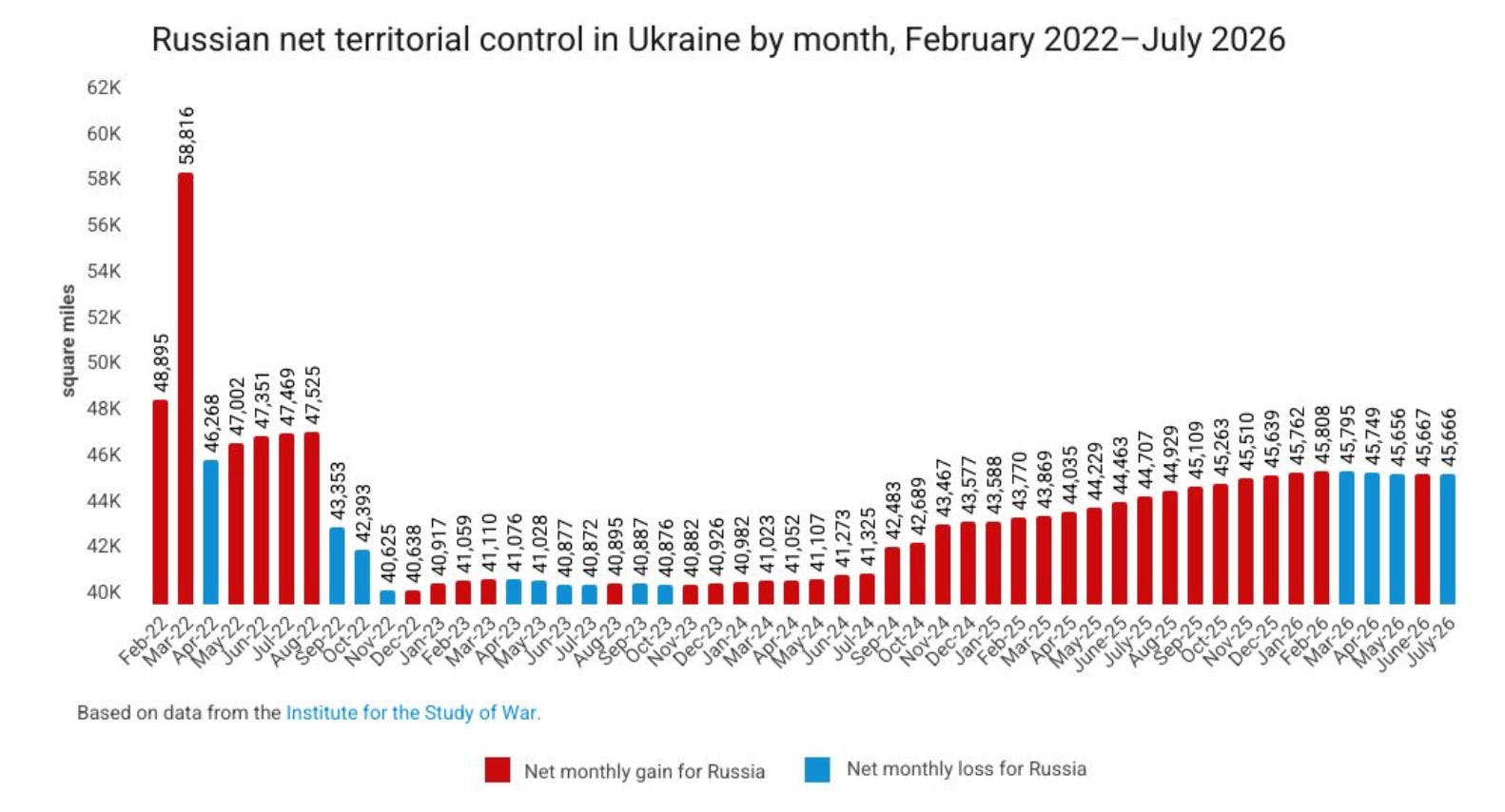
Russia’s main effort remains Pokrovsk and Dobropillya. It is here that Russian ground forces appear to be continuing their attempt to achieve an envelopment of eastern Ukraine’s Fortress Belt.
Ukrainian Command Structure. Ukraine’s command structure has seen more changes this week. General Mykhailo Drapaty, appointed commander of the Armed Forces of Ukraine in late July, named General Serhii Sobko, a 42-year-old Hero of Ukraine who led Kyiv’s territorial defence in 2022, as his deputy on 6 August. Sobko had been commanding the 11th Army Corps, and his appointment has been welcomed by prominent Ukrainian military commentators as a sign of genuine reform.
Russian Reshuffle. On 5 August, President Putin announced a significant reshuffle of Russia’s senior military leadership, part of what the Kremlin describes as refinement of the Defence Ministry’s structure due to the war’s lessons. Colonel General Denis Lyamin now leads Russia’s Unmanned Systems Forces. Colonel General Andrei Ivanayev takes over the “Center” grouping tasked with capturing the whole of eastern Donetsk, while Lieutenant General Pyotr Bolgarev takes the “East” grouping.
The reshuffle is perhaps best read as Putin wanting to inject new ideas and energy into his war against Ukraine while also messaging that those ‘responsible for attacks against Russia’ are being moved on. None of these leadership changes are likely to result in any significant change in the effectiveness of Russian military forces. The underlying strategy of Russia’s war against Ukraine is so poor, and Ukraine’s military effectiveness is continuing to improve, so there is little that these military leaders will be able to do to change the situation.
Russia continues to face a difficult strategic dilemma in the Black Sea theatre, one that its nightly missile attacks on Ukrainian cities are unlikely to resolve. Crimea has been the bedrock of Russia’s Ukraine strategy since 2014, hosting the Black Sea Fleet, air defence networks and a logistics hub feeding the entire southern front.
Ukraine’s 2026 integrated campaign, switching off Crimea’s power, striking its bridges, transport and drone infrastructure, and hunting shipping in the Azov and Black Seas, has turned Russia’s southern foundation into a strategic liability. Crimea is now drawing more air defence and naval assets at exactly the same time as Ukraine’s long-range strikes into the Russian heartland, against refineries, energy infrastructure and manufacturing hubs, are demanding those same assets to the north.
Russia cannot adequately defend both without accepting greater risk somewhere else. In the past 24 hours, Ukraine’s president has referred to this Russian dilemma:
The Russians have concentrated three rings of air defense around Moscow. To create such a strong defensive shield, they had to pull all their air defense systems from every corner of their vast territory.
This is the brutal calculus that is part of the rationale behind this week’s Russian military leadership reshuffle. Putin’s dilemma here will become more acute as Ukraine’s strike forces continue to expand their reach and capacity. Crimea and the Russian interior are no longer separate problems for Russian planners to solve sequentially. They are a single, unified target set for the Ukrainians.
At some point in the near future, Putin will have to make tough strategic decisions about the apportionment of military forces and effort.
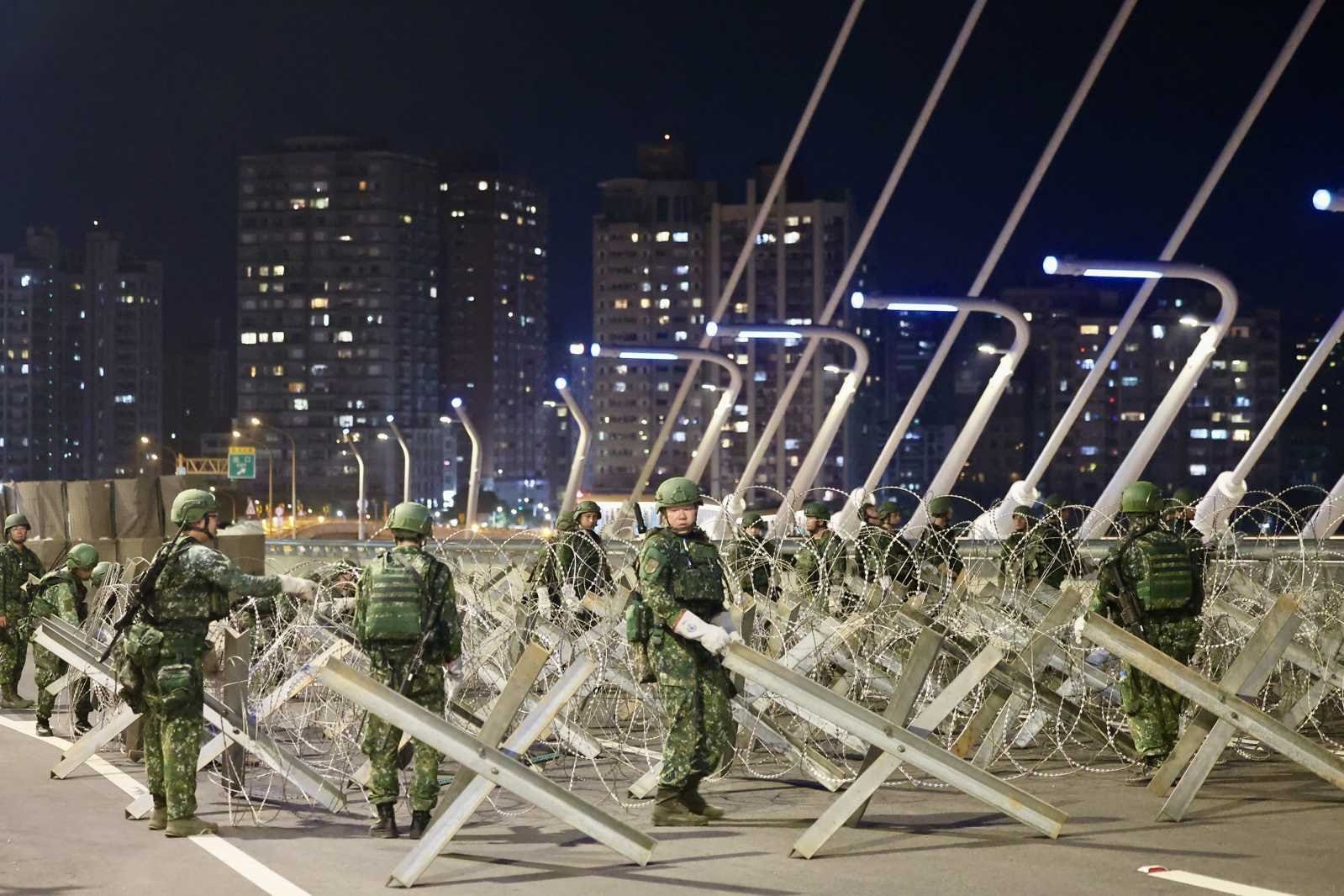
Taiwan Rehearses for War. Taiwan’s Han Kuang exercise is being conducted over the period 5 to 14 August. The activity involves mobilising around 20,000 reservists alongside active units and running events simultaneously in every city.
An interesting activity took place on the evening of 5 August, when President Lai Ching-te was moved by armoured personnel carrier from the Presidential Office to a fortified command centre in a rehearsal of continuity of government. Decapitation operations are part of Chinese military doctrine, and this is a scenario Taiwan has prepared for going back to the Chiang Kai-shek era. The recent decapitation strikes against Iran’s leadership, and Russia’s attempts to murder the Ukrainian president, add relevance to Taiwan’s preparations.
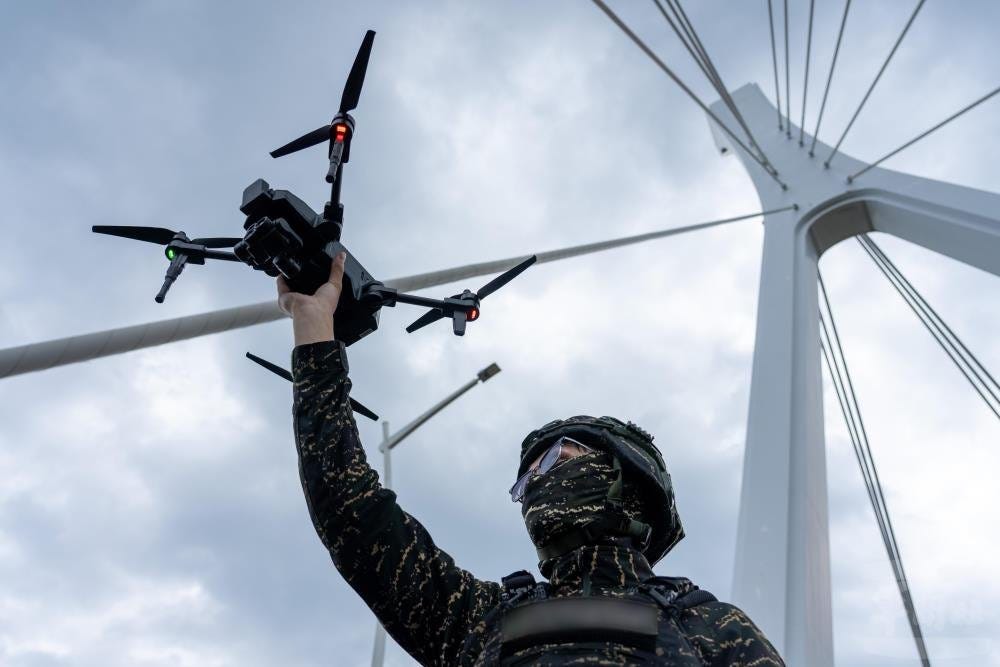
The drills have grown in complexity throughout the past week. On 7 August troops rehearsed defending the new Danjiang Bridge near Taipei, a potential avenue of approach towards Taipei from amphibious landing beaches. Other exercises simulated converting civilian factories to wartime arms production. On 8 August, President Lai boarded a fast attack missile boat off Kaohsiung to direct a simulated coastal strike against a mock landing force. Reconnaissance and loitering munition drones were also used in the exercise for the first time.
Taiwan’s offshore islands were also incorporated into the exercise. Taiwan’s army executed deployments to an outlying island as part of this year’s drills. This is a pointed message from the Taiwanese government about its willingness to defend territory where any Chinese move short of full invasion is most likely to begin.
Taiwan’s Budget. Taiwan’s cabinet is due to approve next year’s budget on 20 August, with defence spending under NATO standard accounting projected to exceed one trillion New Taiwan dollars for the first time. This is more than 34 billion US dollars, and includes another 240 billion New Taiwan dollar special budget for fighter jets and domestically developed uncrewed systems.
Recruitment and retention figures for the military were also published this week. Taiwan’s military exceeded its 2025 recruitment target by more than 17 percent, and retention climbed from 82 to 87 percent. This is a good outcome and suggests that the sense of urgency on display in this week’s military exercises is beginning to translate into institutional resilience and sustainability.
Japan’s 2026 “Defence of Japan” paper. Japan’s cabinet approved its 2026 Defence White Paper on 4 August. It described China as Japan’s “unprecedented and greatest strategic challenge”.
The paper’s core assessment is that Chinese military reach is expanding well beyond the First Island Chain into the broader Pacific. ,The report notes that Chinese military aircraft entered Taiwan’s surrounding airspace more than 3,700 times over the past year, up from under a thousand in 2021, with naval sorties around Taiwan climbing to roughly 2,600.
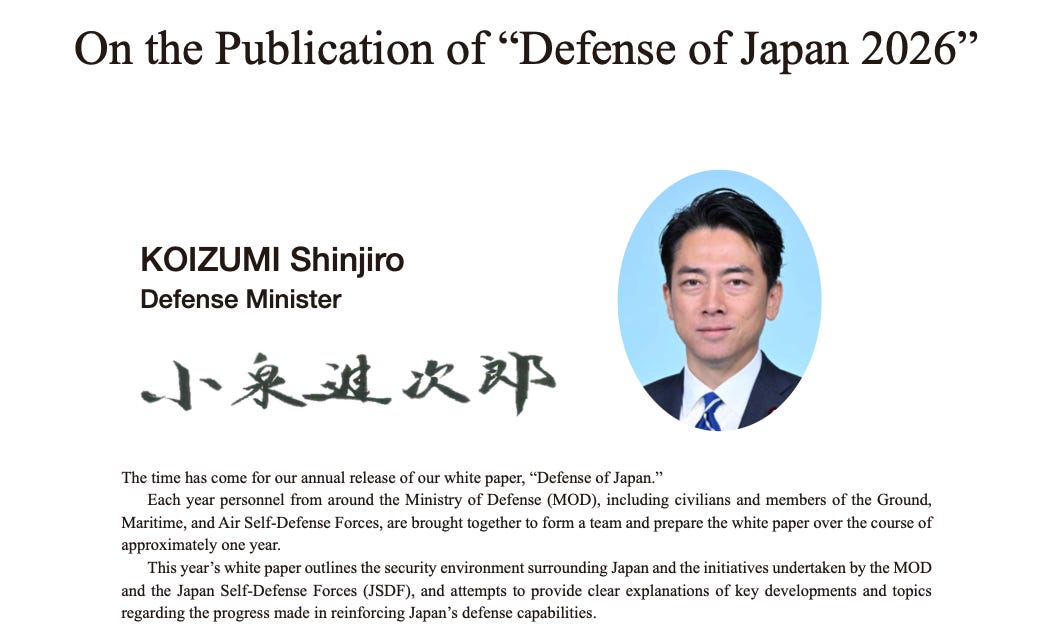
For the first time, the paper describes defence spending as an economic growth driver rather than a pure cost to the national budget. This is a message that conforms to Prime Minister Takaichi’s strategic spending agenda. It takes Japan’s defence spending to two percent of GDP ahead of the original schedule. Beijing’s response was predictable: a Defence Ministry spokesperson accused Tokyo of hyping threats to justify remilitarisation, and the Foreign Ministry lodged a formal protest on 5 August, while state media dismissed the paper’s findings as “distorted”.
Pressure Around Taiwan Continues. Chinese military activity around Taiwan this week continued its pattern of continuous pressure. The latest assessment by the American Enterprise Institute and the Institute for the Study of War found that the PLA conducted 190 median line and ADIZ incursions in July. This was less than half the peak levels recorded in July 2024 and 2025.
Chinese Coast Guard patrols around Kinmen continued, while Taiwan’s Coast Guard drove off a Chinese Maritime Safety Administration vessel that cut through restricted waters near the island on 16 July. On the American side, the US and Taiwan coast guards publicised their first confirmed combined patrol in Taiwanese waters on 28 July.
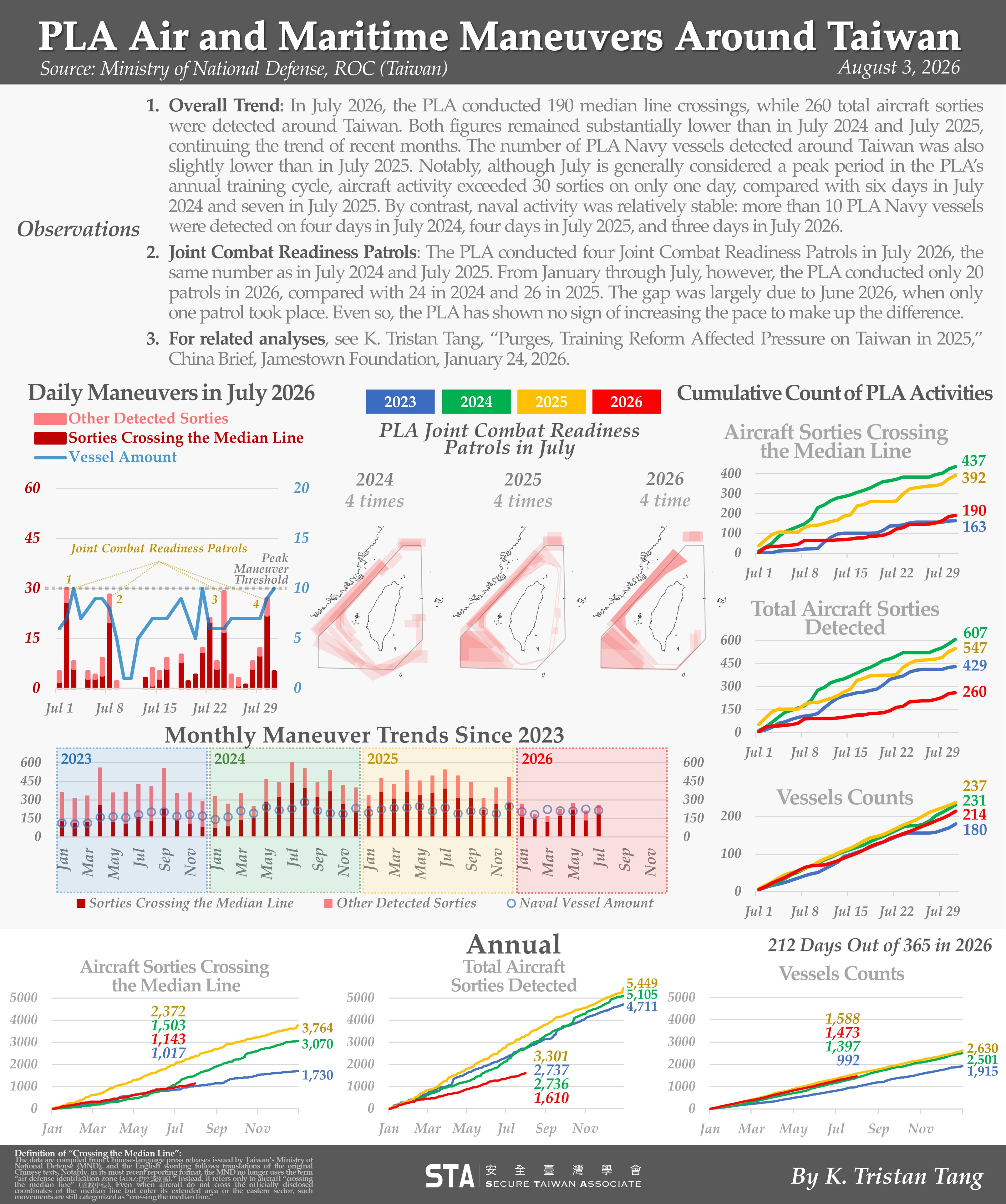
The most recent assessment by analyst Tristan Tang on this issue notes the following:
The number of PLA Navy vessels detected around Taiwan was also slightly lower than in July 2025. Notably, although July is generally considered a peak period in the PLA’s annual training cycle, aircraft activity exceeded 30 sorties on only one day, compared with six days in July 2024 and seven in July 2025. By contrast, naval activity was relatively stable: more than 10 PLA Navy vessels were detected on four days in July 2024, four days in July 2025, and three days in July 2026.
**********
It’s time to explore this week’s recommended readings.
This week’s recommendations include a great article about warfare in space and how it is evolving. There are also articles about drone warfare, the application of AI in military organisations and scenarios for Russia’s next steps in its aggression against European nations.
As always, if you only have the time available to read one of my recommendations, the first is my pick of the week.
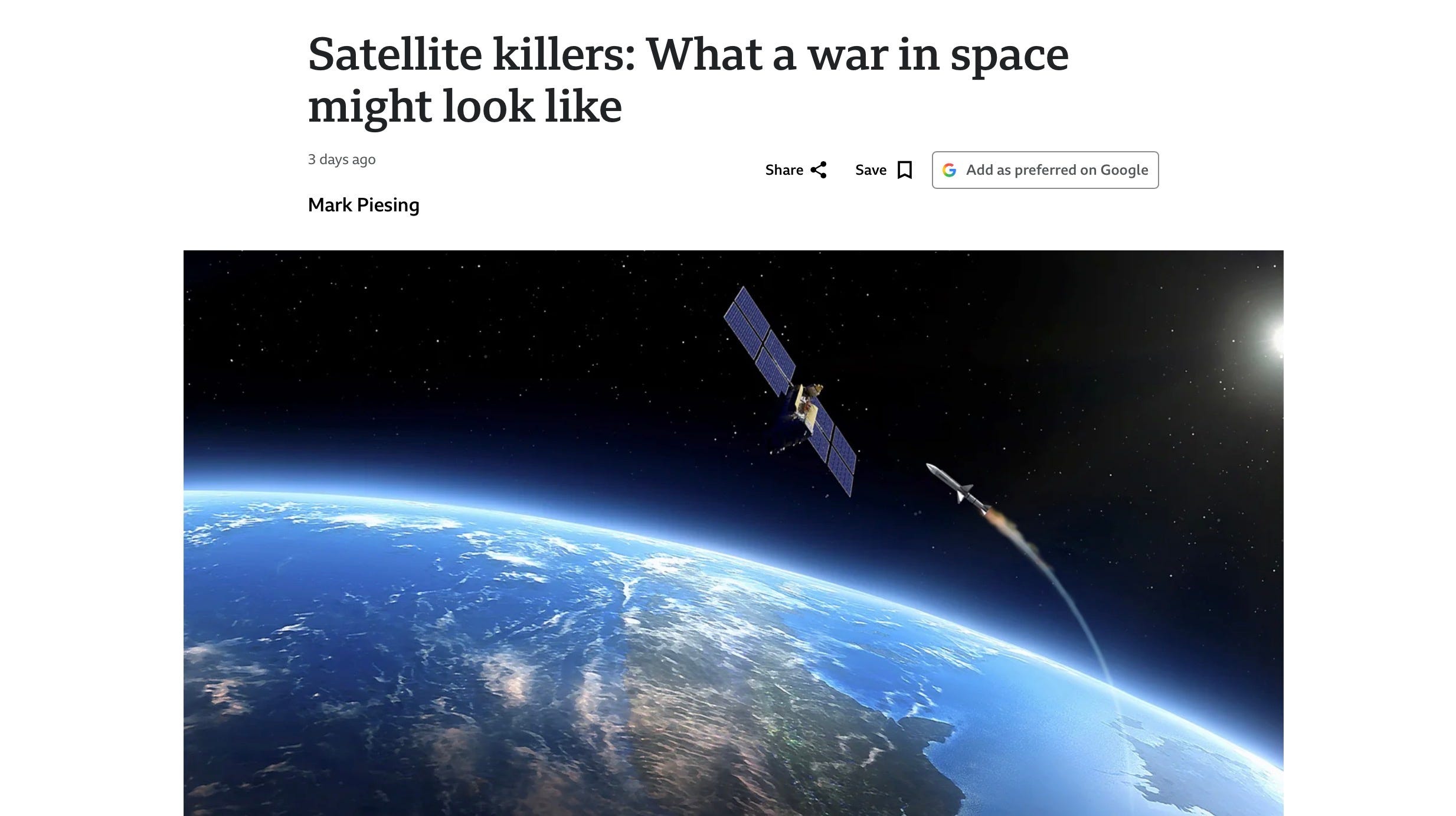
This BBC report is a survey of the counterspace arsenal now in routine use, from the 2022 Viasat cyberattack that opened the Russia-Ukraine war to Russian satellites conducting close approach manoeuvres against Western geostationary assets. You can read the full report at this link.
This new report by George Scutaru, published by the Romanian New Strategy Center think tank, explores Black Sea escalation, from Russian pressure on Ukrainian grain exports to Ukrainian counter strikes on ports and shadow fleet vessels. It also has a useful section on Russian probing of NATO’s eastern flank through drone incursions and cyberattacks against Romania. The full brief can be read here.
This occasional paper by Dr Oleksandra Molloy, published by the Australian Army Research Centre, draws on interviews with 27 Ukrainian and Australian practitioners to trace how Ukraine’s drone effort evolved from improvised volunteer efforts in 2022 into an institutionalised force and a domestic industry producing millions of drones each year. You can read it here.
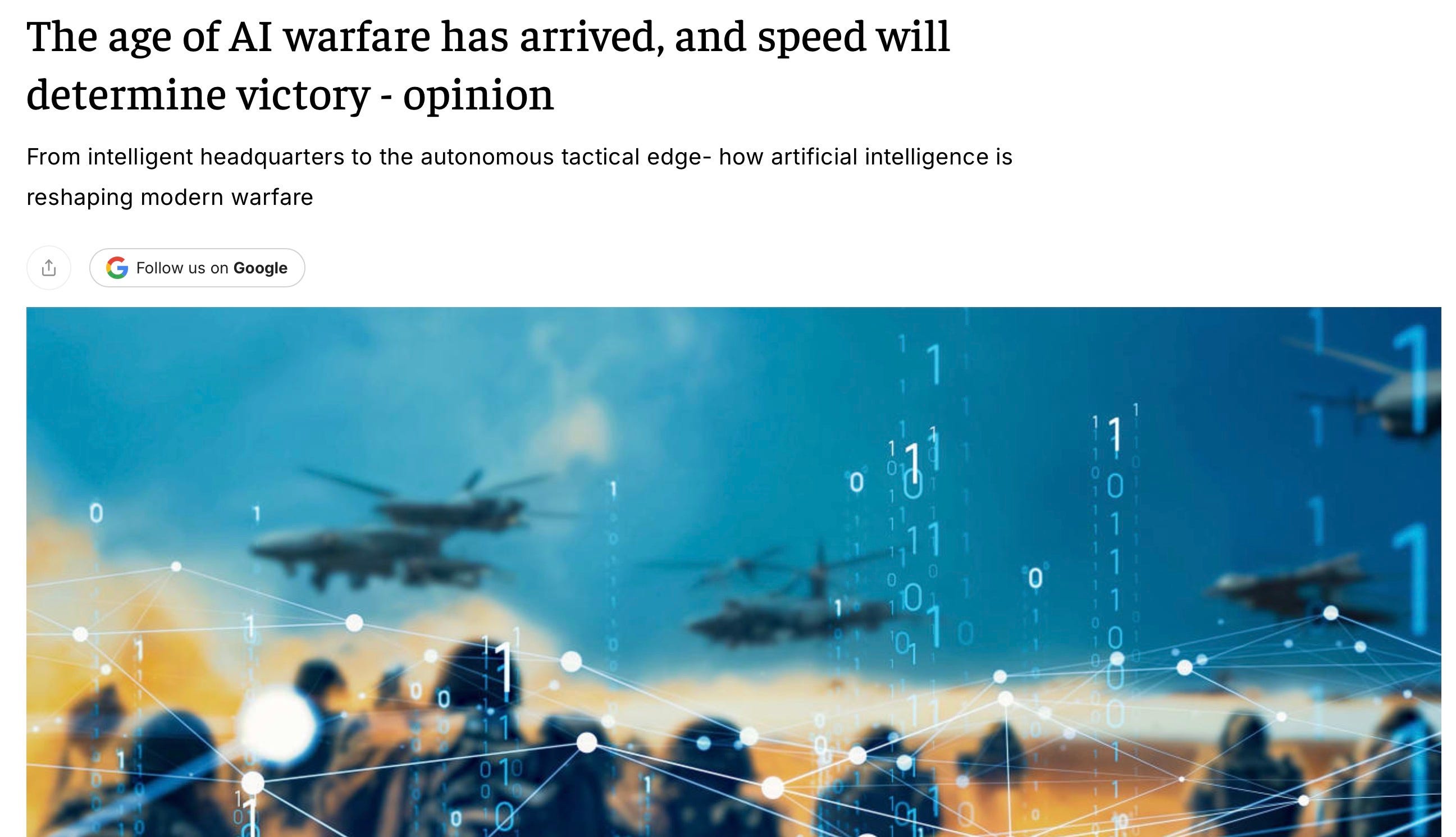
This report from the Jerusalem Post contains a retired Israeli general’s practical assessment on how artificial intelligence is reshaping both headquarters and tactical activities in contemporary military operations. He argues that the real contest is not whether machines replace commanders but how well people, data and algorithms are integrated into a single adaptive system. You can read it all here.

In this interesting piece by Dr Michael Raska, and published by the Center for Security Studies, the author tests Clausewitz’s enduring trinity of passion, chance and reason against a battlefield that includes autonomous systems. He employs case studies from Ukraine and the Iran conflict. A key insight is his warning that equating decision speed with decision superiority risks decoupling algorithmic warfare from political judgment. This is a useful contrast to the views expressed in the previous article. The article is available at this link.