

Access to energy in the Matam region, a reality thanks to the PADERAU program
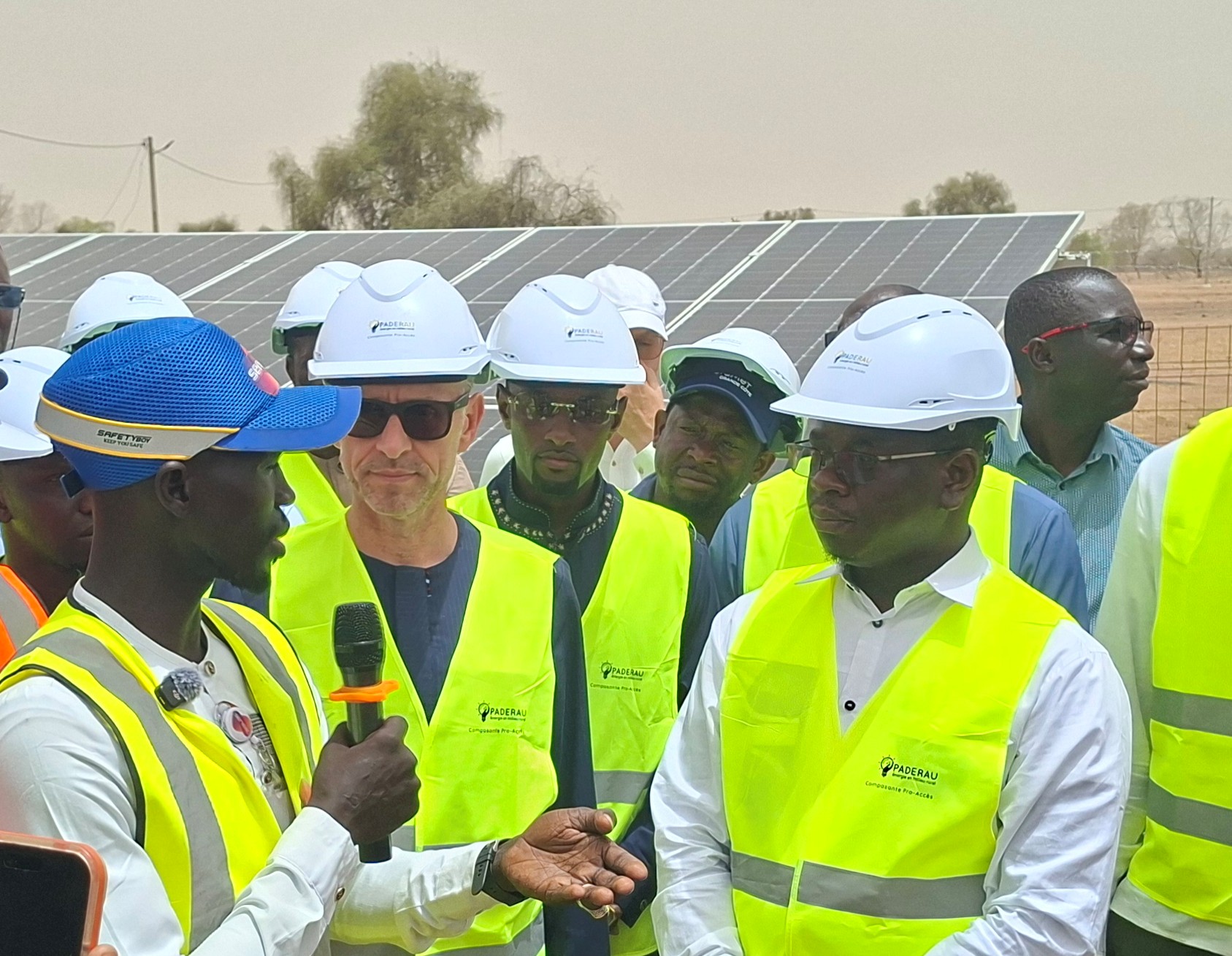
The Renewable Energy Development Support Programme for Universal Access (PADERAU) in partnership with the German Cooperation Agency GIZ through the Energising Development (ENDEV) project, and Senelec organised, on May 12, in the villages of Dayane Kodiolé and Dayane Séllé (Vélingara Ferlo, Ranérou Ferlo – Matam), the official inauguration of two (2) mini solar power plants 2.0.
The ceremony was presided over by Mr. Birame Souleye Diop, Minister of Energy, Petroleum, and Mines of Senegal, in the presence of Mr. Jean-Marc Pisani, Ambassador of the European Union (EU), Mr. Kai Baldow, Ambassador of the Federal Republic of Germany, Mr. Papa Toby Gaye, Director General of Senelec, and regional administrative and political authorities.
These two mini solar grids were installed as part of the project “Promoting access to electricity for people living in isolated, off-grid villages in Senegal,” commonly known as Pro-Access. This project embodies exemplary triangular cooperation between the Government of Senegal, represented by the Ministry of Energy, Petroleum and Mines, the German Federal Ministry for Economic Cooperation and Development (BMZ), and the European Union through its Support Programme for the Development of Renewable Energies for Universal Access to Electricity (PADERAU).
PADERAU is part of the Global Gateway strategy, a European initiative aimed at mobilizing sustainable and high-quality investments worldwide. With a total budget of €92 million (60.4 billion CFA francs) over six years, the programme is co-financed by the EU, the European Investment Bank (EIB), the French Development Agency (AFD), and the German Federal Ministry for Economic Cooperation and Development (BMZ).
The program is structured around several complementary components, including the “Support for Universal Access to Electricity through Grid Extensions” component, implemented by Senelec with the electrification of 556 rural communities in the Matam, Tambacounda, Sédhiou, and Ziguinchor regions, and the “Support for Universal Off-Grid Access” component, implemented by the German Development Cooperation agency GIZ through the ENDEV project.
These mini power plants will provide electricity access to more than 94 households (712 people), as well as to schools and health facilities in the area. They thus contribute to improving living conditions and socio-economic development in these relatively remote rural areas.
The inauguration of these infrastructures concretely illustrates Team Europe’s commitment to sustainable development and improving the living conditions of Senegalese communities in areas furthest from major power grids.
Credit: Source link